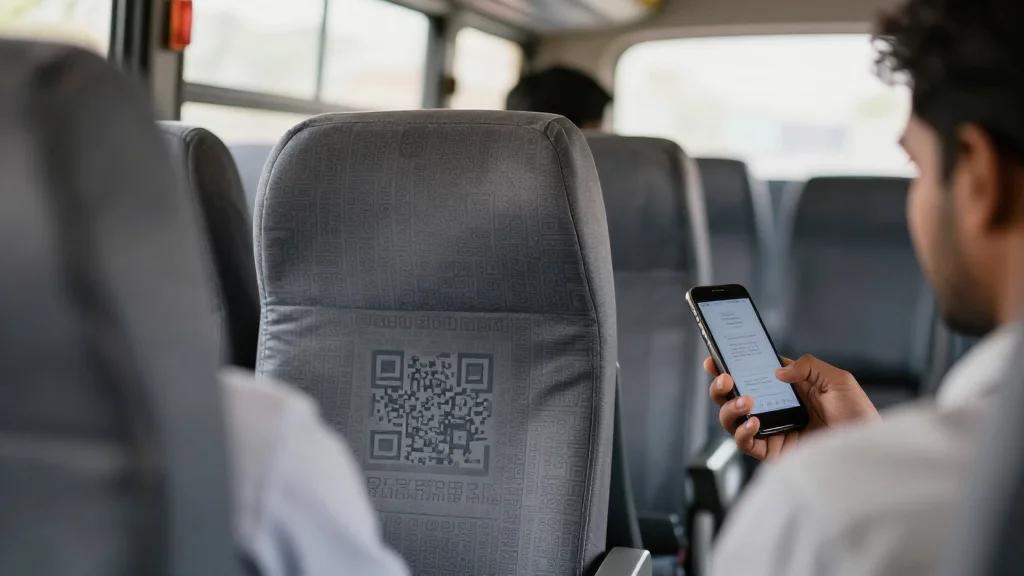
Gujarat Road Transport Body Launches QR Code-Based Passenger Feedback System
Companies Mentioned
Why It Matters
Real‑time, QR‑driven feedback gives GSRTC actionable data to boost service quality, safety and passenger loyalty, setting a benchmark for digital transformation in Indian public transport.
Key Takeaways
- •GSRTC installed QR codes on 8,000+ buses, 400+ codes pending
- •March 2026 passenger satisfaction hit 4.5/5 from 1,702 responses
- •Safety rated highest at 4.7, staff behaviour 4.6, cleanliness 4.5
- •Air‑freshener fix resolved odor complaints on AC and Volvo buses
- •Daily ridership grew to 2.7 million; target 3 million soon
Pulse Analysis
India’s public‑transport sector is accelerating its digital pivot, and GSRTC’s QR‑code feedback platform exemplifies how low‑cost technology can unlock granular, real‑time insights. By placing scannable codes behind seats, the corporation captures passenger sentiment on cleanliness, punctuality, safety and staff conduct instantly, bypassing traditional paper surveys. The system’s March 2026 data—1,702 responses yielding a 4.5‑star average—provides a statistically meaningful pulse on service quality, enabling operators to prioritize fixes without delay.
The immediate impact is evident. Safety topped the chart at 4.7, reinforcing GSRTC’s reputation for secure travel, while staff behaviour and cleanliness also scored above 4.5. When riders flagged unpleasant odours on AC and Volvo buses, the corporation responded by installing air fresheners across the premium fleet, demonstrating a closed‑loop feedback mechanism. Such data‑driven actions not only resolve isolated issues but also foster a culture of continuous improvement, encouraging higher rider satisfaction and potentially boosting repeat usage.
Beyond GSRTC, the initiative signals a broader shift for Indian transit agencies seeking to modernize operations. Scalable QR feedback can be replicated across state and municipal fleets, feeding into centralized dashboards for performance monitoring and resource allocation. As daily ridership climbs toward the 3 million mark, the ability to swiftly address passenger concerns will be pivotal for retaining market share against emerging mobility alternatives. Ultimately, GSRTC’s approach showcases how simple digital tools can drive operational excellence, elevate safety standards, and strengthen the public‑transport value proposition in a rapidly evolving mobility landscape.
Gujarat road transport body launches QR code-based passenger feedback system
Comments
Want to join the conversation?
Loading comments...