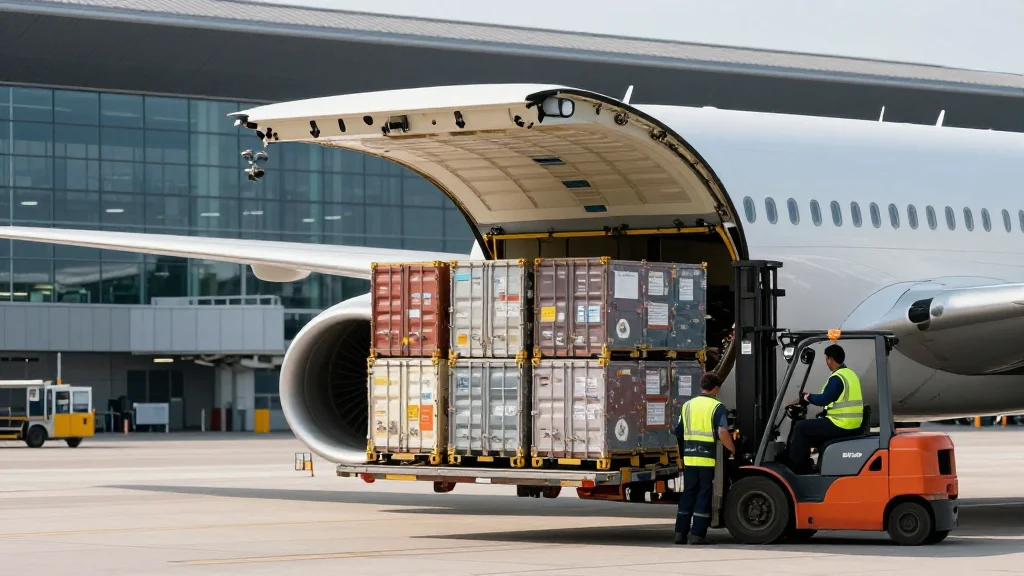
Hamburg Airport Celebrates 10th Anniversary of Cargo Centre
Companies Mentioned
Why It Matters
The centre solidifies Hamburg’s position as a leading European air‑cargo hub, boosting regional trade and supporting supply‑chain resilience for high‑value, time‑critical shipments.
Key Takeaways
- •HACC cost €50 million (≈$55 M) and opened May 30 2016.
- •60,000 sqm facility includes 20,000 sqm freight hall and 44 loading ramps.
- •Serves ~40 tenants and 450 employees, handling time‑sensitive goods.
- •Processed 68,400 tonnes of cargo in 2025, matching pre‑pandemic volumes.
- •Major airlines like Emirates and Lufthansa use HACC, boosting regional logistics.
Pulse Analysis
Hamburg Airport’s cargo hub, the Hamburg Airport Cargo Center, represents a strategic upgrade to Europe’s air‑freight landscape. The €50 million (≈$55 M) investment delivered a purpose‑built, 60,000‑square‑metre complex that integrates a massive 20,000‑square‑metre air‑freight hall, extensive ramp infrastructure and dedicated office space. By consolidating operations that were previously scattered across an outdated 1960s terminal, HACC offers streamlined handling, reduced turnaround times and a scalable platform for future growth, positioning Hamburg as a modern logistics gateway.
Since its inauguration, HACC has attracted a diverse tenant base of roughly 40 companies and employs about 450 professionals. The centre’s design caters to time‑sensitive cargo, including aviation spare parts, medical technology, chemicals and pharmaceuticals. In 2025, the hub processed roughly 68,400 tonnes of freight, effectively restoring volumes to pre‑COVID levels. Key carriers—Emirates, Deutsche Lufthansa, Turkish Airlines, Qatar Airways, Air France and KLM—rely on HACC’s efficient loading ramps and ample truck parking, reinforcing the airport’s role in global supply chains and enabling rapid, reliable delivery across continents.
The broader impact extends beyond the airport’s perimeter. By enhancing cargo capacity and reliability, HACC strengthens Hamburg’s economic engine, attracting logistics firms and supporting regional manufacturers that depend on swift market access. The centre’s success signals a shift toward integrated, high‑value air‑cargo services in Europe, prompting other airports to consider similar upgrades. Looking ahead, continued investment in digital tracking and sustainable handling practices could further cement Hamburg’s status as a premier European air‑cargo hub, driving growth in trade volumes and reinforcing supply‑chain resilience.
Hamburg Airport celebrates 10th anniversary of cargo centre
Comments
Want to join the conversation?
Loading comments...