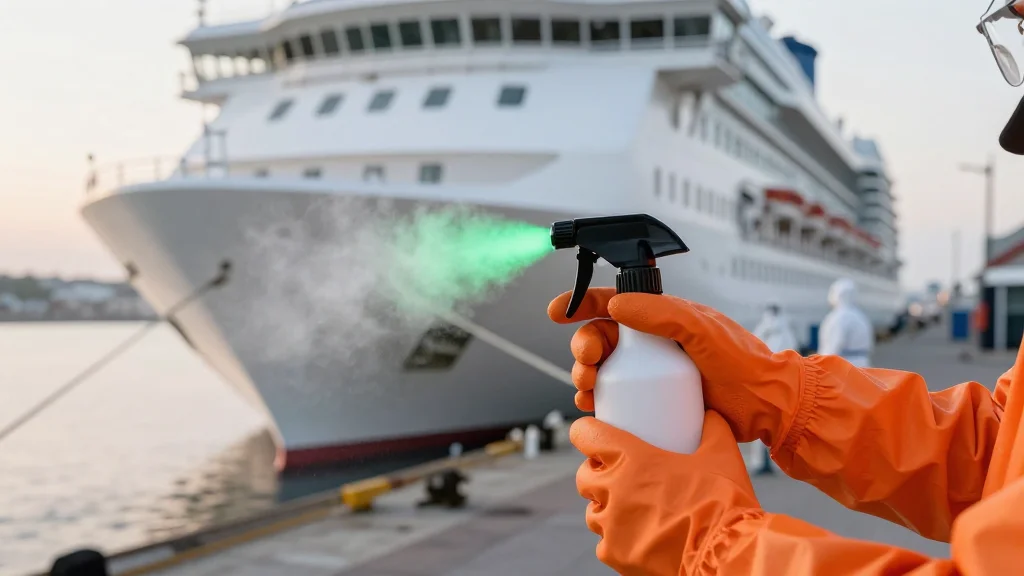
Hantavirus-Contaminated Cruise Ship Arrives in Netherlands for Emergency Disinfection

Why It Matters
The hantavirus incident highlights a blind spot in maritime health security: while respiratory illnesses have dominated recent protocols, vector‑borne diseases can also pose serious risks in the confined, high‑traffic environment of cruise ships. A failure to address such threats could lead to larger outbreaks, erode passenger confidence, and trigger costly port closures. Moreover, the event forces regulators to consider expanding inspection criteria beyond traditional sanitation checks, potentially reshaping how ports assess bio‑hazard readiness. For the broader transportation sector, the case serves as a reminder that disease surveillance must be comprehensive, covering not only human health but also environmental vectors like rodents. As global travel rebounds, integrating robust pest‑control and environmental cleaning standards into maritime operations could become a competitive differentiator for cruise lines seeking to reassure wary travelers.
Key Takeaways
- •Cruise ship docked in Rotterdam for emergency hantavirus disinfection
- •Dutch health officials to conduct 48‑72 hour deep‑cleaning protocol
- •Passengers with exposure are being repatriated under medical supervision
- •WHO urges enhanced pest‑control and health screening on cruise vessels
- •Industry analysts warn potential impact on consumer confidence and operating costs
Pulse Analysis
The Rotterdam incident arrives at a moment when the cruise industry is still rebuilding from the pandemic's fallout. Historically, maritime disease outbreaks have been rare but high‑impact events—think of the 1970 cholera scare on the SS Mongolia or the 2003 SARS cases on several Asian liners. Hantavirus, however, introduces a new vector that is less visible but equally persistent. The pathogen's ability to survive in dust and on surfaces means that standard cleaning regimes, which were sufficient for respiratory viruses, may be inadequate. This could push cruise operators to invest in more advanced decontamination technologies, such as UV-C air treatment and electrostatic fogging, raising capital expenditures at a time when profit margins are already thin.
Regulators are likely to respond with tighter entry requirements, potentially mandating pre‑arrival pest‑control certifications and on‑board environmental monitoring. Such measures could create a competitive advantage for operators that have already adopted stringent bio‑security protocols, accelerating a market split between premium lines that can absorb higher compliance costs and budget carriers that may struggle to meet new standards.
From a broader transportation perspective, the incident underscores the need for integrated health surveillance across all modes of travel. Airports, rail hubs, and seaports share the challenge of detecting and containing pathogens that may not present immediate symptoms. The hantavirus case could catalyze cross‑industry collaborations on data sharing and rapid response frameworks, ultimately strengthening the resilience of global mobility networks against future biological threats.
Hantavirus-Contaminated Cruise Ship Arrives in Netherlands for Emergency Disinfection
Comments
Want to join the conversation?
Loading comments...