Haryana Rolls Out Tech-Driven Roadmap to Curb Air Pollution Across NCR
Why It Matters
The initiative targets a major source of health‑risk haze in the densely populated NCR, offering a scalable model for Indian states and supporting national climate‑change commitments.
Key Takeaways
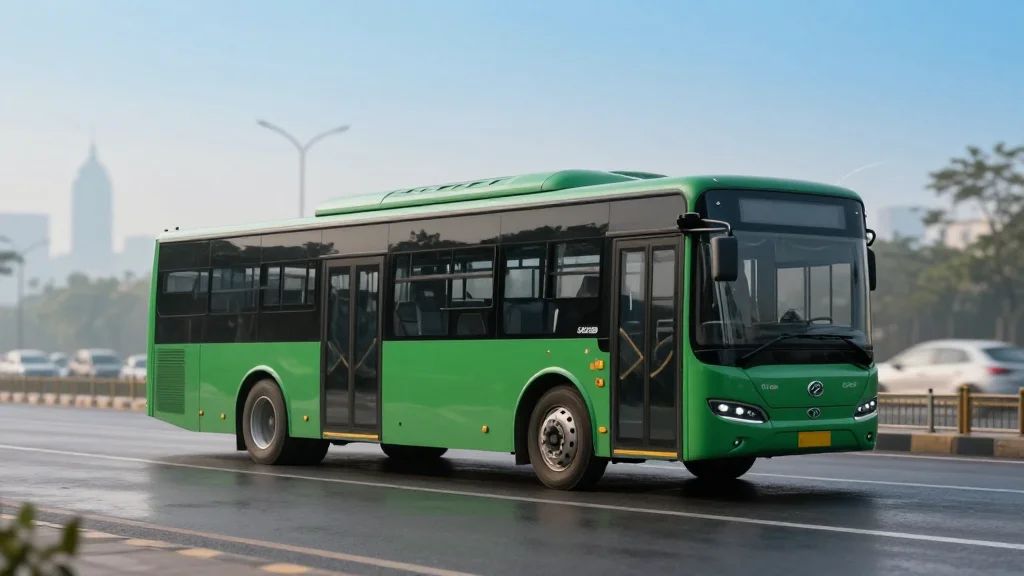
- •925 electric buses planned for NCR, 575 already ordered
- •“No PUCC, No Fuel” at 2,780 fuel stations from Oct 2026
- •1,286 polluting factories linked to CPCB emission network
- •Air‑quality monitors to be operational by Sep 2026
- •Target to impound 100 end‑of‑life vehicles daily
Pulse Analysis
The National Capital Region remains one of the world’s most polluted urban agglomerations, with PM2.5 levels frequently exceeding World Health Organization limits. Chronic exposure drives respiratory disease, reduces labor productivity, and strains public health budgets. While Delhi has launched occasional smog alerts, lasting improvement requires coordinated action across neighboring states. Haryana’s new roadmap arrives at a critical juncture, marrying real‑time data, enforcement technology, and clean‑mobility investments to address the systemic sources of haze that have long plagued the corridor.
The plan hinges on three pillars. First, a fleet of 925 electric buses—575 already under purchase order—will replace diesel‑run routes in Gurugram, Faridabad, Panipat, Karnal and Rohtak, cutting tailpipe emissions by an estimated 150,000 tonnes annually. Second, the “No PUCC, No Fuel” rule will bar 2,780 fuel stations from dispensing gasoline to vehicles lacking a Pollution Under Control Certificate, backed by automatic number‑plate recognition cameras. Third, 1,286 of the state’s 1,349 high‑polluting industries are now linked to the Central Pollution Control Board’s emission‑monitoring network, and continuous ambient monitoring stations will be operational by September 2026.
If executed, the measures could shave several micrograms per cubic meter from the region’s PM2.5 average, delivering measurable health benefits and lowering compliance costs for businesses. The initiative also signals to investors that Haryana is creating a predictable regulatory environment for clean‑tech ventures, potentially attracting electric‑vehicle manufacturers and data‑analytics firms. Moreover, the roadmap aligns with India’s 2030 net‑zero pledge, offering a replicable template for other states grappling with industrial haze. Success will depend on sustained funding, inter‑agency coordination, and public acceptance of stricter vehicle checks.
Haryana rolls out tech-driven roadmap to curb air pollution across NCR
Comments
Want to join the conversation?
Loading comments...