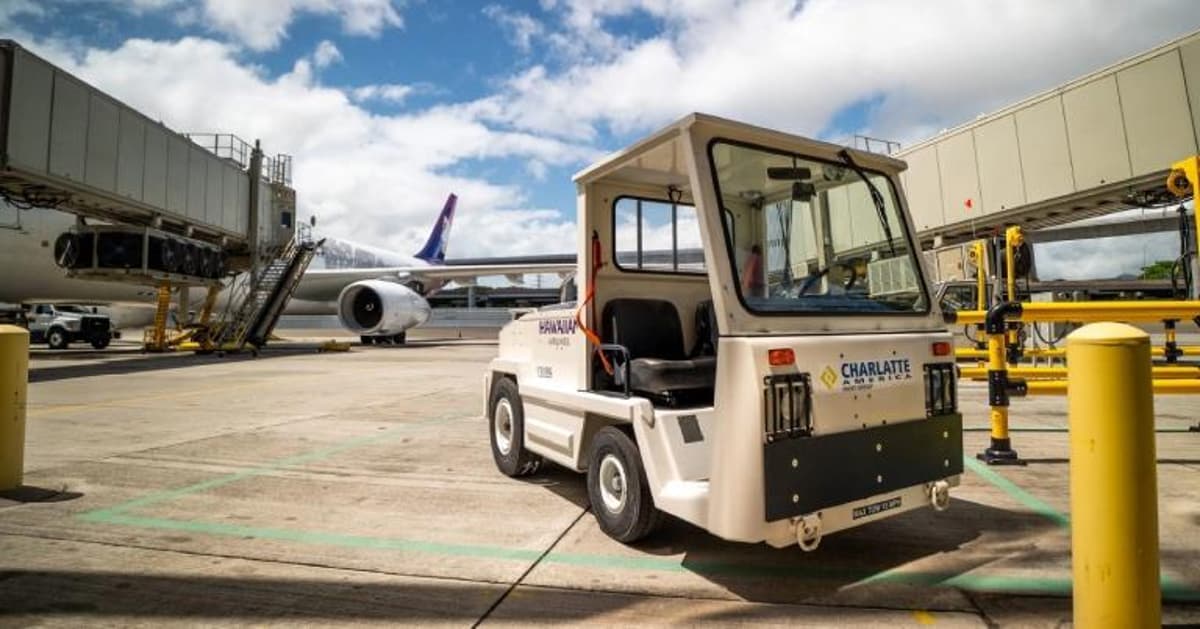
Hawaiian Airlines Accelerates Sustainability Efforts with Electric Ground Support Fleet
Companies Mentioned

Why It Matters
Electrifying GSE reduces operating costs and carbon emissions, positioning Hawaiian Airlines as a sustainability leader and advancing Hawaii’s broader clean‑energy airport agenda.
Key Takeaways
- •116 diesel/propane GSE replaced by electric units at Honolulu
- •Electric fleet now 73% of Hawaiian’s HNL ground equipment
- •30 charging stations (60 ports) installed; four more by Q4 2026
- •Noise and maintenance costs expected to drop significantly
- •Alaska Air Group’s overall electric GSE share reaches 42%
Pulse Analysis
The airline industry is accelerating its transition to zero‑emission operations, and Hawaiian Airlines has taken a visible step by electrifying its ground support equipment (GSE) at Honolulu International Airport. Replacing 116 diesel‑ and propane‑powered tractors, belt loaders and push‑back tugs with lithium‑battery models, the carrier now runs 73 % of its HNL GSE fleet on electricity. This shift eliminates direct fossil fuel consumption, curtails greenhouse‑gas emissions, and aligns with the broader sustainability commitments of the Alaska Air Group, which already reports that 42 % of its total GSE inventory is electric.
The operational upside is equally compelling. Electric GSE produces far less noise, improving the working environment for the hundreds of ramp crew who handle more than 8,500 bags and 180 daily flights. Maintenance intervals are longer and parts wear is reduced, promising lower lifecycle costs. Critical to the rollout, the Hawai‘i Department of Transportation installed 30 charging stations—providing 60 ports—across the airport, with an additional four stations slated for Q4 2026. The partnership grants Hawaiian and other airlines two years of free charging, supporting the state’s $7 billion airport modernization plan and its clean‑energy targets.
Looking ahead, Hawaiian’s electrification program could serve as a blueprint for other island hubs where short‑haul flights dominate and fuel logistics are costly. As the charging network expands to Maui, Kona and Lihue, the airline can further increase its electric GSE share, driving down operating expenses and reinforcing its brand as an eco‑forward carrier. For investors and industry observers, the move signals that airlines are willing to invest capital upfront to reap long‑term environmental and financial returns, a trend likely to accelerate as regulators tighten emissions standards and passengers demand greener travel options.
Hawaiian Airlines accelerates sustainability efforts with electric ground support fleet
Comments
Want to join the conversation?
Loading comments...