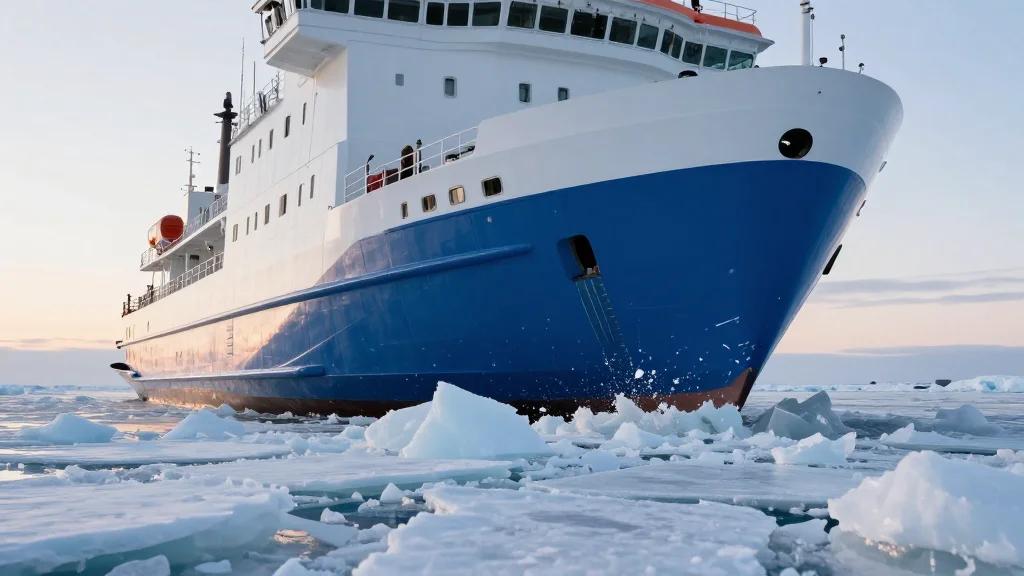
HD Hyundai Heavy Industries Lands $349 M Swedish Icebreaker Contract, Korea’s First Overseas Order

Companies Mentioned
Why It Matters
The award marks a watershed moment for South Korea’s shipbuilding sector, traditionally dominated by bulk carriers and container ships. By breaking into the specialized ice‑breaker market, HD Hyundai demonstrates that Korean engineering can meet the stringent safety, durability, and environmental standards required for polar operations. For Sweden, the new vessel will safeguard a critical supply chain that moves nine‑tenths of its trade by sea, ensuring year‑round access to ports in the Baltic Sea. Globally, the contract reflects a broader shift toward Arctic commerce and the need for modern, energy‑efficient ice‑breakers. As climate change opens new shipping lanes, nations and private operators will increasingly compete for vessels that can operate safely in harsh conditions while meeting tighter emissions targets. Hyundai’s success could spur other Asian shipyards to pursue similar high‑tech contracts, reshaping the competitive landscape of specialized maritime construction.
Key Takeaways
- •HD Hyundai Heavy Industries signed a $348.9 million icebreaker contract with Sweden, the first overseas ice‑breaker order for a Korean shipbuilder.
- •The vessel will be 126 m long, 15,000 tons displacement, and meet Polar Class 4 standards, capable of breaking 1‑1.2 m thick ice.
- •Swedish government will fund the purchase with a 4.1 billion‑kronor ($444 million) injection.
- •The icebreaker’s electric propulsion cuts energy consumption by about 40 percent versus older Swedish ice‑breakers.
- •Delivery is slated for 2029, positioning Hyundai for future Arctic and special‑purpose ship contracts.
Pulse Analysis
HD Hyundai’s win is less about a single contract than about a strategic re‑orientation of Korean shipbuilding. For decades, Korean yards have competed on volume and price in the bulk carrier and container markets, where profit margins are thin and competition is fierce. The ice‑breaker segment, by contrast, is low‑volume but high‑margin, demanding advanced engineering, rigorous certification, and long lead times. By leveraging the integration of HD Hyundai Heavy Industries and its subsidiary HD Hyundai Mipo, the company can offer a bundled package of design, construction, and after‑sales support that rivals the entrenched Finnish and Norwegian players.
The timing aligns with geopolitical shifts in the Arctic. Melting sea ice is unlocking new trade routes, but also prompting governments to invest heavily in sovereign ice‑breaking capabilities to secure resource access and national security. The United States’ $9 billion ice‑breaker program and the ICE Pact illustrate a surge in public funding that could create a pipeline of orders for capable builders. Hyundai’s entry into this arena could diversify its order book, reduce exposure to cyclical bulk‑carrier demand, and improve earnings stability.
However, success will depend on execution. The contract’s performance metrics—delivery schedule, energy efficiency, and ice‑breaking capability—will be scrutinized by both the Swedish client and potential future customers. Any delay or shortfall could reinforce the perception that Asian yards lack the niche expertise of their European counterparts. Conversely, a flawless delivery could catalyze a wave of Asian bids for other specialized vessels, from offshore support ships to next‑generation research vessels, reshaping the global supply chain for high‑tech maritime assets.
HD Hyundai Heavy Industries lands $349 M Swedish icebreaker contract, Korea’s first overseas order
Comments
Want to join the conversation?
Loading comments...