Heavy Rains Flood Kansas City Edge, Shutting Key Roads and Halting Freight

Why It Matters
The Blue Summit flooding illustrates a broader vulnerability in American transportation networks: when jurisdictional boundaries intersect, critical infrastructure can fall through the cracks. Repeated road closures not only cripple local commerce but also disrupt regional freight corridors that rely on seamless highway access. As climate change intensifies storm frequency, municipalities and state agencies must develop joint‑ownership models for drainage and road maintenance to prevent similar supply‑chain bottlenecks. For shippers and logistics firms, the incident serves as a reminder to diversify routing options and build contingency plans for weather‑related disruptions. The $150,000 loss reported by a single cold‑storage operator is a microcosm of potential larger economic impacts if key arterial roads across the Midwest become repeatedly impassable. Coordinated investment in resilient storm‑water infrastructure could safeguard billions of dollars in freight value and keep commuter traffic flowing during extreme weather events.
Key Takeaways
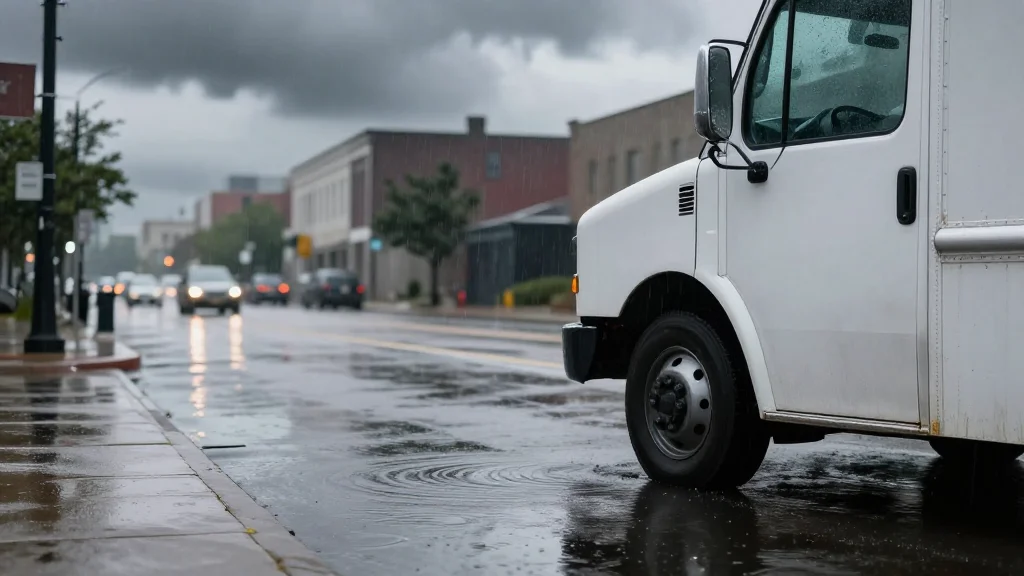
- •Heavy rain on June 4 flooded East 23rd Street Trafficway and Television Place in Blue Summit, prompting MoDOT to close the intersection.
- •Cold‑storage operator Kansas City Cold Storage reported a $150,000 loss from the April 27 flood.
- •Gas‑station owner Khurram “JJ” Jawed warned repeated floods could force closure of his 15‑year‑old business.
- •Jackson County Legislator Manny Abarca and Blue Summit Association chair Tracie Rice blamed jurisdictional ambiguity for inaction.
- •Local merchants and truck drivers faced safety hazards and supply‑chain delays, highlighting the need for coordinated drainage upgrades.
Pulse Analysis
The Kansas City flash‑flood episode is a textbook case of how fragmented governance can magnify climate risk for transportation assets. Historically, metropolitan areas have relied on a single agency—usually the city—to own and maintain storm‑water systems. In the Blue Summit corridor, however, the patchwork of city, county and state responsibilities created a vacuum that left critical roadways vulnerable. This structural weakness is now being exposed by more frequent, high‑intensity precipitation events linked to a warming climate.
From a logistics perspective, the incident underscores the hidden cost of “last‑mile” bottlenecks. While major interstates are often the focus of resilience planning, the smaller arterial links that feed them can become chokepoints when they fail. The $150,000 hit to a single cold‑storage facility is likely a lower‑bound estimate of the total economic fallout, considering delayed shipments, spoilage and the ripple effect on downstream distributors. Companies that depend on just‑in‑time delivery models will need to reassess risk exposure and perhaps invest in alternative routing or on‑site water‑mitigation measures.
Looking ahead, the pressure is on Kansas City, Jackson County and MoDOT to move beyond reactive road closures toward a proactive, shared‑funding model for drainage infrastructure. A joint‑task force could pool tax revenues, state grants and possibly federal climate‑resilience funds to design a unified storm‑water network. Such collaboration would not only protect local businesses but also preserve the reliability of a key freight corridor that serves the broader Midwest economy. Failure to act could see more frequent shutdowns, higher insurance premiums for commercial operators and a gradual erosion of confidence in the region’s transportation reliability.
Heavy Rains Flood Kansas City Edge, Shutting Key Roads and Halting Freight
Comments
Want to join the conversation?
Loading comments...