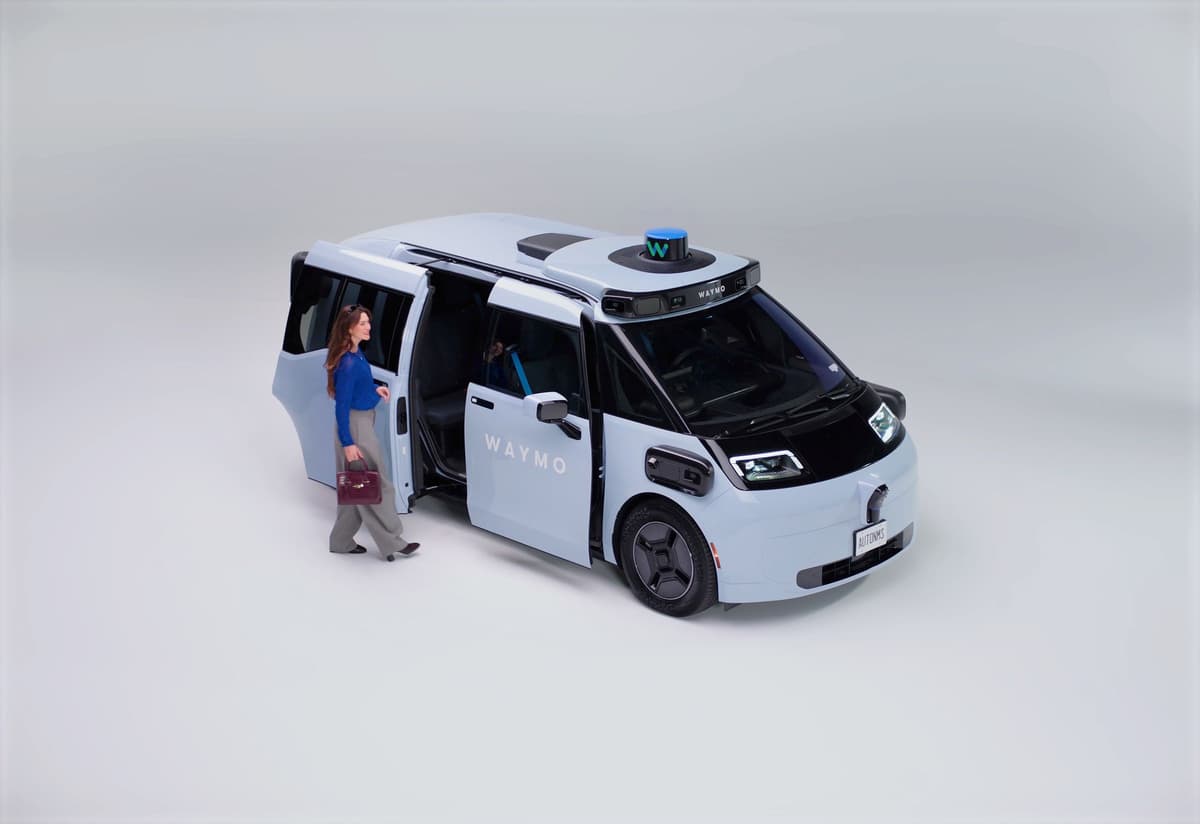
Here Comes Ojai, Waymo’s New Chinese-Made Robotaxi
Companies Mentioned
Why It Matters
Introducing a Chinese‑manufactured autonomous vehicle expands Waymo’s supply chain options and accelerates its public‑facing rollout, pressuring rivals to scale faster. Free rides lower adoption barriers, giving Waymo valuable real‑world data to refine its technology.
Key Takeaways
- •Waymo's Ojai robotaxi built by Chinese manufacturer BYD
- •Free rides offered during initial public launch
- •Deployments start in Los Angeles, San Francisco, Phoenix
- •Sensors and steering wheel coexist in driverless design
Pulse Analysis
Waymo’s Ojai robotaxi marks a notable shift in the autonomous‑vehicle supply chain, as the pale‑blue minivans are assembled by BYD in China. By sourcing chassis and battery systems from an established electric‑vehicle maker, Waymo reduces production costs and shortens time‑to‑market, a strategic move that could reshape the competitive landscape where domestic manufacturers have traditionally dominated. The partnership also signals growing confidence in cross‑border collaborations for high‑tech mobility solutions, despite lingering geopolitical tensions.
The rollout targets three of the United States’ most congested metros—Los Angeles, San Francisco, and Phoenix—offering free rides through the Waymo app. This promotional strategy serves a dual purpose: it lowers the barrier for first‑time users to experience driverless travel and generates a wealth of operational data across diverse traffic conditions. Competitors such as Cruise and Zoox will feel pressure to accelerate their own public pilots, while municipalities watch closely for safety outcomes that could influence future regulatory frameworks.
Regulators in California and Arizona are closely monitoring the Ojai deployment, especially given the vehicle’s hybrid design that retains a steering wheel while operating autonomously. The mixed‑mode approach may ease public concerns, providing a tangible fallback if the system encounters edge cases. As Waymo gathers performance metrics, the company is positioned to refine its perception‑learning algorithms, potentially expanding free‑ride zones and eventually transitioning to a paid model that could reshape urban transportation economics.
Here Comes Ojai, Waymo’s New Chinese-Made Robotaxi
Comments
Want to join the conversation?
Loading comments...