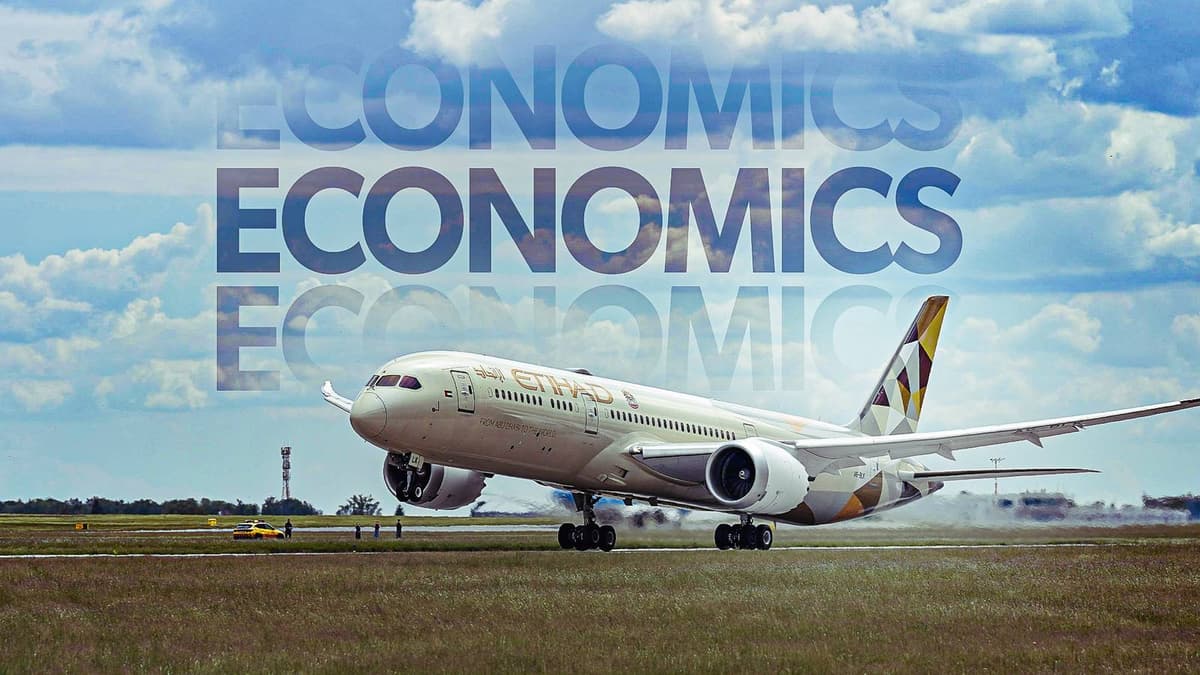
Here's How The Boeing 787 Dreamliner Permanently Rewrote Long-Haul Economics
Companies Mentioned

Why It Matters
Airlines gain cost‑effective capacity on routes previously uneconomical, driving network expansion and higher margins, while the 787’s legacy sets the efficiency benchmark for the next generation of widebodies.
Key Takeaways
- •787 delivers 25% fuel burn reduction versus previous generation
- •7,565 nm range enables new city‑pair routes on midsize jets
- •Composite fuselage allows 6,000‑ft cabin pressure and higher humidity
- •787‑10’s 426 seats boost capacity on slot‑constrained high‑demand routes
- •777X inherits composite wing tech, targeting efficiency for larger capacity
Pulse Analysis
The 787’s breakthrough came from marrying carbon‑fiber composites with next‑generation turbofan engines, cutting structural weight and improving thermal efficiency. Those advances translate into roughly a quarter less fuel per seat‑mile, a decisive advantage as jet fuel prices fluctuate. Airlines have leveraged the savings to launch thin, long‑haul services that were previously unprofitable, reshaping route maps and reducing reliance on larger, less flexible aircraft like the 777 and A350.
Beyond economics, the Dreamliner redefined passenger experience. By pressurizing the cabin to the equivalent of 6,000 feet and increasing humidity, travelers report less fatigue on ultra‑long flights. Larger, electronically dimmable windows and LED lighting that mimics natural day‑night cycles further improve comfort, giving carriers a marketable edge in premium cabins. Operationally, the aircraft’s modest size and runway performance allow service to secondary airports, expanding network reach without demanding extensive infrastructure upgrades.
The 787’s influence extends to Boeing’s next flagship, the 777X, which inherits composite wing technology and a focus on fuel efficiency despite its larger footprint. As airlines grapple with slot constraints at hub airports, the high‑capacity 787‑10 offers a pragmatic solution, delivering up to 426 seats while maintaining the Dreamliner’s per‑seat cost advantage. This trend signals a broader industry shift: airlines will prioritize flexible, efficient twins that can serve both thin and high‑demand markets, shaping fleet strategies for the decade ahead.
Here's How The Boeing 787 Dreamliner Permanently Rewrote Long-Haul Economics
Comments
Want to join the conversation?
Loading comments...