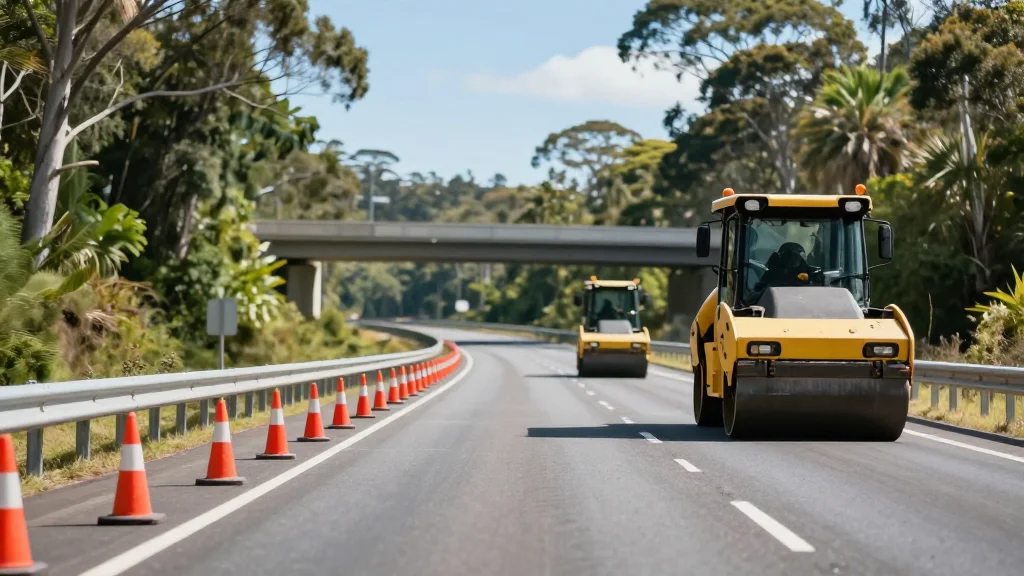
Highway Safety Works Ramp up with New Contracts
Why It Matters
Upgrading the Bruce Highway will dramatically reduce accidents and improve logistics efficiency, bolstering regional economies and national supply chains. The initiative also demonstrates a scalable model for high‑impact infrastructure investment.
Key Takeaways
- •$9 billion safety program adds 22 new contracts.
- •Federal government funds 80% of Bruce Highway upgrades.
- •Over 100 km centre line treatments and 50 km pavement strengthening.
- •New overtaking lanes, bridge upgrades, and road widening planned.
- •Dedicated panels accelerate design and construction procurement.
Pulse Analysis
The Bruce Highway, stretching over 1,600 kilometres along Queensland’s east coast, is a critical freight corridor and lifeline for regional communities. Decades of heavy traffic and challenging terrain have generated a troubling safety record, prompting both federal and state governments to launch the $9 billion Bruce Highway Targeted Safety Program. By focusing on high‑risk segments between Gympie and Cairns, the initiative aims to cut crash rates and improve travel reliability for motorists and freight operators alike. Recent crash statistics show a 15% higher fatality rate than the national average, underscoring the urgency of intervention.
The latest tranche releases 22 contracts—five for construction and 17 for design—under a streamlined procurement framework. Dedicated design and construction panels were created to accelerate approvals, ensuring projects such as 100 km of wide centre‑line treatments, 50 km of pavement strengthening, new overtaking lanes, bridge upgrades, and road widening progress swiftly. The contracts also embed climate‑resilient design standards, ensuring that upgraded sections can withstand extreme weather events increasingly common in northern Queensland. With the Australian Government covering 80 percent of costs, the funding model reduces state exposure while delivering tangible infrastructure upgrades across priority sections.
Stakeholders anticipate measurable safety gains, reduced travel times, and lower vehicle operating costs once the works are completed. For freight operators, smoother pavement and additional overtaking lanes translate into more predictable schedules, bolstering Queensland’s export competitiveness. Moreover, the program signals a broader governmental commitment to resilient regional transport networks, setting a template for future infrastructure investments across Australia’s vast hinterland. Local communities stand to benefit from improved access to health, education, and tourism services, while the construction phase will generate thousands of jobs across the region.
Highway safety works ramp up with new contracts
Comments
Want to join the conversation?
Loading comments...