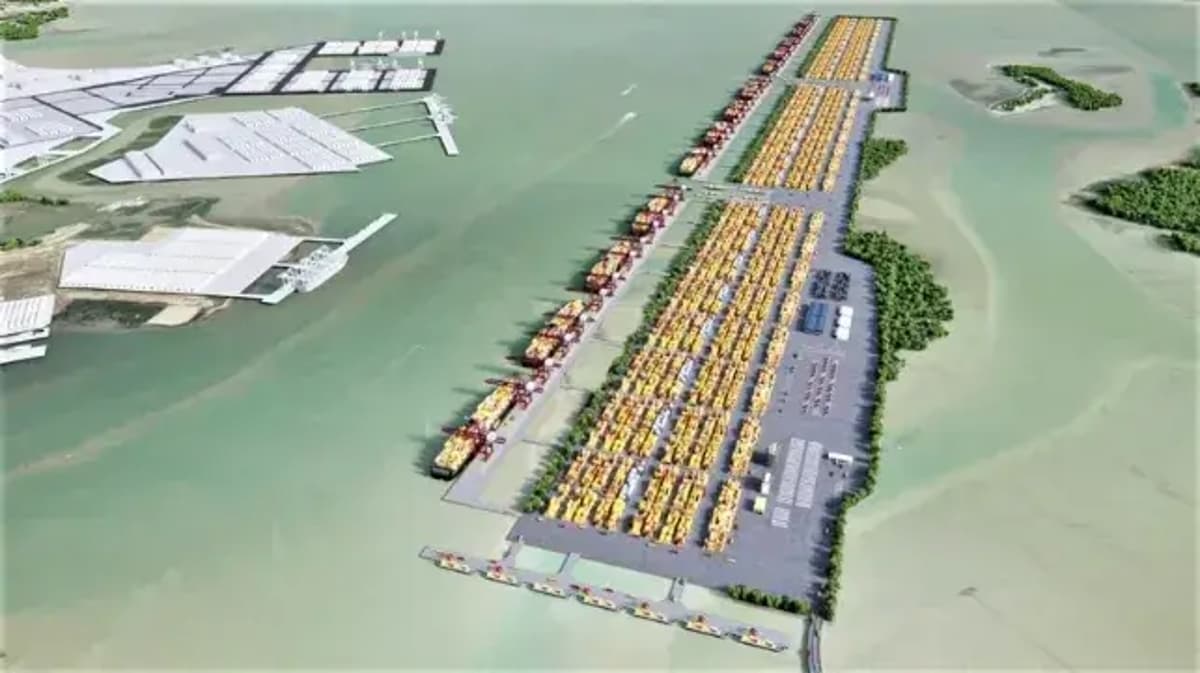
Ho Chi Minh City Approves $5B MSC Container Terminal
Why It Matters
The project elevates Ho Chi Minh City toward becoming a global maritime hub, deepening MSC’s footprint and attracting further foreign investment in Vietnam’s logistics ecosystem.
Key Takeaways
- •MSC TIL leads 49% consortium for $4.9B Can Gio port.
- •Initial capacity 4.8M TEU by 2030, 16.9M TEU by 2047.
- •Project adds 13 berths, 7.5km quay on 570‑hectare island.
- •Complements $1.95B Cai Mep Ha expansion, boosting capacity 10.8M TEU.
- •Positions Ho Chi Minh City as a major global transshipment hub.
Pulse Analysis
Vietnam has been courting major carriers to transform its coastline into a world‑class logistics corridor, and the recent approval of the Can Gio International terminal marks the most ambitious step yet. Led by MSC’s Terminal Investment Limited, the $4.9 billion joint venture brings together the world’s largest ocean carrier with state‑owned Vietnam Maritime Corporation and Saigon Port. By securing a 49 % stake, MSC deepens its foothold in a market that already moves over one million TEU annually, signaling confidence in Vietnam’s regulatory reforms and growth trajectory.
The Can Gio project will occupy 570 hectares on the offshore Go Con Sho islet, delivering up to four berths capable of handling 250,000‑ton vessels in its first phase. Capacity is slated at 4.8 million TEU by 2030 and will expand to 16.9 million TEU by 2047, supported by a total of 13 berths and 7.5 km of quay. When combined with the $1.95 billion Cai Mep Ha expansion, Ho Chi Minh City’s port system will add roughly 10.8 million TEU of annual handling capability, reshaping regional cargo flows.
Beyond the infrastructure, the terminal gives MSC a strategic gateway to Southeast Asian trade lanes, allowing it to capture higher value‑added services such as customs clearance and inland distribution. For investors, the consortium’s composition underscores Vietnam’s preference for public‑private partnerships that blend foreign expertise with local capital, a model that could accelerate future megaprojects. However, the venture must navigate challenges including dredging costs, labor shortages, and competition from neighboring ports in Singapore and Thailand. If these hurdles are managed, Can Gio could cement Ho Chi Minh City’s role as a pivotal transshipment hub for the next generation of global supply chains.
Ho Chi Minh City Approves $5B MSC Container Terminal
Comments
Want to join the conversation?
Loading comments...