Companies Mentioned
Why It Matters
Unexpected airbag deployment poses a direct safety hazard and exposes Honda to regulatory scrutiny and potential liability, while eroding consumer trust in vehicle safety systems. The recall also underscores the importance of robust software validation in modern automotive safety architectures.
Key Takeaways
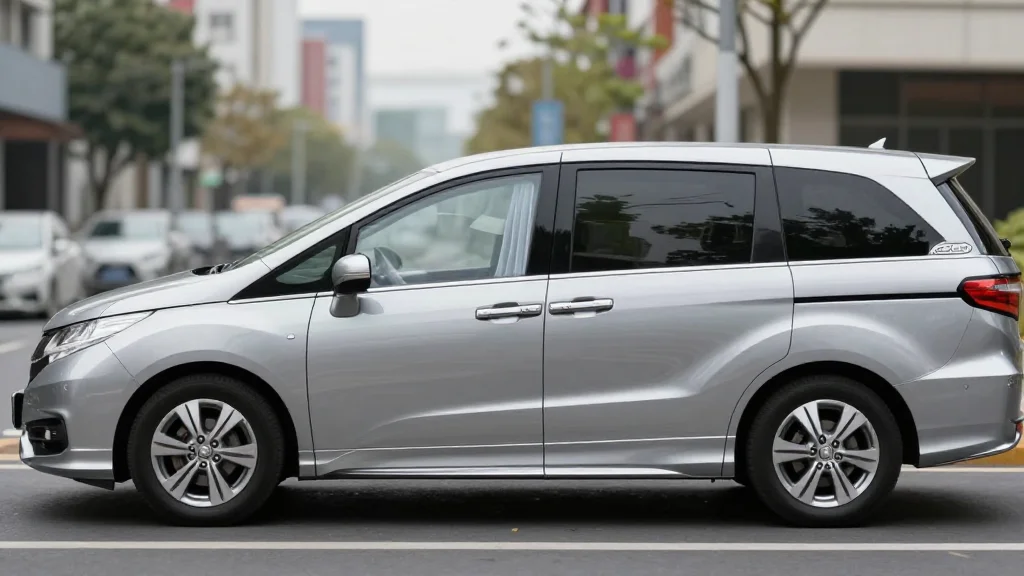
- •Honda recalls 440,830 Odyssey minivans (2018‑2022) for airbag issue.
- •Curtain airbags may deploy over potholes, speed bumps, debris.
- •Fault stems from software misreading side‑impact signals in SRS ECU.
- •130 warranty claims and 25 injuries reported to Honda.
- •Dealers will re‑program or replace SRS ECU to fix deployment logic.
Pulse Analysis
The recent Honda recall highlights a growing challenge in the automotive industry: software‑driven safety components can fail in unexpected ways. In the Odyssey minivan, the SRS ECU’s logic erroneously interprets normal road vibrations as side‑impact forces, triggering the curtain airbags for passengers in the second and third rows. This type of defect is particularly insidious because it does not stem from a physical component failure but from code that governs critical safety functions. As vehicles become increasingly software‑centric, manufacturers must adopt more rigorous validation and over‑the‑air update capabilities to mitigate such risks.
Regulators are closely monitoring the situation, with the NHTSA’s preliminary evaluation prompting Honda’s decision to act after four years of internal investigation. The recall’s scale—over 440,000 units—combined with 25 documented injuries, amplifies the potential for class‑action lawsuits and could influence future safety standards for airbag control software. Honda’s remediation plan, which involves re‑programming or replacing the SRS ECU, aligns with industry best practices for addressing firmware flaws, but the delay in identification raises questions about the effectiveness of existing diagnostic tools and reporting mechanisms.
For consumers, the recall serves as a reminder to stay vigilant about service bulletins and to prioritize dealer‑authorized repairs, especially for safety‑critical systems. The broader market impact may be modest in the short term, yet the incident adds to a string of recent recalls—from Hyundai seatbelt anchors to Ford’s extensive vehicle pull‑backs—potentially pressuring automakers to invest more heavily in software safety assurance. As the industry moves toward autonomous driving, ensuring the reliability of electronic safety controls will be paramount to maintaining public confidence and meeting evolving regulatory expectations.
Honda Recalls 440,000 Vehicles For Faulty Airbags
Comments
Want to join the conversation?
Loading comments...