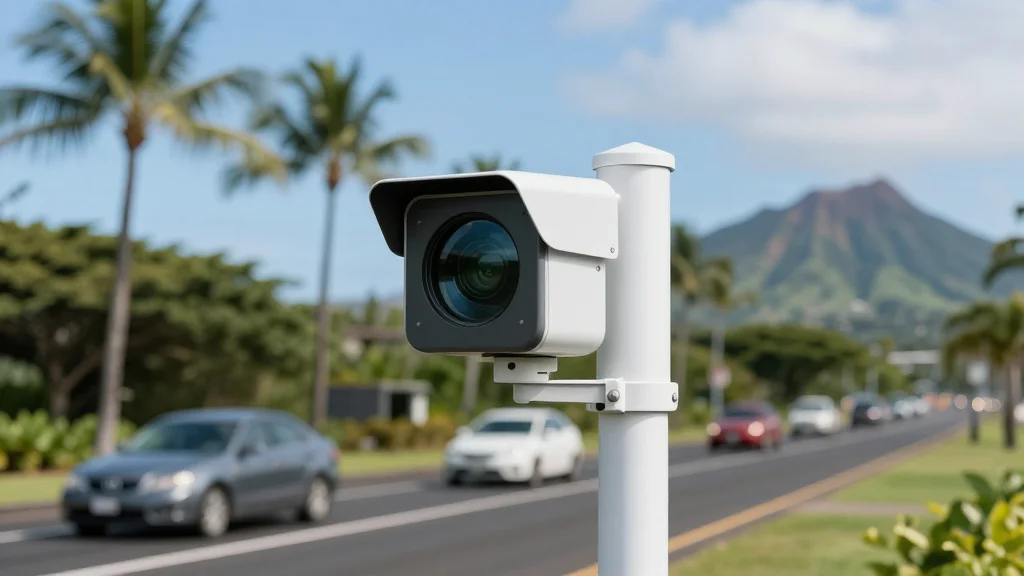
Honolulu Speed-Camera Trial Flags 500,000 Speeders but Issues Only 17 Tickets

Why It Matters
The Honolulu speed‑camera trial illustrates the tension between automated enforcement’s promise of safety and revenue, and the practical limits of judicial and administrative capacity. By restricting tickets to the most dangerous drivers, HDOT aims to balance public safety with system sustainability, but the slow ticket flow threatens the program’s self‑funding premise. The pending $6.6 million state appropriation and the $160 million Verra contract signal a long‑term commitment to automated enforcement, which could set a precedent for other U.S. jurisdictions facing similar capacity constraints. If the expanded camera network achieves its projected 60,000‑plus citations per month, Hawaii could dramatically reduce reliance on police‑issued tickets, lower enforcement costs, and generate a steady revenue stream for transportation infrastructure. Conversely, failure to scale processing capabilities could stall the program, erode public confidence, and force a reevaluation of automated traffic‑law enforcement nationwide.
Key Takeaways
- •500,000+ speeders recorded in a five‑month Honolulu camera trial
- •Only 17 speeding tickets issued in the first four months, two later dismissed
- •HDOT seeks $6.6 million state funding for upgrades and court‑system integration
- •A 10‑year, $160 million contract awarded to Verra Mobility to expand to 177 cameras
- •Current ticket threshold >20 mph over limit; state law allows tickets at 11 mph
Pulse Analysis
Honolulu’s cautious rollout reflects a broader industry lesson: technology alone cannot solve enforcement bottlenecks. The decision to limit citations to the most egregious offenders is a pragmatic response to a judiciary that warned of system overload. While this protects court operations, it also delays the revenue upside that justified the $160 million Verra contract. Other municipalities considering automated speed enforcement should anticipate similar capacity gaps and budget for both hardware and the often‑overlooked back‑office infrastructure.
Historically, automated traffic‑law programs have struggled with public perception and legal challenges. By emphasizing safety—targeting drivers more than 20 mph over the limit—HDOT hopes to mitigate backlash, but the low ticket count may fuel criticism that the system is a revenue‑driven gimmick rather than a safety tool. The upcoming expansion will test whether the balance between safety, revenue, and administrative feasibility can be achieved at scale.
Looking ahead, the success of Hawaii’s program will likely hinge on two factors: the speed at which the courts can ingest and process citations, and the political will to fund the necessary upgrades. If both align, Honolulu could become a model for island‑wide, data‑driven traffic management, potentially influencing federal transportation policy and encouraging other states to adopt similar automated enforcement frameworks.
Honolulu Speed-Camera Trial Flags 500,000 Speeders but Issues Only 17 Tickets
Comments
Want to join the conversation?
Loading comments...