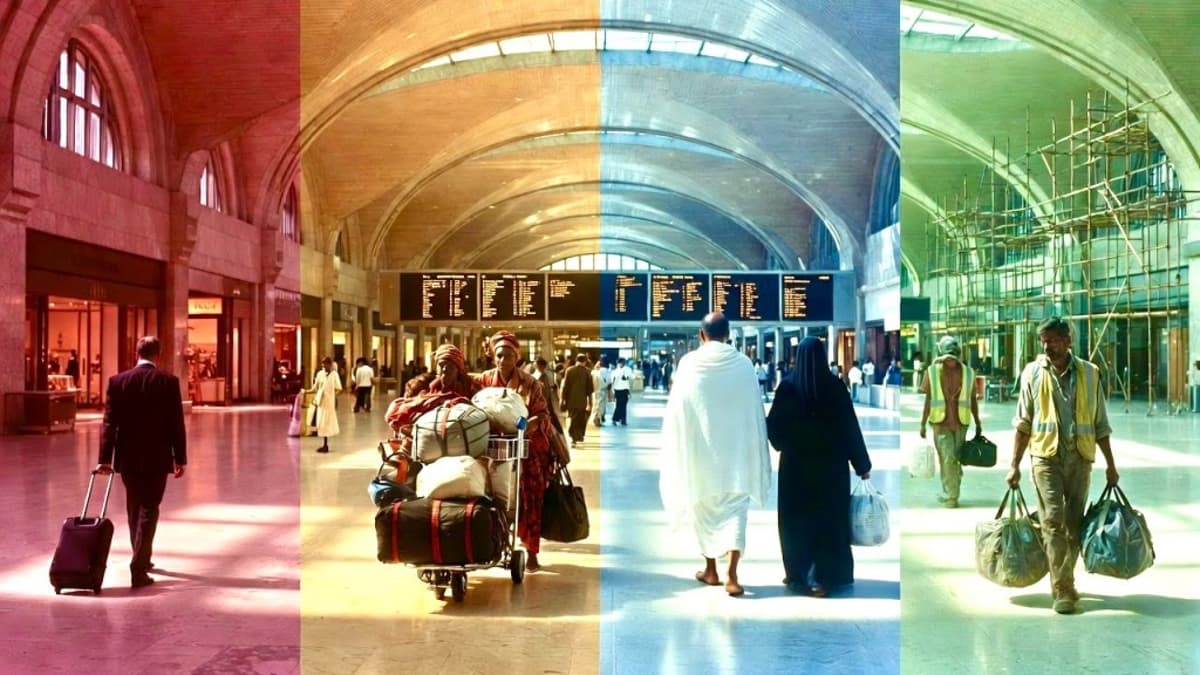
How Curation and Scale Battle for Dominance Inside the World’s Busiest Airport Hubs
Why It Matters
Airport design in the Gulf is a strategic lever for national branding and economic diversification, shaping airline routing, passenger flows, and global competitiveness.
Key Takeaways
- •Doha’s terminal prioritizes cultural curation over sheer passenger volume
- •Dubai expands commercial density, leveraging scale for airline hub dominance
- •Abu Dhabi builds institutional gravity through long‑term airline partnerships
- •Saudi Arabia’s mega‑projects risk brand dilution without clear design narrative
- •Sovereign conversion subsidy turns national wealth into global aviation branding
Pulse Analysis
Gulf hub airports have become more than transit points; they are state‑crafted symbols that convert sovereign wealth into aviation influence. Analysts label this the "sovereign conversion subsidy," where governments invest billions to build capacity, capture routing share, and forge a recognizable brand. Doha’s Hamad International showcases curated art installations, luxury lounges, and a layout that guides travelers through Qatari culture, reinforcing a soft‑power narrative. In contrast, Dubai’s Dubai International pursues relentless scale, packing retail, hospitality, and airline facilities into a massive footprint that maximizes revenue per square foot and cements its status as a global connector. Abu Dhabi’s Abu Dhabi International leans on institutional gravity, forging deep partnerships with carriers like Etihad to create a stable, long‑term hub ecosystem.
These divergent design philosophies reflect each nation’s economic blueprint. Qatar bets on high‑touch experiences to attract premium passengers and differentiate itself. The United Arab Emirates leverages volume and commercial density to diversify revenue streams beyond aviation. The United Arab Emirates’ emphasis on institutional gravity offers a middle path, balancing scale with strategic airline alliances. Collectively, the hubs have reshaped global traffic patterns, pulling Europe, Asia, and Africa through the Gulf corridor and prompting airlines to allocate capacity based on the hubs’ brand appeal.
Saudi Arabia now stands at a crossroads. Projects such as the NEOM Airport and the expanded Riyadh hub promise unprecedented capacity, yet risk “terminal inflation” if they merely replicate Doha or Dubai’s playbooks without a distinct identity. A clear design narrative—whether cultural, commercial, or partnership‑focused—will be essential to avoid brand dilution and to capture a meaningful share of future traffic. The success of Saudi’s ventures will signal whether the Gulf’s formula of wealth‑to‑brand can be scaled further or if a new strategic paradigm is required for the next generation of global aviation hubs.
How Curation and Scale Battle for Dominance Inside the World’s Busiest Airport Hubs
Comments
Want to join the conversation?
Loading comments...