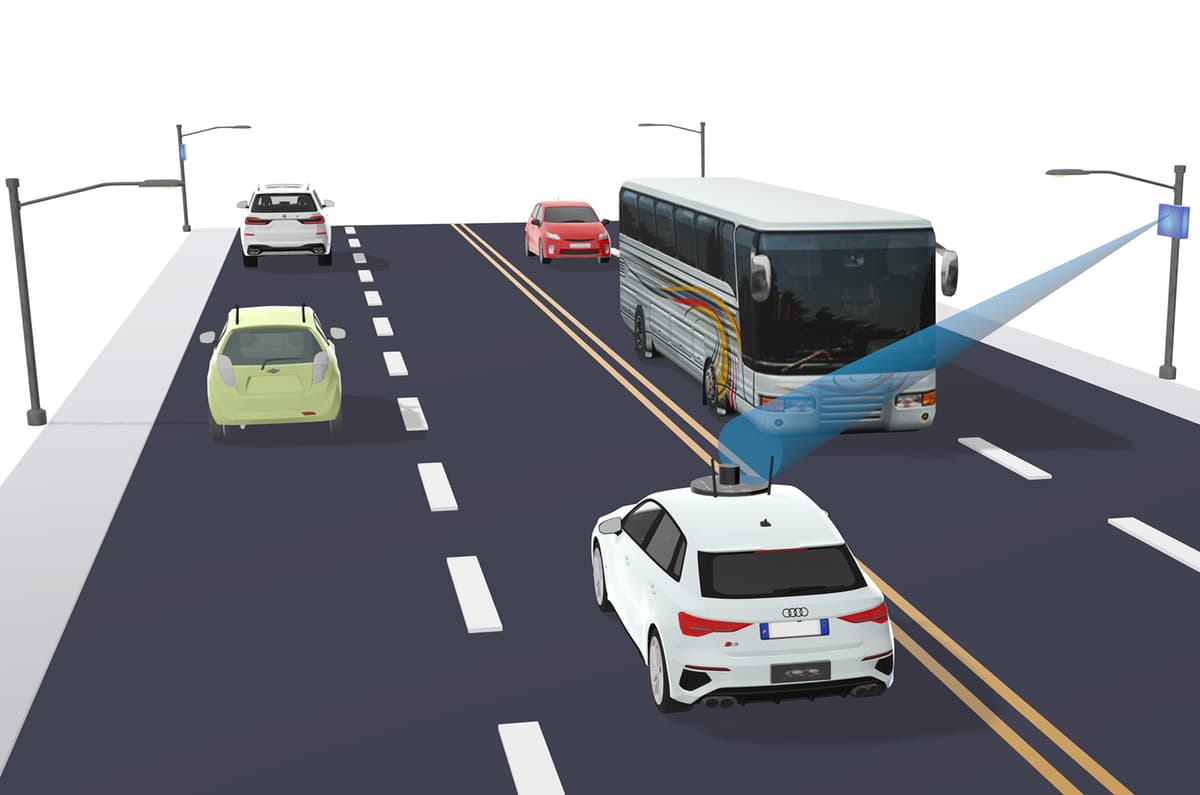
How Heavy Traffic Could Hinder the Autonomous Cars of Tomorrow
Why It Matters
Reliable low‑latency 5G is essential for real‑time sensor data exchange in autonomous driving; any signal loss could delay decision‑making and hinder safety and scalability of driverless fleets.
Key Takeaways
- •Heavy traffic reduces 5G link quality by ~20%
- •11 m antenna height removes most signal blockages
- •Too‑high antennas weaken 5G signal strength
- •Smart placement of units needed for optimal coverage
Pulse Analysis
The rollout of 5G promises the ultra‑low latency and high bandwidth required for vehicle‑to‑everything (V2X) communications, a cornerstone of future autonomous‑vehicle ecosystems. By leveraging a digital‑twin—a real‑time virtual replica of a city street—researchers could model how connected cars stream high‑resolution sensor data to control centres under varying traffic conditions. This approach mirrors industry trends where AI‑driven simulations accelerate infrastructure design, reducing costly field trials while delivering granular insight into network performance.
Results from the study reveal a clear vulnerability: as vehicle density climbs, the primary 5G link can lose up to one‑fifth of its reliability, forcing a fallback to legacy 4G networks that lack the latency needed for split‑second autonomous decisions. However, the experiment also identified a practical mitigation strategy. Positioning roadside radio units at roughly 11 metres—tall enough to clear most vehicle obstructions but not so high as to dilute signal strength—eliminated detectable blockages. Adding more units offered mixed benefits, underscoring the need for coordinated network planning rather than brute‑force deployment.
For automakers, telecom operators, and city planners, these insights translate into actionable design criteria. Antenna height, spacing, and adaptive control algorithms must be calibrated to maintain seamless connectivity even during rush‑hour congestion. As autonomous fleets scale, the cost of signal interruptions could manifest as safety risks or reduced efficiency, making robust 5G architecture a competitive differentiator. Ongoing research that blends AI prediction models with digital‑twin simulations will likely shape the next generation of low‑carbon, intelligent transport networks.
How heavy traffic could hinder the autonomous cars of tomorrow
Comments
Want to join the conversation?
Loading comments...