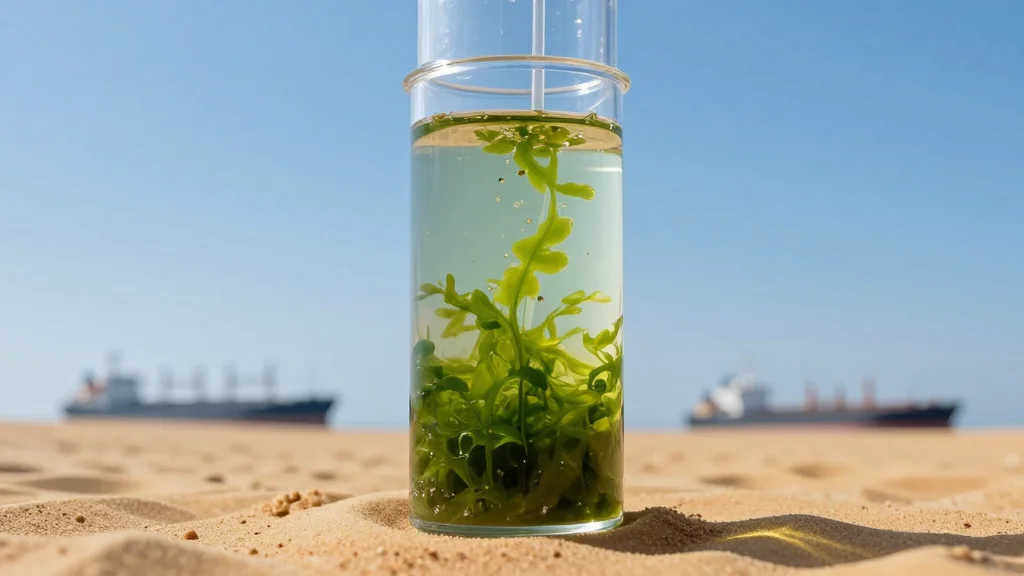
How HutanBio Plans to Decarbonise Heavy Transport by Growing Microalgae in Deserts
Why It Matters
Algal bio‑fuel offers a carbon‑neutral alternative for transport sectors that are difficult to electrify, potentially cutting millions of tonnes of CO₂ annually. Its success could reshape fuel markets and accelerate global decarbonisation targets.
Key Takeaways
- •Algal fuel targets ships, trucks, trains, and aviation
- •Desert photobioreactors use solar heat and recycled water
- •Hydrothermal liquefaction converts algae into drop‑in crude oil
- •Co‑products include animal feed and biodegradable plastics
- •Goal: fuel cost parity with diesel by early 2030s
Pulse Analysis
Heavy‑duty transport remains one of the most stubborn sources of greenhouse‑gas emissions, largely because batteries cannot yet match the energy density required for long‑haul shipping, freight trucking or aviation. Traditional biofuels derived from crops compete with food production and need arable land, limiting scalability. Micro‑algae, by contrast, can photosynthesize up to ten times more carbon per hectare and thrive under intense sunlight, making deserts an untapped reservoir for renewable fuel feedstock. HutanBio’s modular photobioreactors harness this advantage, pairing high solar irradiance with closed‑loop water recycling to grow algae without encroaching on agricultural resources.
The company’s production chain begins with CO₂ capture—either directly from the atmosphere or from nearby industrial emitters—feeding the algae in temperature‑controlled reactors designed to withstand desert extremes. Once harvested, the biomass undergoes hydrothermal liquefaction, a process that transforms wet algae into a crude oil compatible with existing diesel, marine and aviation engines. This drop‑in capability sidesteps the need for new fuel infrastructure, while valuable co‑products such as animal feed and biodegradable plastics create additional revenue streams. Scaling challenges remain, particularly in low‑energy harvesting and continuous flow conversion, but advances in centrifugation and shading technologies are narrowing the efficiency gap.
Economically, algal fuel is presently pricier than conventional diesel, yet the trajectory points toward cost parity by the early 2030s as production scales and carbon pricing mechanisms internalize the climate cost of fossil fuels. Government incentives for low‑carbon fuels and sustainability certifications further improve the business case. HutanBio’s collaborations with shipping lines, European truck fleets, research institutes and solar‑energy firms aim to validate performance, secure long‑term off‑take contracts, and integrate renewable power into the production loop. If the Sahara demonstration plant meets its milestones, the technology could unlock millions of tonnes of CO₂ reductions, offering a pragmatic pathway for sectors where electrification remains out of reach.
How HutanBio plans to decarbonise heavy transport by growing microalgae in deserts
Comments
Want to join the conversation?
Loading comments...