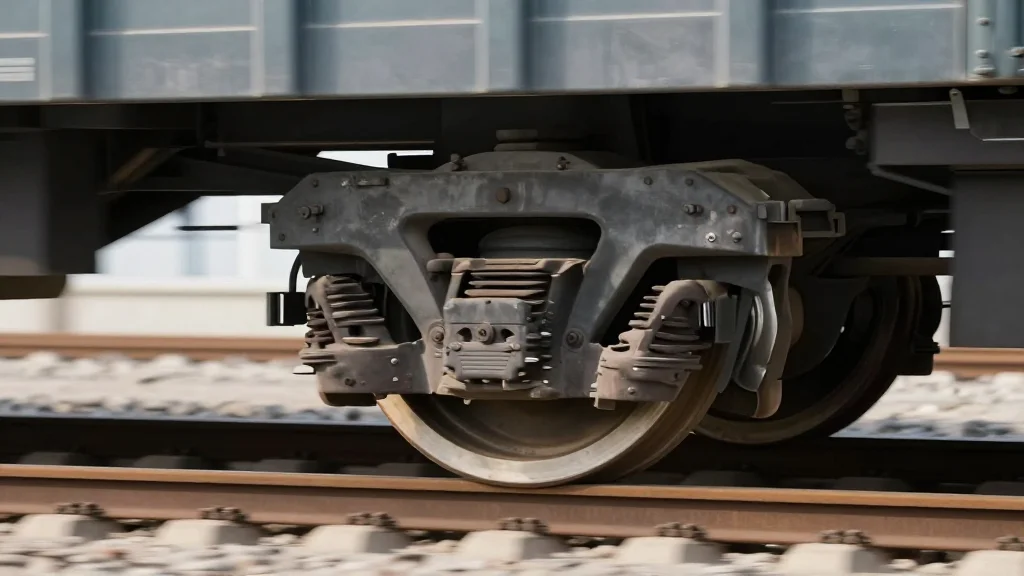
How Wheel/Rail Profiles Affect Hunting Stability
Why It Matters
Understanding profile‑driven hunting helps railroads improve safety, extend equipment life, and optimize maintenance schedules, directly affecting operational costs and reliability.
Key Takeaways
- •Hollow-worn wheels not clearly linked to repeat hunting
- •Flattened rail crowns increase hunting likelihood
- •Greater gage‑shoulder relief reduces repeated hunting
- •No identified wheel‑profile shape factor yet
- •Findings guide profile design and maintenance planning
Pulse Analysis
Hunting—a rapid side‑to‑side oscillation of wheelsets—has long plagued high‑speed rail operations, especially on straight (tangent) track. When a wheel‑rail pair loses lateral stability, the resulting vibrations can damage cargo, wear out components, and in extreme cases trigger derailments. Industry standards have traditionally relied on conicity calculations and extensive field testing, but the growing demand for higher speeds and heavier loads has intensified the need for more precise predictive tools. By isolating the role of wheel and rail geometry, researchers aim to pre‑emptively address instability before it manifests on the network.
MxV Rail’s recent study leveraged the NUCARS® simulation platform to evaluate fourteen real‑world wheel profiles, including the AAR KR standard, against seven distinct rail‑profile templates. Simulations ran a controlled 0.25‑inch lateral perturbation and decelerated trains from 80 mph to 10 mph to pinpoint the critical hunting speed. Results showed that while hollow‑wear on wheels did not consistently predict repeat hunting events, rail crowns with reduced radius—effectively flattening the rail head—significantly increased hunting occurrences. Conversely, profiles featuring more pronounced gage‑shoulder relief demonstrated a lower propensity for repeated instability, highlighting the rail’s crown geometry as a key lever for stability.
The implications for rail operators are immediate. Adjusting grinding practices to preserve or enhance gage‑shoulder relief could reduce hunting incidents without costly wheel replacements. Moreover, the identification of an elusive wheel‑profile shape factor suggests a new frontier for diagnostic algorithms, potentially enabling condition‑based maintenance that targets the most destabilizing geometries. As freight volumes climb and speed targets rise, integrating these findings into design standards and maintenance planning will be essential for maintaining safety margins and minimizing downtime across North America’s rail network.
How Wheel/Rail Profiles Affect Hunting Stability
Comments
Want to join the conversation?
Loading comments...