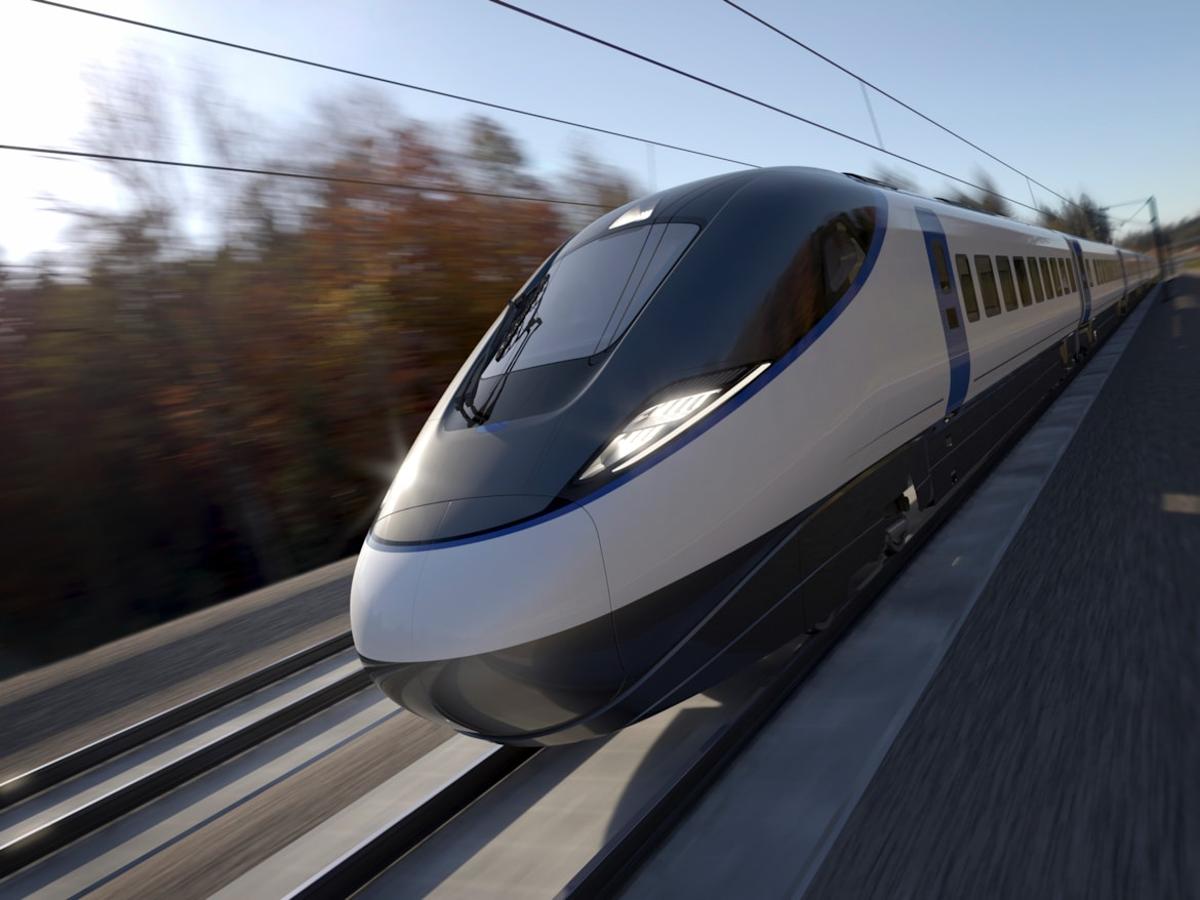
HS2 Costs and Timetable Increased as Government Announces Project Reset
Why It Matters
The cost escalation and timetable shift reshape the UK’s infrastructure agenda, testing the government’s ability to manage mega‑projects while still delivering promised economic growth and connectivity benefits.
Key Takeaways
- •Revised HS2 cost now $111‑$130 billion, up from $41‑$48 billion.
- •Operating speed cut to 200 mph, saving $3.2 billion and a year.
- •First London‑Birmingham service pushed to 2036‑2039, full line 2040‑2043.
- •Over 6,100 contracts awarded, half to SMEs, boosting UK supply chain.
- •Cancellation would cost similar to completion, erasing projected $25‑$52 billion benefits.
Pulse Analysis
The HS2 reset reflects a broader trend of governments re‑evaluating large‑scale infrastructure amid rising construction costs and supply‑chain pressures. By inflating the budget to $111‑$130 billion, the project underscores the challenges of forecasting in an environment of chronic under‑estimation and inflation‑driven spikes. The decision to lower the design speed to 200 mph aligns HS2 with European standards, trims $3.2 billion in expenses, and accelerates the timeline, but it also raises questions about the long‑term capacity and competitiveness of the UK rail network.
Economic analysts see the revised timetable as a double‑edged sword. While the delayed opening pushes revenue generation into the late 2030s, the commitment to award more than 6,100 contracts—half to small and medium‑sized enterprises—injects significant demand into the domestic construction sector. The projected $25‑$52 billion regional economic boost around stations and depots could stimulate urban regeneration, yet the higher upfront cost places additional pressure on the Department for Transport’s spending review cycles. The government’s stance that cancellation would cost as much as completion reinforces the political calculus of preserving sunk investments.
Globally, high‑speed rail projects such as France’s TGV, Spain’s AVE, and Japan’s Shinkansen have demonstrated that speed, reliability, and network integration drive ridership and economic returns. HS2’s alignment with these benchmarks may improve its long‑term viability, but success will hinge on disciplined project management, continued SME participation, and the ability to translate promised connectivity into tangible productivity gains for the UK economy.
HS2 Costs and Timetable Increased as Government Announces Project Reset
Comments
Want to join the conversation?
Loading comments...