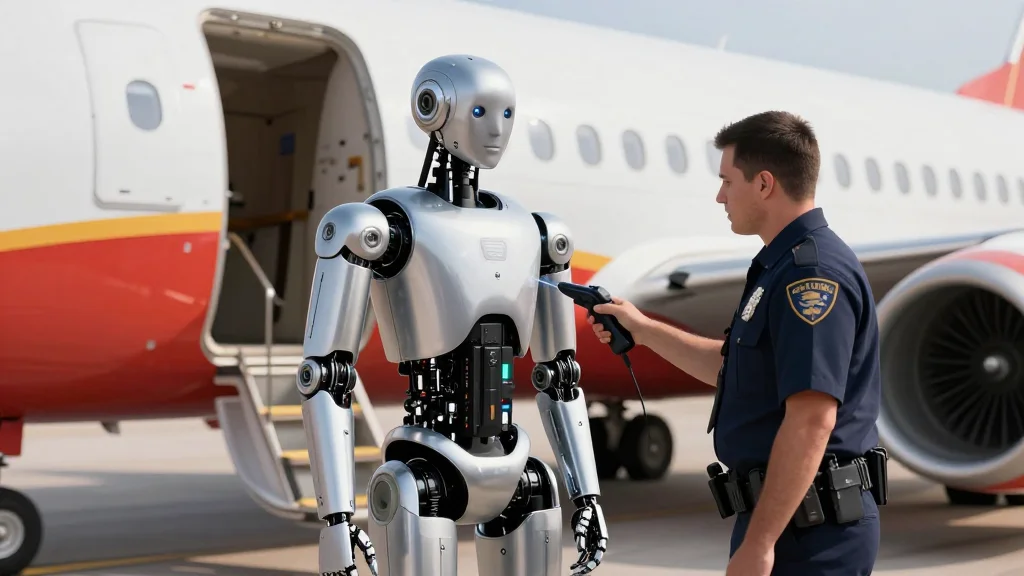
Humanoid Robot Bebop Delays Southwest Flight From Oakland to San Diego over Oversized Battery

Companies Mentioned
Why It Matters
The Bebop delay illustrates how rapid advances in robotics and entertainment technology can clash with entrenched aviation safety standards. As companies like Elite Event Robotics expand the use of humanoid robots for marketing and events, airlines may need to develop new protocols for assessing battery size, weight, and passenger‑seat compatibility. The incident also raises broader questions about how regulators will adapt to a future where autonomous devices become common travelers, potentially reshaping cargo classification and passenger‑service policies. For Southwest and other carriers, the episode is a reminder that operational flexibility must be balanced against strict safety mandates. A single oversized battery can halt a flight, affect crew schedules, and generate negative publicity, prompting airlines to tighten pre‑flight checks for unconventional items and to educate staff on emerging tech.
Key Takeaways
- •Southwest flight from Oakland to San Diego delayed over a humanoid robot's oversized lithium battery
- •Robot Bebop, owned by Elite Event Robotics, weighed 70 lb and was given its own airline seat
- •Southwest statement: battery exceeded maximum allowable size, prompting confiscation
- •Passengers witnessed a brief dance performance at the gate, videos posted on Instagram
- •Elite Event Robotics plans to retrieve the battery in Chicago and resume flights by Sunday
Pulse Analysis
The Bebop incident is a microcosm of a larger trend: the convergence of consumer‑grade robotics with regulated transport ecosystems. Historically, airlines have dealt with oversized cargo, but the novelty here is a device that blurs the line between passenger and cargo. The regulatory framework, largely built around static items like laptops and phones, is now being tested by dynamic, autonomous machines that require power sources beyond the standard 100‑watt‑hour limit.
From a market perspective, the episode could accelerate the development of standardized battery modules for service robots, akin to the aviation industry's push for uniform cargo containers. Companies that pre‑emptively design robots with TSA‑compliant power packs may gain a competitive edge, while those that lag could face operational setbacks and brand risk. Moreover, airlines might explore dedicated "tech‑cargo" compartments, allowing them to transport such devices without compromising passenger seats or safety checks.
Looking ahead, regulators are likely to issue clearer guidance on the transport of autonomous devices, especially as the line between entertainment, logistics, and personal mobility blurs. For Southwest, the incident underscores the importance of staff training on emerging tech and the need for rapid decision‑making protocols that keep flights on schedule without compromising safety. The industry will watch closely how Elite Event Robotics and other rental firms adapt, potentially setting a new norm for robot‑enabled events that span multiple cities.
Humanoid robot Bebop delays Southwest flight from Oakland to San Diego over oversized battery
Comments
Want to join the conversation?
Loading comments...