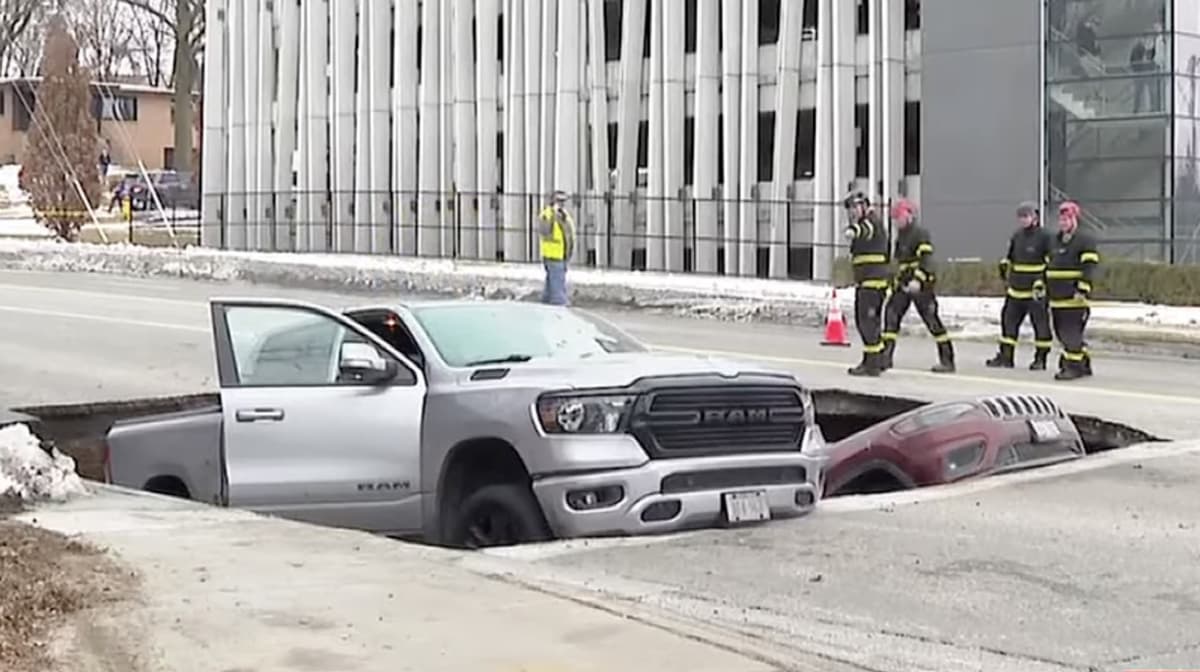
Hungry Omaha Road Gobbles Two Vehicles In Spontaneous Sinkhole
•February 26, 2026
0
Companies Mentioned


Why It Matters
The event underscores the vulnerability of aging urban infrastructure and the potential safety and economic impacts of sudden ground failures. It also raises questions about municipal maintenance practices and emergency response readiness.
Key Takeaways
- •Sinkhole opened under two vehicles at red light
- •Both drivers escaped without injuries
- •Cause remains unclear; water main link disputed
- •Pacific Street closed; repairs may take weeks
- •Incident highlights infrastructure risk in growing city
Pulse Analysis
Sinkholes, though often associated with karst landscapes, have become an increasingly visible urban hazard across the United States. Recent incidents in Cleveland, West Virginia, and now Omaha illustrate how subterranean voids can emerge without warning, endangering motorists and pedestrians alike. Geologists point to a combination of aging utility networks, fluctuating groundwater levels, and soil composition as key contributors. Understanding these factors helps city planners anticipate vulnerable corridors and prioritize preventative inspections before disasters strike.
In Omaha, the Pacific Street collapse has prompted immediate action from municipal authorities. While early statements cited a water‑main break as the trigger, later assessments suggest the break may have been a symptom rather than a cause, highlighting the complexity of diagnosing underground failures. The street closure between 66th and 69th avenues disrupts traffic flow for commuters and local businesses, potentially costing the city thousands in lost productivity each day. Engineers are now deploying ground‑penetrating radar and seismic monitoring to map the affected area, aiming to expedite repairs while preventing further expansion of the void.
Beyond the immediate response, the sinkhole raises broader concerns for insurers, developers, and policymakers. Property and auto insurers must reassess risk models to account for sudden ground loss, while developers may need to incorporate more robust geotechnical surveys into project planning. For municipalities, the incident serves as a reminder to invest in infrastructure resilience, integrating real‑time monitoring of water mains and underground utilities. As climate variability intensifies, cities that proactively address these hidden risks will better protect residents and maintain economic stability.
Hungry Omaha Road Gobbles Two Vehicles In Spontaneous Sinkhole
0
Comments
Want to join the conversation?
Loading comments...