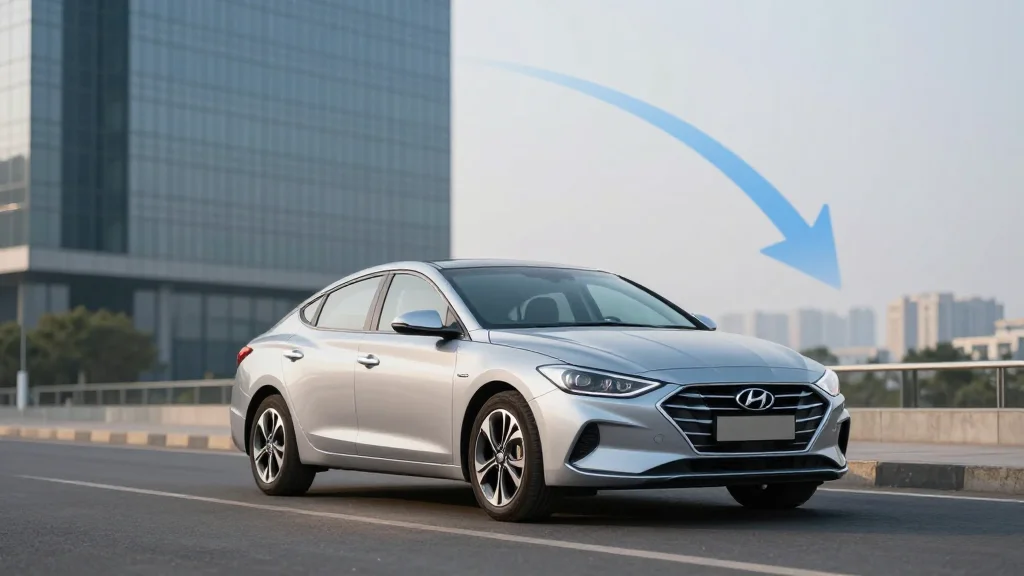
Hyundai India Profit Falls for Second Year as Competition, Costs Weigh
Companies Mentioned
Why It Matters
The profit dip highlights intensifying competition and cost pressures in India's auto sector, while Hyundai's capex signals a strategic push to reclaim market share and offset export headwinds.
Key Takeaways
- •Hyundai India's FY26 net profit fell 4% to ₹5,432 crore (~$654 M).
- •Domestic sales dropped 2.3% to 584,906 units; rank slipped to third.
- •Exports rose 16% to 190,125 cars, boosting revenue 2% to ₹70,763 crore (~$8.5 B).
- •Hyundai announced ₹7,500 crore (~$0.9 B) capex to expand capacity and launch new models.
- •Company targets 8–10% growth; export growth may drop to 8–10% amid war.
Pulse Analysis
India’s passenger‑vehicle market is entering a phase of heightened rivalry, with Maruti Suzuki, Mahindra & Mahindra and Tata Motors tightening the competitive squeeze on legacy players. Hyundai, which has held the second‑largest domestic share since 2009, fell to third place as price wars and aggressive discounting eroded margins. The slowdown in domestic demand, compounded by rising commodity costs, forced the Korean‑owned firm to absorb a 50‑basis‑point margin hit, underscoring the fragility of profit streams in a price‑sensitive market.
The FY26 financials reveal a nuanced picture: while overall revenue grew modestly to ₹70,763 crore (≈$8.5 B), the profit margin slipped to 7.6% after a 4% profit decline. Export performance provided a bright spot, with a 16% jump in shipments to regions outside the Middle East, partially offsetting the domestic slump. However, the ongoing West Asia conflict has throttled Middle‑East exports, prompting Hyundai to diversify toward Latin America and Mexico. The company’s fourth‑quarter results showed a 22% YoY profit drop to ₹1,256 crore, highlighting the acute impact of commodity price inflation on bottom‑line performance.
Looking ahead, Hyundai’s ₹7,500 crore (≈$0.9 B) capex plan aims to boost production capacity and introduce two new models—a conventional internal‑combustion vehicle and an electric car—leveraging recent GST cuts to stimulate demand. Management projects an 8–10% rise in domestic sales, while export growth is expected to moderate to a similar range due to lingering geopolitical risks. By expanding its model portfolio and targeting emerging export markets, Hyundai seeks to restore its number‑two status and improve profitability in a market where consumer sentiment and policy shifts can quickly reshape competitive dynamics.
Hyundai India profit falls for second year as competition, costs weigh
Comments
Want to join the conversation?
Loading comments...