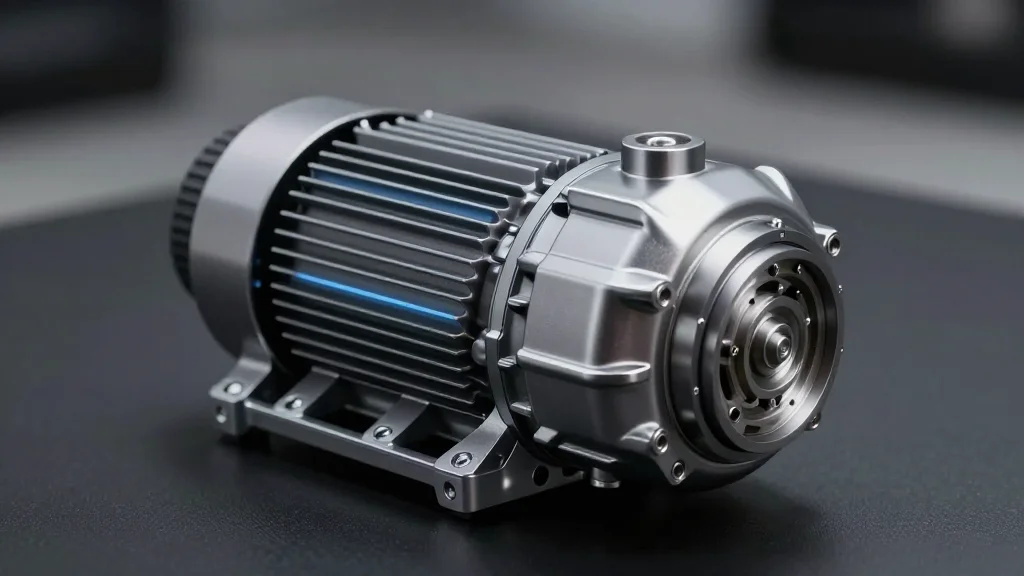
Hyundai’s New Motor Is Smaller, Cheaper, And Ready To Go Into Any EV
Companies Mentioned
Why It Matters
The compact, high‑output design reduces vehicle cost and complexity, accelerating EV adoption while giving Hyundai‑affiliated brands a competitive pricing edge. It also positions Mobis to capture a larger share of the growing EV powertrain market.
Key Takeaways
- •160 kW (215 hp) modular drive integrates motor, inverter, gear.
- •Design reduces volume 20% and boosts specific power 16%.
- •Interchangeable stator, inverter, module cuts costs, speeds production.
- •Supports dual‑motor setups for doubled output.
- •Enables cheaper, faster EV repairs across Hyundai, Kia, Genesis.
Pulse Analysis
Hyundai Mobis’s latest modular electric powertrain marks a shift toward greater integration in EV architecture. By housing the motor, inverter and reduction gear within a single 160‑kilowatt (215‑horsepower) unit, the Korean parts supplier eliminates the need for separate components and external suppliers. This system‑level standardization mirrors a broader industry push for compact, plug‑and‑play solutions that can be dropped into any vehicle platform, from compact city cars to high‑performance sedans. The approach not only simplifies engineering but also accelerates development cycles, giving manufacturers a faster path from prototype to production.
The new drive unit delivers a 16 percent higher specific power output while occupying roughly 20 percent less space than comparable rivals. Such gains stem from an upgraded motor structure, advanced cooling technology and more efficient silicon‑based power semiconductors. Interchangeable stators, inverters and power modules further trim manufacturing costs and enable rapid scaling across multiple models. For OEMs, the ability to pair two of these units—one front, one rear—effectively doubles power without redesigning the drivetrain, offering a flexible route to all‑wheel‑drive performance while keeping vehicle weight in check.
From a market perspective, Mobis’s modular design promises cheaper EVs and lower repair bills for consumers of Hyundai, Kia and Genesis models. Faster, standardized part replacement could reduce service downtime and labor expenses, enhancing total‑ownership value. The in‑house development also opens a new revenue stream for Mobis, positioning it as a potential supplier to other automakers seeking cost‑effective powertrain solutions. As competition intensifies and regulators tighten emissions standards, such scalable, high‑efficiency systems may become a differentiator, helping Hyundai‑affiliated brands capture price‑sensitive buyers while maintaining performance credentials.
Hyundai’s New Motor Is Smaller, Cheaper, And Ready To Go Into Any EV
Comments
Want to join the conversation?
Loading comments...