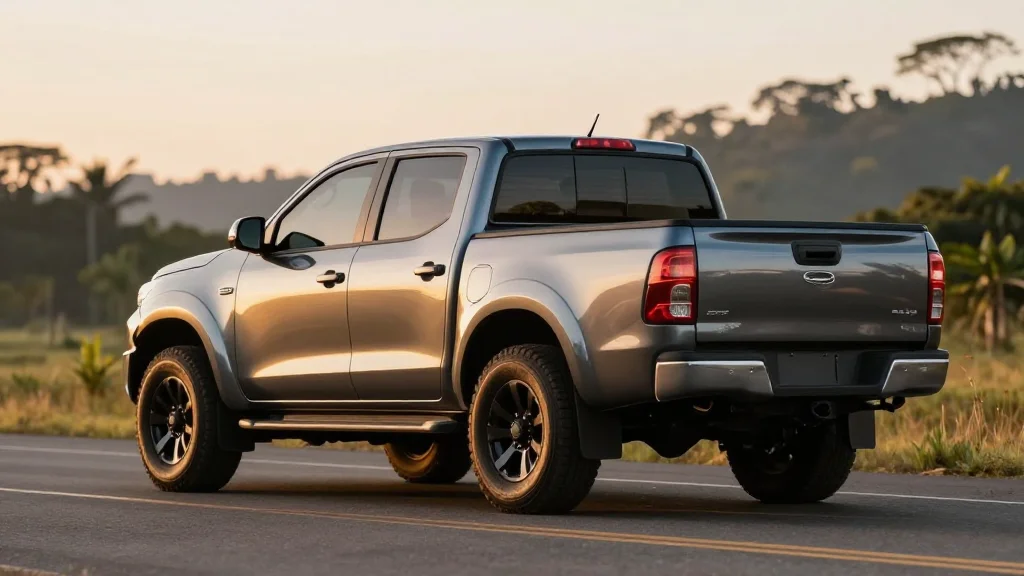
Hyundai's New Pickup Could Use The Chevy Colorado Platform: Report
Companies Mentioned
Why It Matters
The partnership leverages GM's proven chassis to accelerate Hyundai's entry into a high‑growth Latin American truck segment, expanding both brands' market share without costly new development.
Key Takeaways
- •Hyundai, GM co‑develop midsize pickup for Latin America.
- •Uses Chevrolet Colorado GMT31XX platform as base.
- •Modified rear axle boosts load capacity.
- •Supports diesel engines and single‑cab bodies.
- •Production slated at Brazil’s São José dos Campos plant, 2028.
Pulse Analysis
Platform sharing has become a cornerstone of automotive efficiency, and GM’s GMT31XX chassis exemplifies that trend. By repurposing the Colorado’s underpinnings, Hyundai sidesteps the expense of a ground‑up design while inheriting a proven body‑on‑frame architecture. The updated rear axle and reinforced frame address the heavier payload expectations of Latin American buyers, and the flexibility to mount diesel engines aligns with regional fuel preferences. This collaborative approach shortens development cycles and spreads tooling costs across two global manufacturers.
The midsize pickup segment in Central and South America is booming, driven by demand for rugged, affordable work trucks capable of handling diverse terrain. Diesel powertrains remain popular due to fuel economy and torque, while single‑cab layouts offer lower purchase prices and better maneuverability in urban settings. Hyundai’s entry, paired with an updated Chevrolet S10, pits the newcomers against entrenched players like Ford’s Ranger and Volkswagen’s Amarok. By localizing production at the São José dos Campos facility, the alliance can benefit from Brazil’s established supply chain, lower logistics costs, and favorable trade agreements within Mercosur, enhancing price competitiveness.
Strategically, the venture signals Hyundai’s intent to broaden its portfolio beyond passenger cars and electric vans, positioning the brand as a credible contender in the commercial vehicle arena. While the models are slated for exclusive Latin American release, the collaboration could serve as a testbed for future global rollouts, especially if the platform proves adaptable to U.S. emissions standards. For GM, the partnership reinforces its commitment to the region, leveraging existing platforms to maintain market relevance. Together, the two automakers illustrate how shared engineering can unlock new revenue streams while mitigating risk in emerging markets.
Hyundai's New Pickup Could Use The Chevy Colorado Platform: Report
Comments
Want to join the conversation?
Loading comments...