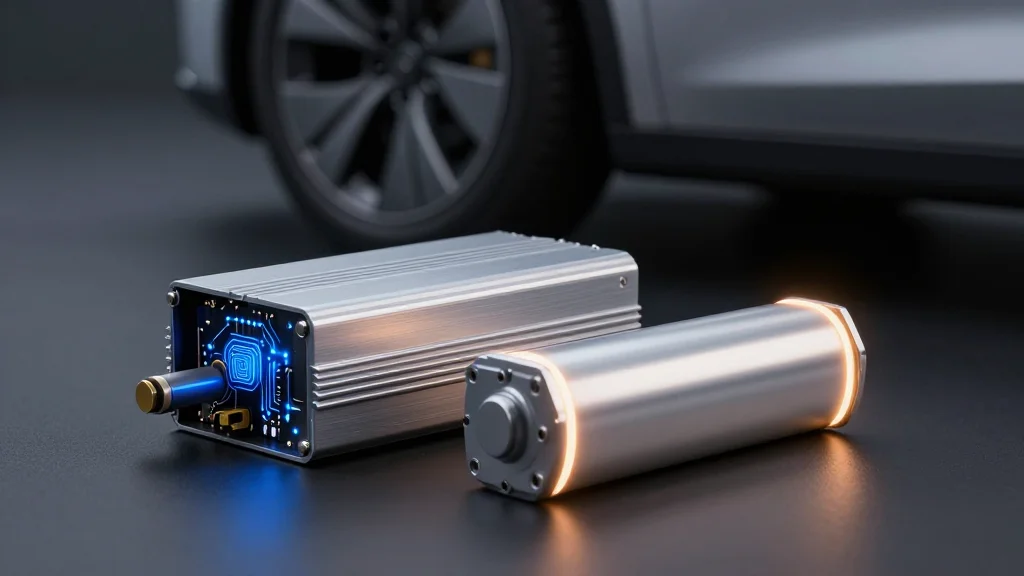
IAV and Nexperia Target Higher EV Battery Efficiency
Why It Matters
By boosting per‑cell performance without larger packs, the technology can lower EV costs and extend range, accelerating adoption of electric mobility.
Key Takeaways
- •IAV and Nexperia co‑develop “ONE Inverter” high‑voltage architecture
- •Software‑controlled system manages each battery cell individually for optimal output
- •GaN bidirectional device enables fast, efficient cell‑level switching
- •Architecture improves EV efficiency without increasing battery size or cost
- •Early semiconductor‑system collaboration accelerates scalable e‑mobility solutions
Pulse Analysis
Electric‑vehicle manufacturers have long wrestled with the "weakest‑cell" dilemma, where a single underperforming cell caps the output of an entire traction battery. Traditional approaches address this by adding more cells, inflating weight, cost, and packaging constraints. Advances in wide‑bandgap semiconductors, especially gallium nitride (GaN) and silicon carbide (SiC), now make it feasible to monitor and control each cell in real time. By leveraging rapid, low‑loss switching, these devices enable a software‑defined architecture that extracts maximum power from every cell, fundamentally reshaping battery efficiency strategies.
The "ONE Inverter" initiative brings together IAV’s system‑integration expertise and Nexperia’s GaN portfolio to deliver a modular, high‑voltage inverter that operates at the cell level. Nexperia’s bidirectional GaN switch provides the fast, precise actuation required for dynamic cell management, while complementary bipolar components streamline the overall design. This architecture eliminates the need for bulky, expensive power electronics traditionally used to balance cells, translating into lower bill‑of‑materials and simplified thermal management. For OEMs, the result is a lighter, more adaptable powertrain that can be tuned via software updates, aligning with the broader trend toward over‑the‑air vehicle upgrades.
Industry analysts view this collaboration as a catalyst for faster EV rollout. By improving energy density without expanding pack size, manufacturers can achieve longer ranges on existing platforms, reducing the pressure to redesign chassis for larger batteries. The cost efficiencies also make EVs more price‑competitive against internal‑combustion counterparts, especially in cost‑sensitive markets. Moreover, the early alignment of semiconductor capabilities with system architecture accelerates time‑to‑market for next‑generation e‑mobility solutions, positioning IAV and Nexperia as key enablers of the software‑defined vehicle era.
IAV and Nexperia target higher EV battery efficiency
Comments
Want to join the conversation?
Loading comments...