If Dragons Were Real: What They Reveal About the Future of Aviation Regulation
Why It Matters
AAM’s success hinges on regulators adopting flexible, data‑driven frameworks that can handle heterogeneous, high‑density traffic, making the transition critical for future urban mobility.
Key Takeaways
- •Dragons illustrate extreme variability challenging static airspace corridors
- •Regulators shift to digital, performance‑based traffic management for AAM
- •Certification moves toward outcomes and continuous airworthiness monitoring
- •Vertiport planning must handle dynamic slots and multimodal integration
- •Adaptive, software‑defined skies are essential for dense urban air traffic
Pulse Analysis
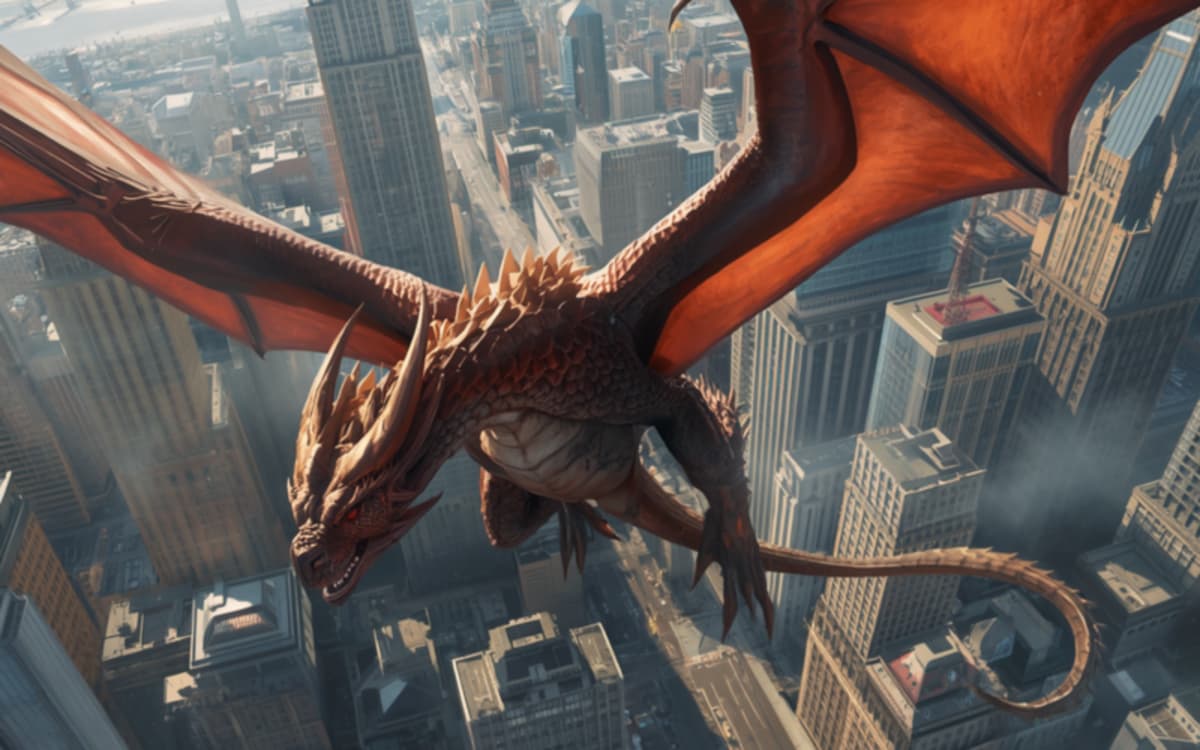
Advanced Air Mobility is rapidly moving from prototype to commercial rollout, with eVTOL taxis, cargo drones, and autonomous aircraft promising to reshape urban transport. Yet the technology’s promise is matched by a regulatory paradox: traditional air traffic control assumes predictable, uniformly certified machines, while AAM introduces a mosaic of propulsion types, software‑defined flight envelopes, and variable performance. By exaggerating these traits through the dragon metaphor, the industry underscores the urgency of re‑engineering airspace governance into a real‑time, data‑centric system that can dynamically allocate routes, detect conflicts, and enforce safety without relying on rigid corridors.
In response, agencies such as the FAA, EASA, and the UK’s Future of Flight program are piloting performance‑based certification models that evaluate outcomes rather than design homogeneity. Continuous airworthiness monitoring, software integrity checks, and automated conflict detection become the new safety pillars, allowing diverse vehicles to coexist while maintaining risk thresholds. This shift mirrors the need to certify not just a machine’s hardware but its behavior within an integrated traffic ecosystem, a concept the dragon analogy drives home by exposing the limits of conventional certification.
Infrastructure follows the same adaptive logic. Vertiports, once imagined as fixed hubs, must evolve into distributed networks with dynamic slot allocation, energy‑flexible charging, and seamless links to rail and road systems. The scarcity of urban space demands that landing rights be managed as fluid resources, coordinated with the digital airspace layer to prevent bottlenecks. As cities prepare for skies populated by thousands of autonomous aircraft, the dragon thought experiment serves as a stress test, reminding stakeholders that only a software‑defined, interoperable framework can keep urban skies safe and efficient.
If Dragons Were Real: What They Reveal About the Future of Aviation Regulation
Comments
Want to join the conversation?
Loading comments...