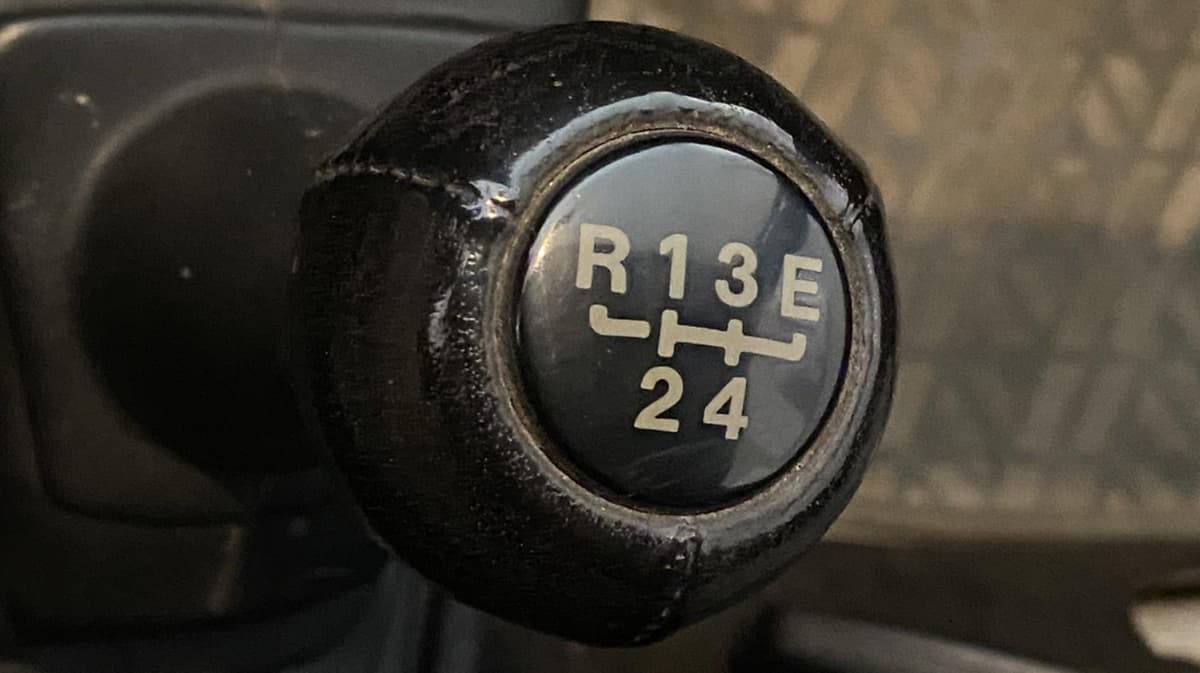
If Your Manual Transmission Has An E, What Does It Stand For?

Companies Mentioned
Why It Matters
Understanding the E gear clarifies how manufacturers historically squeezed efficiency from manual boxes, a lesson relevant as automakers balance performance and fuel savings. Its decline signals the broader shift toward automated transmissions that deliver comparable economy without driver intervention.
Key Takeaways
- •E stands for efficiency, an over‑drive gear for lower rpm.
- •VW Rabbit’s 3+E achieved 28 mpg city, beating 24 mpg predecessor.
- •E gear reduces pumping losses, improving fuel economy on highways.
- •Manual transmissions now under 1 % of U.S. sales in 2024.
- •Modern automatics and CVTs have largely replaced manual over‑drive systems.
Pulse Analysis
The "E" designation on vintage German manuals is short for efficiency, a marketing label that highlighted an over‑drive gear designed to lower engine speed at cruising velocities. Volkswagen pioneered the concept with its 3+E gearbox on the 1981 Rabbit (Golf), effectively converting a three‑speed into a four‑ratio layout by adding a tall fifth gear. This configuration preserved the original 3.89:1 final‑drive ratio while delivering an EPA‑verified 28 mpg city rating, a noticeable jump from the prior 24 mpg model. The later 4+E version extended the idea to a true four‑speed plus over‑drive, offering drivers a smoother transition to highway cruising.
Technically, the E gear functions like any manual ratio but is engaged at higher vehicle speeds to reduce engine revolutions per minute. By dropping rpm, the engine experiences fewer pumping losses—a phenomenon where the intake and exhaust strokes consume excess energy at high speeds. The result is lower fuel consumption, reduced wear, and a quieter cabin. While modern engines achieve similar efficiency gains through variable valve timing, direct injection, and turbocharging, the mechanical simplicity of the E gear offered a low‑cost solution before electronic controls became ubiquitous. As dual‑clutch and continuously variable transmissions emerged, they provided seamless over‑drive without driver input, rendering the manual E gear increasingly obsolete.
The broader market narrative mirrors this technical evolution. In 2024, manual transmissions accounted for less than one percent of U.S. vehicle sales, supplanted by automatics that pair convenience with comparable or superior fuel economy. Yet manuals retain strong demand in regions like China and India, where driver engagement and lower purchase costs remain valued. For enthusiasts, the E gear represents a nostalgic blend of driver control and efficiency, and its rarity adds a collectible allure to surviving models. As regulatory pressure pushes manufacturers toward ever‑greater fuel savings, the underlying principle of an efficiency‑focused over‑drive may reappear in hybrid or electric powertrains, albeit under new nomenclature.
If Your Manual Transmission Has An E, What Does It Stand For?
Comments
Want to join the conversation?
Loading comments...