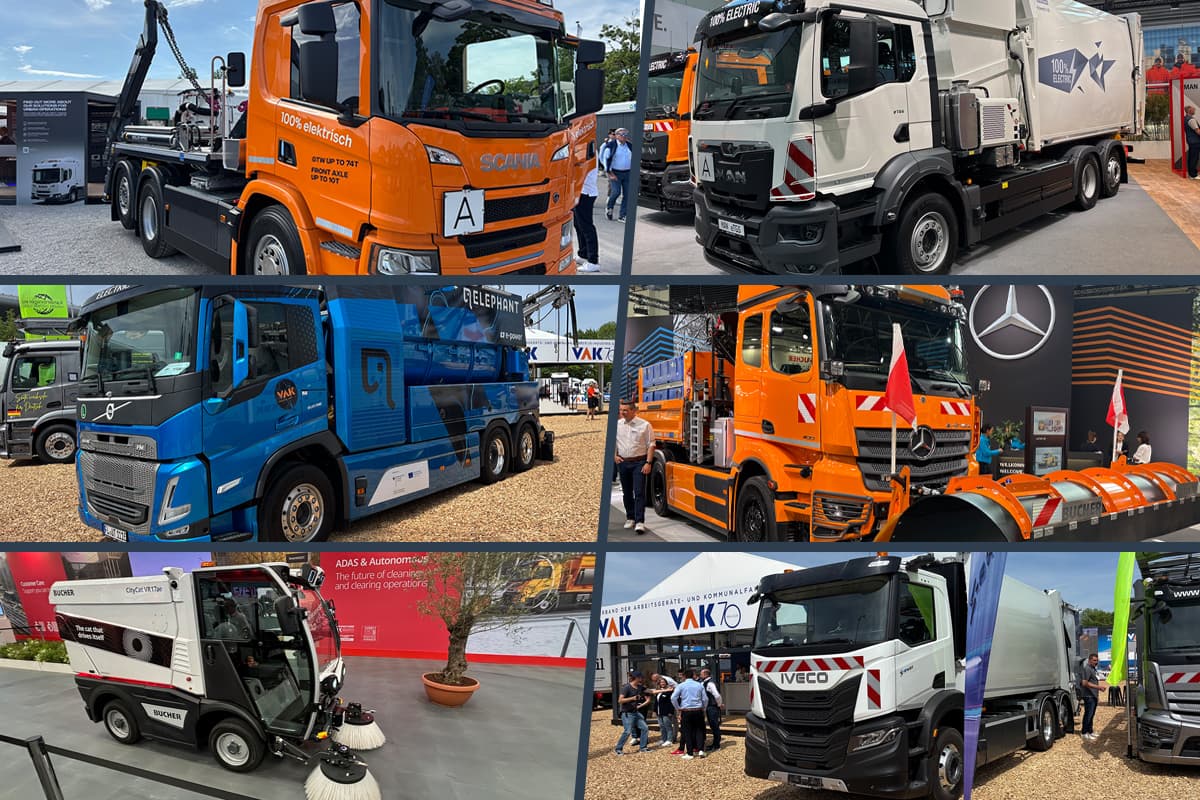
IFAT Munich Showcases Next Generation of Municipal Electric Vehicles
Why It Matters
The expanded range and payload options make electric trucks viable for routine city services, accelerating decarbonisation of municipal fleets. This shift also intensifies competition among OEMs and spurs infrastructure investment.
Key Takeaways
- •Mercedes‑Benz unveiled eEconic 400 with 400 kWh battery, 150‑200 km range
- •Copenhagen orders six eEconic 400 units, may increase quantity
- •Volvo FM Electric 6×2 Roll‑Off now offers up to 400 km range
- •Volvo plans hydrogen truck by decade’s end, Daimler delays to early 2030s
- •MAN’s modular eTGS supports 3‑7 battery packs, customizing range and payload
Pulse Analysis
The municipal electric‑truck segment is moving from niche to mainstream, driven by tighter emissions regulations and the predictable, stop‑and‑go routes of city services. IFAT 2026 provided a showcase for manufacturers to demonstrate how advances in battery density, vehicle architecture, and charging infrastructure are addressing the range‑and‑payload trade‑off that once limited adoption. Fleet managers are now evaluating electric options not as experimental pilots but as cost‑effective replacements for diesel workhorses.
Mercedes‑Benz’s eEconic 400 epitomises this shift. By extending the wheelbase to accommodate a fourth NMC battery pack, the model lifts usable capacity to 400 kWh and pushes range to 200 km for demanding winter and summer tasks. The Copenhagen order of six units signals early municipal confidence, while the parallel ReEconic concept highlights a broader sustainability agenda that includes recycled interior materials. Together, these moves reinforce Mercedes‑Benz’s commitment to a fully electric municipal portfolio.
Across the aisle, Volvo, MAN, Scania and DAF are racing to close remaining gaps. Volvo’s FM Electric 6×2 Roll‑Off now reaches 400 km, and its roadmap includes a hydrogen‑fuel‑cell truck by the decade’s end, positioning it for long‑haul and heavy‑load niches. MAN’s modular eTGS platform lets operators fine‑tune battery count from three to seven packs, matching payload to route length. Scania focuses on hard‑to‑electrify applications, while DAF rolls out fast‑charging stations under the Paccar Power Solutions brand. This competitive thrust accelerates the rollout of charging networks and encourages municipalities to commit larger budgets toward zero‑emission fleets.
IFAT Munich showcases next generation of municipal electric vehicles
Comments
Want to join the conversation?
Loading comments...