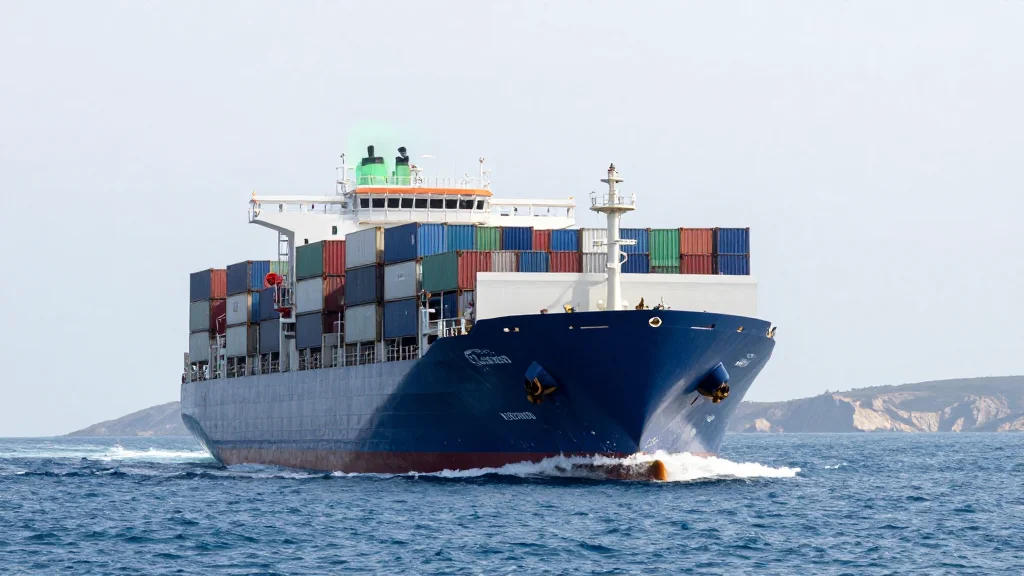
IMO Sets Up World’s Largest Emission Control Area in North‑East Atlantic

Why It Matters
The North‑East Atlantic ECA sets a new benchmark for maritime pollution control, directly affecting the busiest shipping lanes between Europe and North America. By slashing SOx, NOx and black‑carbon emissions, the regulation promises measurable health benefits for over 190 million coastal residents and a tangible reduction in ocean acidification. For the transportation sector, the ECA accelerates the transition toward low‑sulfur fuels and alternative propulsion technologies, reshaping fleet investment strategies and port infrastructure. Moreover, the coordinated, multi‑jurisdictional approach demonstrates that the IMO can still enact impactful environmental policy, potentially inspiring similar actions in other ocean basins. Economically, the projected $31 billion in avoided health costs underscores the financial upside of stringent emissions standards. Shipping companies that proactively adopt compliant technologies may gain a competitive edge, while those lagging risk penalties, higher fuel costs, and reputational damage. The ECA also creates market opportunities for scrubber manufacturers, low‑sulfur fuel suppliers, and emerging clean‑fuel innovators, catalyzing growth in a nascent green‑maritime ecosystem.
Key Takeaways
- •IMO adopts the world’s largest Emission Control Area covering the North‑East Atlantic, effective September 2028.
- •SOx emissions projected to drop up to 82 % and PM2.5 by 64 % within the new zone.
- •Potential health impact: over 4,000 premature deaths avoided and €29 bn (~$31 bn) in health costs saved by 2050.
- •Ships built after 1 Jan 2027 must meet stricter NOx engine limits; all vessels face tighter fuel sulfur caps.
- •Regulation links existing ECAs in the Baltic, North and Mediterranean Seas, creating a contiguous Atlantic corridor.
Pulse Analysis
The North‑East Atlantic ECA is more than a regulatory footnote; it is a catalyst that could reshape the economics of global shipping. Historically, maritime emissions standards have been incremental—most notably the 2020 global sulfur cap. This new ECA, however, combines geographic breadth with stringent pollutant limits, effectively turning the Atlantic into a testing ground for the next generation of clean‑shipping technologies. Companies that have already invested in LNG or dual‑fuel engines stand to benefit from early compliance, while those still reliant on heavy fuel oil face costly retrofits or fuel switches.
From a market perspective, the ECA is likely to compress the price differential between low‑sulfur fuel oil and alternative fuels, as demand for compliant bunkers spikes. Scrubber manufacturers may see a surge in orders, but the technology’s lifespan could be shortened if the industry pivots toward zero‑carbon fuels faster than anticipated. Investors should watch for a reallocation of capital toward firms offering emissions‑monitoring software and carbon‑offset services, as the IMO’s upcoming electronic tracking requirements will create a data‑driven compliance market.
Strategically, the ECA underscores the IMO’s capacity to act decisively when member states present a united front. The joint submission from 27 EU members, the UK and Iceland, backed by robust ICCT research, demonstrates that technical credibility can overcome political inertia. If the Atlantic ECA delivers on its health and environmental promises, it will set a precedent that could pressure the IMO to adopt similar zones in the Pacific and Indian Oceans, potentially ushering in a new era of globally coordinated maritime climate policy.
IMO Sets Up World’s Largest Emission Control Area in North‑East Atlantic
Comments
Want to join the conversation?
Loading comments...