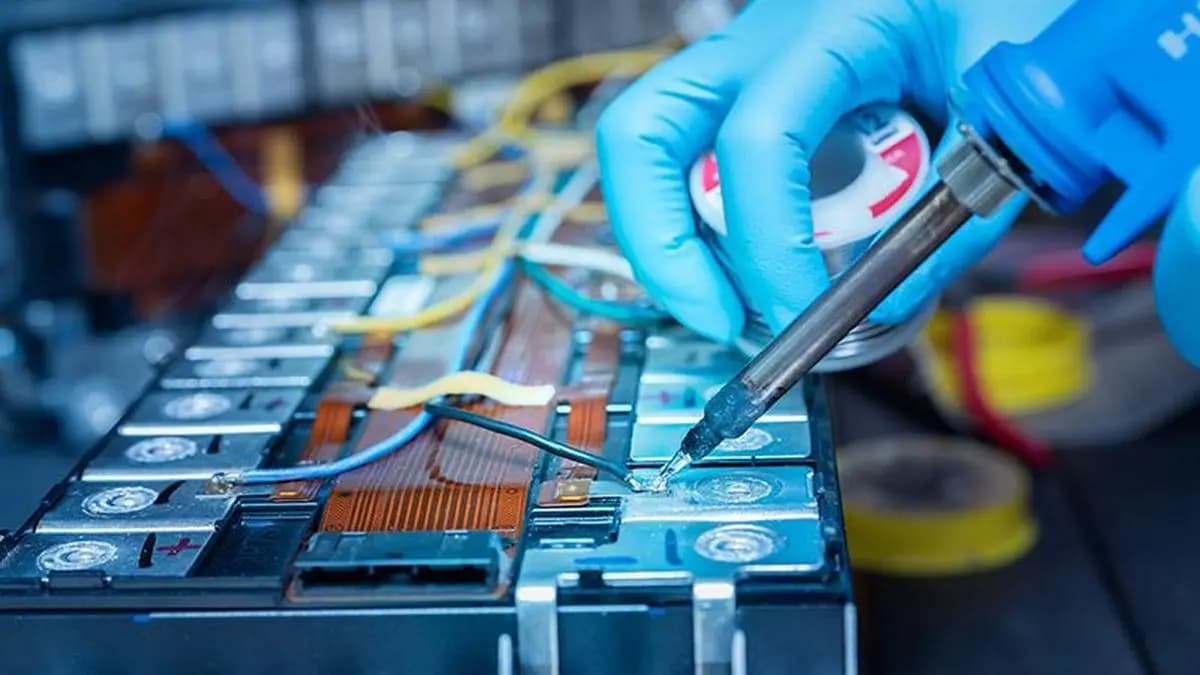
India EV Battery Demand to Grow Tenfold to 200 GWh by 2032: IESA
Why It Matters
The scale‑up positions India as a global EV battery manufacturing hub, attracting capital and reshaping supply‑chain dynamics across Asia. Investors and OEMs must align with localisation trends to capture the coming market upside.
Key Takeaways
- •India EV battery demand to hit 200 GWh by 2032
- •2025 EV sales reached 2.5 million units, led by two‑wheelers
- •NMC chemistry holds 70% share in two‑wheelers; LFP gaining ground
- •BLDC motors dominate two‑wheelers; PMSM over 90% in passenger cars
- •Localisation and supply‑chain investments will drive next growth phase
Pulse Analysis
India’s EV battery outlook is reshaping the country’s industrial strategy. A tenfold jump to 200 GWh by 2032 reflects not only aggressive consumer adoption but also a policy environment that rewards domestic production. The surge is anchored by a 2.5 million‑unit sales figure in 2025, where two‑wheelers account for the bulk, signaling that affordable, high‑volume segments will fuel the bulk of battery demand. This scale creates a compelling case for manufacturers to locate cell factories, raw‑material processing, and pack‑assembly lines within India’s borders.
Technology trends further define the market’s trajectory. Nickel‑Manganese‑Cobalt (NMC) cells still dominate the two‑wheel‑segment with a 70% share, yet Lithium Iron Phosphate (LFP) is gaining traction across other vehicle classes, hinting at a future chemistry diversification. Motor technology mirrors this shift: brushless DC (BLDC) motors hold 71% of the two‑wheel market, while permanent‑magnet synchronous motors (PMSM) capture over 90% of passenger‑car applications. Emerging chemistries such as LMFP, solid‑state, and sodium‑ion are already on the research radar, promising higher energy density and safety improvements that could accelerate adoption.
The strategic implication for investors and OEMs is clear: localisation will be the next growth lever. By building a domestic supply chain—from mining and refining to cell production—India can reduce import dependence, lower costs, and meet the projected demand curve. This creates opportunities for joint ventures, private‑equity funding, and government‑backed incentives aimed at establishing the country as a global EV battery hub. Companies that embed themselves early in this ecosystem stand to benefit from economies of scale, regulatory support, and access to one of the world’s fastest‑growing EV markets.
India EV battery demand to grow tenfold to 200 GWh by 2032: IESA
Comments
Want to join the conversation?
Loading comments...