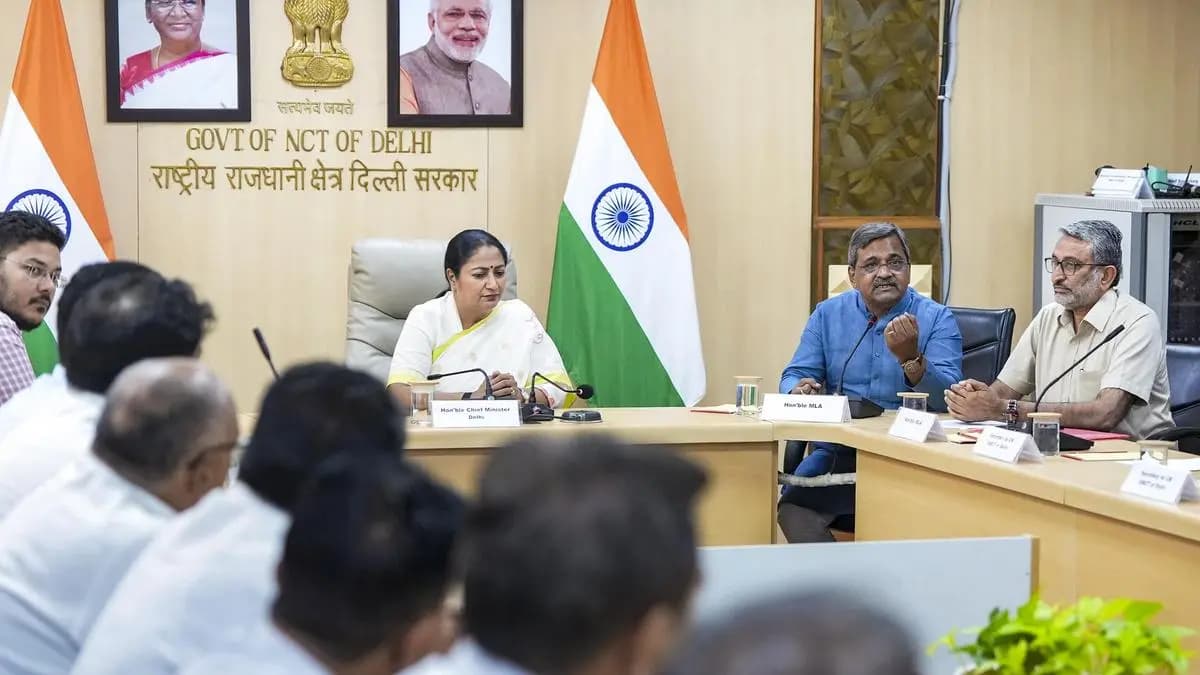
‘India Has Emerged as World's 3rd-Largest Domestic Aviation Market’, Says Delhi CM
Why It Matters
The milestone signals robust demand for air travel, attracting airline investment and reinforcing India’s strategic importance in the global aviation ecosystem, while the compensation measures highlight heightened governmental focus on safety and public welfare.
Key Takeaways
- •Metro network grew from 248 km to over 1,095 km across 26 cities
- •India now operates 164 airports, ranking third in domestic aviation market
- •UDAN scheme spurred air travel access for millions of citizens
- •Delhi ex‑gratia: $12,000 per deceased, $2,400 per injured
- •Digital India recognized globally, boosting tech‑enabled travel services
Pulse Analysis
India’s ascent to the third‑largest domestic aviation market reflects a confluence of demographic and policy drivers. A burgeoning middle class, coupled with low‑cost carrier expansion, has lifted demand for short‑haul flights. Government initiatives such as the UDAN regional connectivity scheme have lowered barriers to entry for smaller airports, while the rapid increase to 164 operational airfields provides the necessary infrastructure backbone. This growth trajectory positions India as a pivotal arena for airline route planning and aircraft leasing firms seeking high‑volume, price‑sensitive markets.
Infrastructure upgrades extend beyond airports. The Delhi metro’s leap from 248 km to more than 1,095 km across 26 cities illustrates a nationwide push to integrate multimodal transport, reducing travel friction and feeding air‑travel demand. Parallel digital reforms under the Digital India banner have streamlined ticketing, baggage handling, and real‑time flight information through mobile platforms, enhancing passenger experience and operational efficiency. The synergy between physical and digital connectivity creates a fertile environment for ancillary services, from airport retail to fintech solutions tailored to travel.
For investors and industry stakeholders, these developments signal both opportunity and responsibility. The scale of the market invites capital inflows into airline fleets, airport concessions, and ground‑handling services, while the recent ex‑gratia payouts—approximately $12,000 per fatality and $2,400 per injury—underscore a heightened regulatory focus on safety and consumer protection. Companies that align with India’s infrastructure momentum and adhere to emerging safety standards are likely to capture sustainable growth in the world’s fastest‑expanding aviation landscape.
‘India has emerged as world's 3rd-largest domestic aviation market’, says Delhi CM
Comments
Want to join the conversation?
Loading comments...