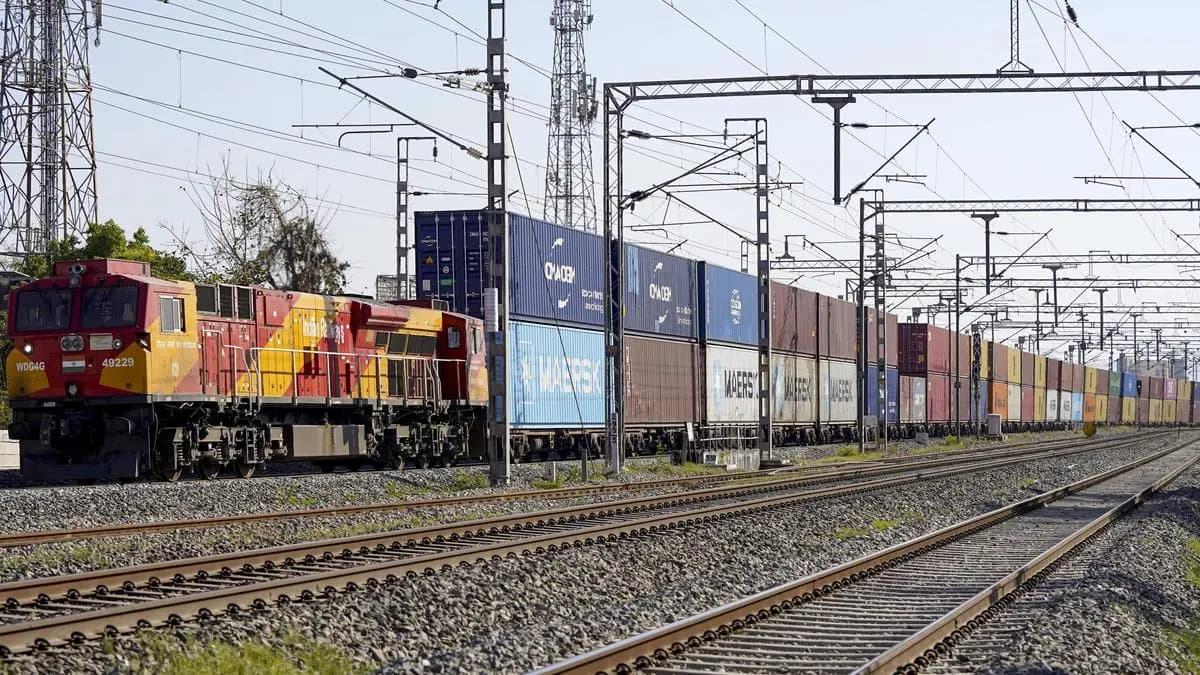
India Joins Elite Heavy-Haul Railway Club, Targets Lower Logistical Costs: DFCCIL MD
Why It Matters
Lower logistics costs will sharpen India’s global trade competitiveness and attract more freight volumes, while advanced rail tech positions the country as a logistics hub. The heavy‑haul capability also signals readiness for larger, higher‑value cargo flows.
Key Takeaways
- •India now among ~8 nations with heavy‑haul freight rail
- •DFCCIL targets AI predictive maintenance for safer operations
- •Eastern and Western corridors already lowered logistics costs
- •New East‑West corridor will span ~2,100 km, double‑track
- •Cutting logistics from 13% to 7% GDP boosts trade competitiveness
Pulse Analysis
India’s entry into the elite heavy‑haul freight rail club marks a strategic shift for its logistics landscape. Only a handful of nations—such as the United States, China, Sweden, Australia, Brazil and South Africa—operate rail lines capable of moving massive freight loads over long distances. By completing the Eastern and Western Dedicated Freight Corridors, India has built the backbone needed to qualify, and the government is now leveraging that foundation to drive down logistics expenses that currently sit at roughly 13‑14% of GDP, well above the 7‑8% global average.
The next frontier is technology. DFCCIL’s leadership emphasized AI‑based predictive maintenance, autonomous inspection drones and real‑time monitoring as essential tools to shift rail operations from manual, error‑prone processes to data‑driven precision. These innovations promise higher asset availability, reduced downtime, and safer working conditions, aligning Indian rail standards with best‑in‑class global practices. Early pilots have already shown maintenance cost reductions, and broader rollout across the DFC network could accelerate efficiency gains.
Looking ahead, the announced East‑West Dedicated Freight Corridor will add roughly 2,100 kilometres of double‑track, high‑rise electrified line, linking the industrial heartland of West Bengal to Gujarat’s logistics hub. This expansion not only augments capacity but also creates a seamless east‑to‑west freight artery, further compressing transit times and costs. As the corridor comes online, analysts expect India’s logistics cost share to converge toward the global norm, enhancing export competitiveness and inviting greater foreign investment into the country’s supply‑chain ecosystem.
India joins elite heavy-haul railway club, targets lower logistical costs: DFCCIL MD
Comments
Want to join the conversation?
Loading comments...