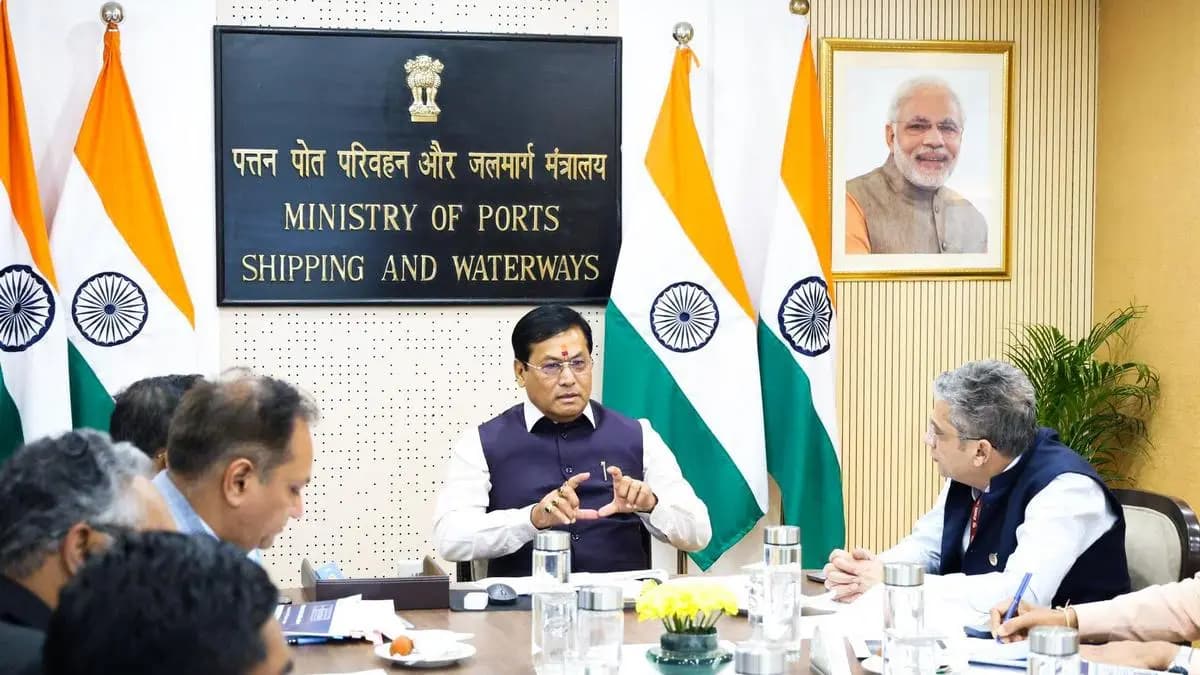
India Plans to Add 92 Vessels with ₹51,383 Crore Investment in FY27
Companies Mentioned
Why It Matters
The funding will significantly boost India's domestic shipping capacity, reducing reliance on foreign fleets and strengthening supply‑chain security amid geopolitical tensions.
Key Takeaways
- •₹51,383 crore (~$6.3 billion) earmarked for fleet expansion.
- •Goal: 92 new vessels adding 2.85 million GT capacity.
- •Focus on containers, LPG carriers, crude tankers, and green tugs.
- •Inter‑ministerial white paper to address maritime gaps and targets.
Pulse Analysis
India’s FY27 maritime roadmap reflects a broader Atmanirbhar (self‑reliant) agenda that seeks to insulate the nation from external shocks. By earmarking roughly $6.3 billion for shipbuilding, the government aims to close a long‑standing capacity gap, positioning Indian ports as reliable hubs for regional trade. The coordinated effort across the Ministries of Petroleum, Chemicals, and Commerce underscores how maritime logistics are now viewed as a strategic national asset rather than a peripheral industry.
The investment targets a diversified fleet: container vessels to handle growing export‑import volumes, LPG and crude carriers that support India’s energy security, and green tugs that align with the country’s decarbonisation goals. Shipping Corporation of India’s involvement in specialized ammonia carriers signals an early bet on emerging clean‑fuel markets. Domestic shipyards stand to benefit from a surge in orders, potentially creating thousands of jobs and spurring ancillary industries such as steel fabrication and marine engineering.
Strategically, a larger, modern fleet enhances India’s bargaining power in global shipping alliances and reduces dependence on foreign charter rates, which have surged amid geopolitical tensions in the Strait of Hormuz. The white‑paper initiative promises clearer policy signals, faster project approvals, and tighter coordination among stakeholders, fostering an ecosystem that can compete with regional powerhouses like China and Singapore. In the long run, the expanded capacity could translate into lower freight costs for Indian exporters, bolstering competitiveness across sectors.
India plans to add 92 vessels with ₹51,383 crore investment in FY27
Comments
Want to join the conversation?
Loading comments...