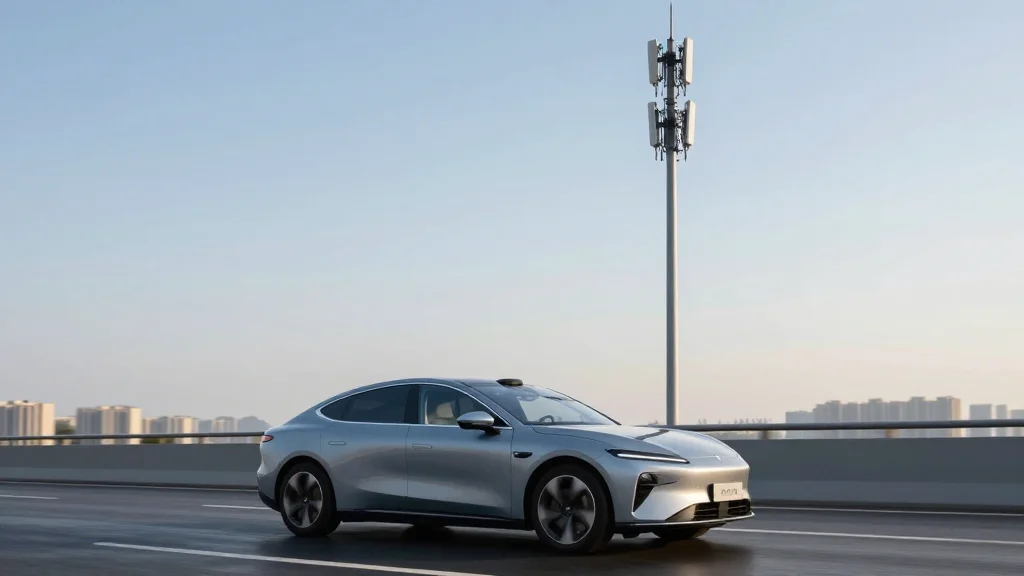
India's Next Telecom Battle Could Be Fought on Highways, with Connected Cars
Companies Mentioned
Why It Matters
Ownership of the V2X layer will dictate future revenue from spectrum, data licensing and platform services, reshaping India’s telecom and automotive landscapes.
Key Takeaways
- •TRAI backs C‑V2X as India’s unified standard, tying vehicles to 4G/5G
- •Telecom operators could become the backbone of highway communication networks
- •Automakers and cloud platforms vie for the lucrative vehicle‑generated data market
- •Road‑safety benefits are secondary to building a national mobility data layer
- •Stakeholder comments close June 18; final recommendations will shape policy
Pulse Analysis
Globally, Vehicle‑to‑Everything technology is emerging as the connective tissue for autonomous and smart‑mobility solutions, and India is poised to become a major testbed. By anchoring V2X to cellular networks, TRAI aligns the rollout with its existing 4G/5G rollout, reducing the need for separate radio ecosystems and accelerating deployment across the country’s 6.7 million‑kilometre road network. This approach mirrors Europe’s C‑V2X pilots and the United States’ DSRC‑to‑cellular transition, positioning India to benefit from economies of scale while fostering home‑grown innovation in edge computing and AI‑driven traffic management.
For telecom operators, the consultation paper opens a new revenue frontier beyond traditional voice and data services. Controlling the spectrum and infrastructure that underpins V2X will enable telcos to monetize low‑latency connectivity, offer tiered data packages to fleet operators, and license real‑time traffic analytics to municipalities. Simultaneously, automakers and cloud platforms are eyeing the massive data trove generated by connected vehicles—location, speed, braking patterns—that can fuel predictive maintenance, targeted advertising, and urban planning. The resulting platform economy could see telecoms providing the backbone while software firms capture the lion’s share of data‑driven value.
However, the path to a nationwide mobility layer is fraught with challenges. Spectrum allocation must balance V2X needs with existing mobile broadband demand, while regulatory clarity on data ownership and privacy will be critical to attract investment. The June 18 comment deadline marks the first formal stakeholder engagement, but the real test will be in the implementation phase, where standards, interoperability and cost‑effective roadside units will determine adoption speed. Observers will watch for early pilots on national highways, the emergence of joint ventures between telcos and automakers, and how quickly the ecosystem can translate safety gains into commercial opportunities.
India's next telecom battle could be fought on highways, with connected cars
Comments
Want to join the conversation?
Loading comments...