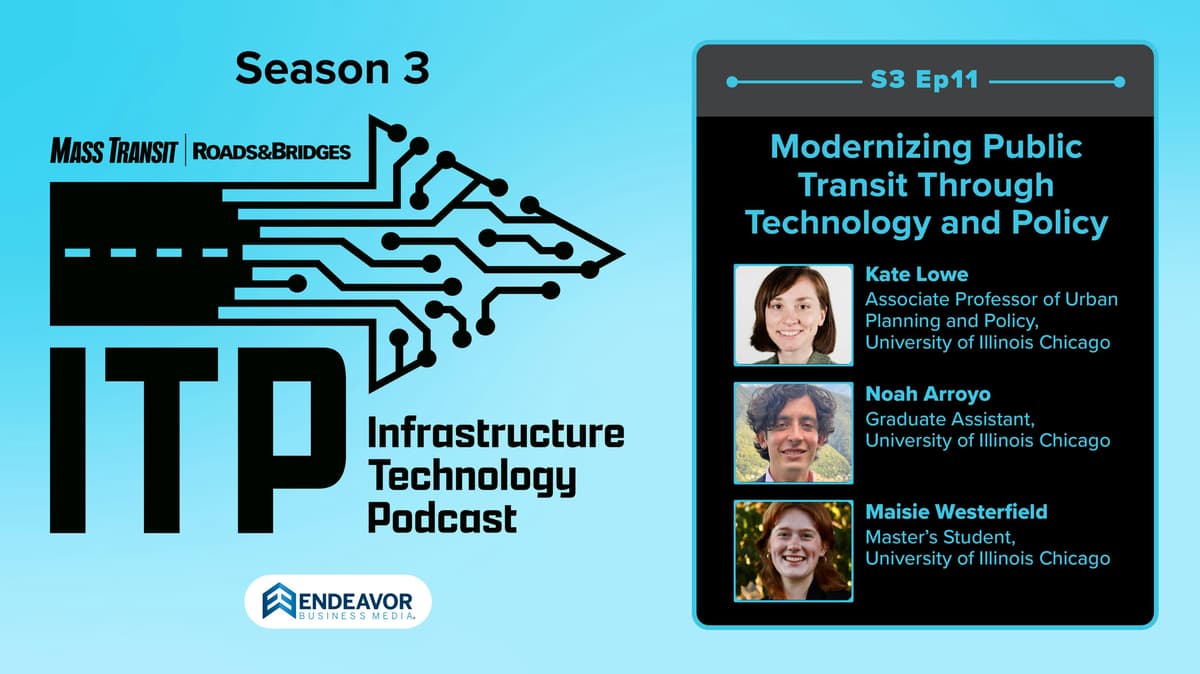
Infrastructure Technology Podcast: Modernizing Public Transit Through Technology and Policy
Companies Mentioned
Why It Matters
AI and secure cloud platforms can accelerate transit upgrades while addressing equity, and upcoming Infrastructure Investment and Jobs Act funding will shape how agencies implement these innovations.
Key Takeaways
- •AI chatbots now handle CTA rider inquiries, improving response speed
- •Illinois legislation funds “transit ambassadors” to boost safety and equity
- •Bentley’s FedRAMP‑cleared platforms enable secure federal AI and digital‑twin workflows
- •CTA’s aging hardware hampers rapid AI adoption across operations
- •Graduate program blends GIS, policy, and climate‑resilient transit training
Pulse Analysis
Artificial intelligence is moving from experimental pilots to everyday operations in U.S. transit agencies. Chatbots, predictive scheduling and real‑time rerouting tools are already helping the Chicago Transit Authority answer rider questions faster and optimize service during disruptions. Yet the rollout faces a paradox: while AI promises efficiency, legacy hardware and concerns over algorithmic bias can stall adoption, especially in communities that have historically been underserved by public transportation. Balancing speed with equity will be a defining challenge for agencies seeking to modernize.
Secure cloud infrastructure is becoming a prerequisite for large‑scale AI deployments. Bentley Systems’ recent FedRAMP authorization for its ProjectWise and OpenGround platforms gives federal and state agencies a vetted environment for digital twins, geotechnical intelligence and collaborative workflows. By meeting stringent U.S. government security standards, these tools lower the barrier for public‑sector entities to integrate AI‑driven analytics without compromising sensitive data. The move signals a broader trend: as federal funding streams—like those from the Infrastructure Investment and Jobs Act—favor cloud‑native solutions, agencies that adopt FedRAMP‑cleared services will likely move faster on project delivery and resilience.
Education and policy are the twin engines that will sustain this transformation. UIC’s two‑year Master’s program in Urban Planning & Policy, with its urban‑transportation focus, equips students with GIS, policy analysis and climate‑resilient design skills, preparing a new generation of transit professionals. Concurrently, state legislation introducing “transit ambassadors” and earmarking funds for safety and equity initiatives creates a supportive regulatory backdrop. Together, advanced curricula, targeted funding, and secure technology platforms form an ecosystem that can accelerate the shift toward smarter, more inclusive public‑transport networks across America.
Infrastructure Technology Podcast: Modernizing public transit through technology and policy
Comments
Want to join the conversation?
Loading comments...