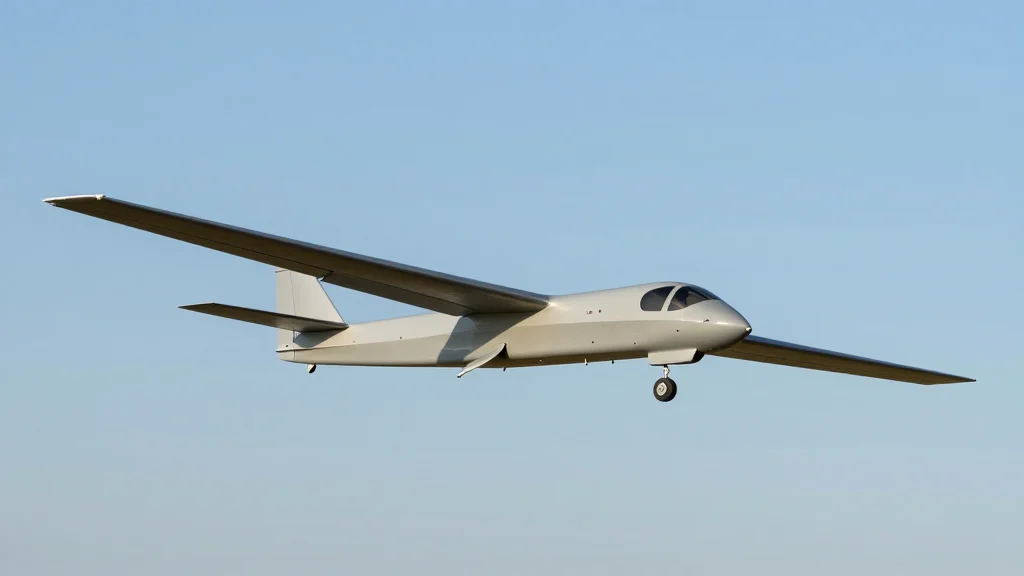
Initial Flight Tests on Proteus Show Promise for DLR Morphing Wings
Why It Matters
Morphing wings promise significant fuel savings and enhanced maneuverability, potentially reshaping design standards for both unmanned and manned light aircraft. Demonstrating airworthiness and AI‑driven control in flight accelerates commercial adoption of adaptive wing technology.
Key Takeaways
- •HyTEM morphing wing eliminates traditional flaps and ailerons
- •AI‑assisted control continuously updates models during flight
- •Pressure‑field reconstruction enables real‑time aerodynamic sensing
- •Scaled 70 kg Proteus flight campaign planned for 2026
Pulse Analysis
DLR’s recent flight tests of the Proteus platform represent a pivotal step toward operational morphing‑wing aircraft. By integrating the HyTEM system—an array of hyperelastic actuators that reshape the trailing edge without gaps—the aircraft achieved seamless profile adjustments at ten distinct points along the span. This continuous surface reduces profile drag and offers finer control over lift and induced drag, addressing long‑standing efficiency penalties associated with conventional hinged control surfaces. The successful demonstration of basic airworthiness confirms that composite, shape‑shifting structures can meet the rigorous demands of flight, opening the door for broader adoption in light‑aircraft markets.
Beyond the mechanical innovation, DLR paired the morphing wing with an AI‑driven flight‑control algorithm that learns from deviations between predicted and actual flight behavior. The system trains on simulated damage scenarios, allowing it to reallocate actuator commands when a control surface fails, thereby preserving stability and enhancing fault tolerance. A complementary pressure‑field reconstruction technique translates sparse sensor data into a full aerodynamic map, giving the aircraft an instantaneous sense of its flow environment. This synergy of adaptive structures and intelligent control exemplifies the next generation of smart airframes, where software and hardware co‑evolve to optimize performance in real time.
Looking ahead, the upcoming 2026 flight campaign will scale the prototype to a 70‑kilogram version, testing the concept under higher‑mass conditions and longer endurance missions. Results from this campaign will feed into the UAdapt project, which aims to certify morphing wings for broader commercial use. If the technology delivers on its promise of drag reduction and improved handling, airlines and UAV operators could see measurable fuel savings and lower emissions, while aircraft manufacturers may redesign airframes to exploit continuous‑shape aerodynamics. The convergence of composite materials, distributed actuation, and AI control positions morphing wings as a disruptive innovation poised to reshape the aerospace industry.
Initial flight tests on Proteus show promise for DLR morphing wings
Comments
Want to join the conversation?
Loading comments...