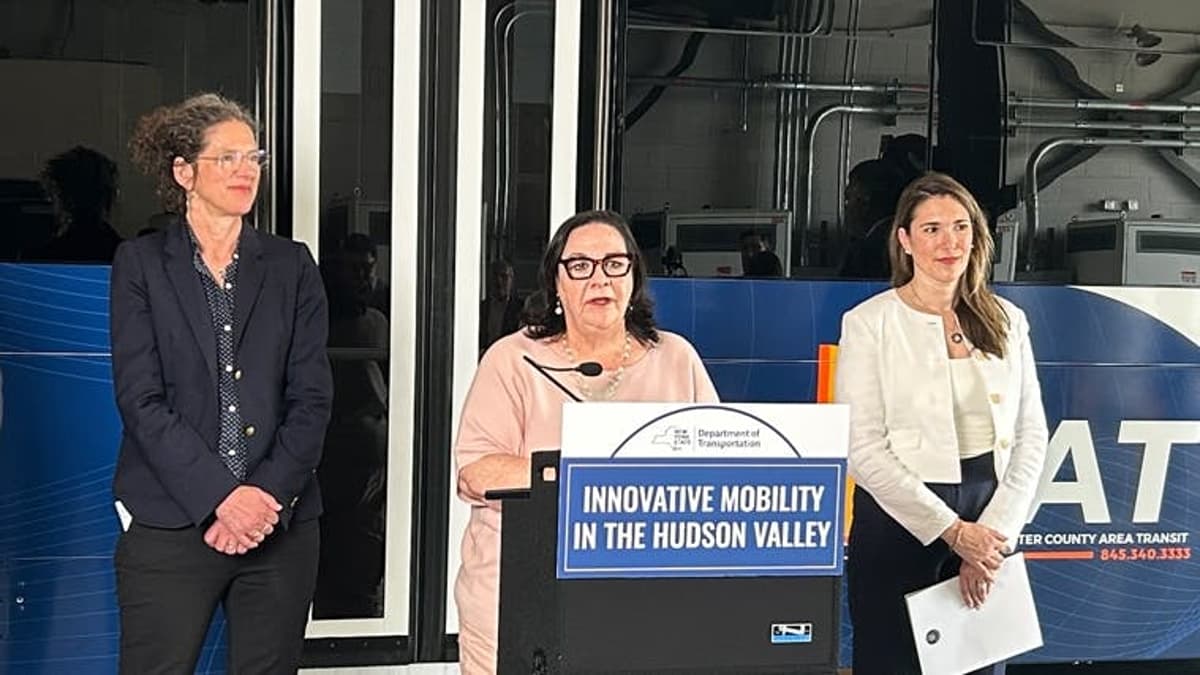
Innovative Mobility Initiative to Award $6 Million for Non-MTA Transit Projects in New York
Why It Matters
By directing state capital to micro‑transit, New York expands transportation options for underserved communities, strengthening regional economies and reducing reliance on personal vehicles.
Key Takeaways
- •$6 million allocated to micro‑transit projects across five NY counties.
- •Lawrence County receives largest grant, $3.1 million for new service.
- •Funding targets riders with limited access to traditional MTA transit.
- •Grants aim to boost economic growth and environmental sustainability.
- •State emphasizes equitable, technology‑driven mobility solutions.
Pulse Analysis
The Innovative Mobility Initiative marks a strategic shift in New York’s transportation policy, channeling $6 million into micro‑transit and dial‑a‑ride services across Broome, Lewis, Oswego, Lawrence, and Ulster counties. By focusing on non‑MTA providers, the state seeks to fill service gaps in rural and semi‑urban areas where conventional bus routes are sparse. Each grant is tailored to local needs—whether expanding geographic coverage, enhancing capacity, or integrating technology platforms that enable on‑demand rides. This targeted investment reflects a broader trend of leveraging flexible, tech‑enabled mobility to complement legacy transit systems.
Beyond immediate service improvements, the initiative is positioned as an economic engine. Micro‑transit can lower commuting costs, connect workers to job centers, and stimulate local commerce by making it easier for residents to reach retail and healthcare hubs. Moreover, by encouraging shared rides and reducing single‑occupancy vehicle trips, the program aligns with New York’s climate goals, cutting emissions and easing roadway congestion. The emphasis on equity—ensuring that low‑income and mobility‑limited populations gain reliable options—reinforces the state’s commitment to inclusive growth.
Looking ahead, the success of these pilot projects could inform statewide policy and attract additional federal or private funding. If the micro‑transit models demonstrate cost‑effectiveness and rider satisfaction, they may serve as templates for other regions grappling with similar accessibility challenges. However, scalability will depend on sustained operational funding, robust data analytics, and coordination with existing transit agencies. As New York continues to experiment with flexible mobility solutions, the initiative underscores a pivotal moment where public investment, technology, and social equity converge to reshape the future of regional transportation.
Innovative Mobility Initiative to award $6 million for non-MTA transit projects in New York
Comments
Want to join the conversation?
Loading comments...