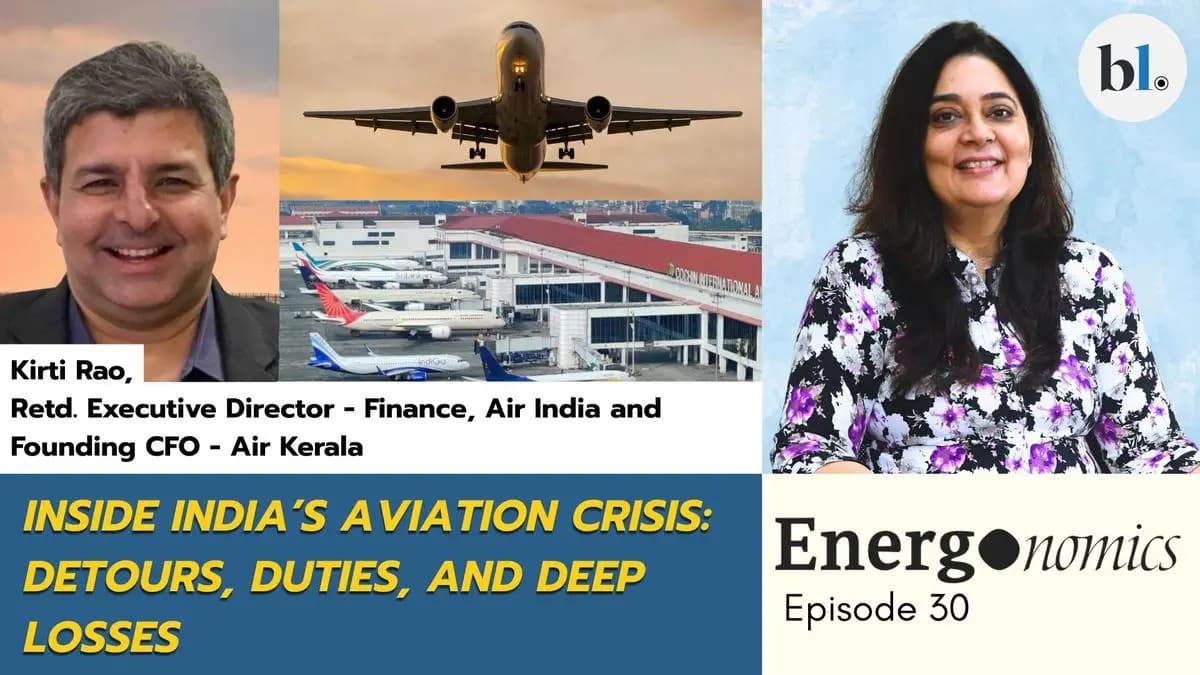
Inside India’s Aviation Crisis: Detours, Duties, and Deep Losses | Energonomics Ep 30 | Richa Mishra
Why It Matters
The mounting losses threaten airline profitability and could dampen tourism‑related growth, prompting policymakers to balance fuel security with industry sustainability.
Key Takeaways
- •Indian airlines face $2.6 billion loss this year
- •Fuel now consumes up to 55% of operating costs
- •Government raised export duty on ATF to secure domestic supply
- •Carriers explore hedging, route changes amid West Asia conflict
Pulse Analysis
The current turbulence in India’s aviation market is a microcosm of broader geopolitical and energy dynamics. The escalation of hostilities in West Asia has tightened global oil supplies, pushing jet fuel prices to multi‑year highs. For India, a net importer of aviation turbine fuel, the ripple effect is amplified by a steep rise in the export duty, a policy move intended to prioritize domestic flights but which also inflates carrier costs. This environment forces airlines to reassess their cost structures, with fuel now eating up more than half of operating expenditures for many operators.
Within this pressure cooker, Indian carriers are turning to financial engineering and strategic network redesign. Hedging programs, once a peripheral risk‑management tool, have become central to preserving cash flow, allowing airlines to lock in fuel prices ahead of further volatility. Simultaneously, route planners are trimming or rerouting flights that have become uneconomical due to longer detours around conflict zones. The combined effect of these measures aims to blunt the impact of a $2.6 billion industry loss, but the efficacy varies across legacy carriers and newer low‑cost entrants.
The stakes extend beyond airline balance sheets to the wider tourism ecosystem, which contributes significantly to India’s GDP. Prolonged high fares and reduced flight frequencies could suppress inbound travel, affecting hotels, ancillary services, and regional economies reliant on tourism. Policymakers face a delicate trade‑off: sustaining fuel availability for domestic carriers while avoiding a tax regime that erodes competitiveness. Future outlook hinges on the resolution of the West Asian conflict, global oil market stabilization, and the agility of Indian airlines to adapt through hedging, fleet optimization, and potential government incentives.
Inside India’s aviation crisis: Detours, duties, and deep losses | Energonomics Ep 30 | Richa Mishra
Comments
Want to join the conversation?
Loading comments...