Interview: The Avionics Suite Designed to Let Anyone Fly a Plane
Why It Matters
By turning complex cockpit tasks into intuitive, car‑like interactions, Airhart could lower the skill barrier and expand the private‑aviation market, driving demand for next‑gen general‑aviation aircraft.
Key Takeaways
- •Airhart completed Sling avionics test flights on April 12, 2026
- •New cockpit replaces mechanical linkages with fly‑by‑wire and gesture UI
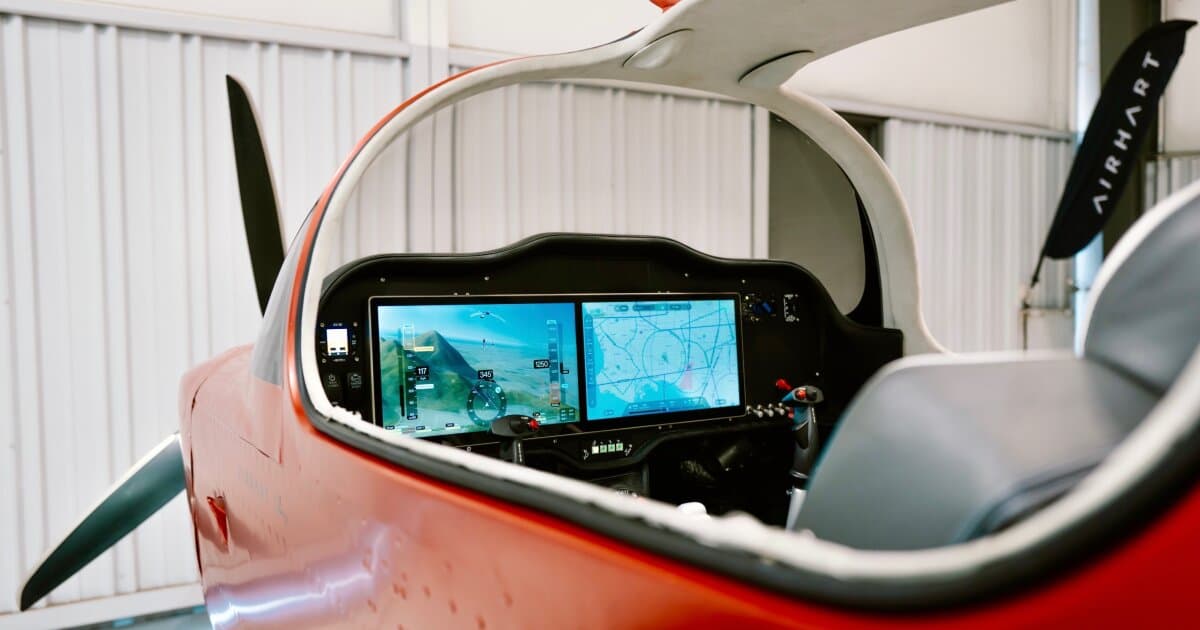
- •14‑inch bright displays deliver AI‑driven, context‑aware flight assistance
- •Integrated controller lets pilots adjust autopilot without removing hands
- •Goal: democratize private aviation with driver‑assist technology
Pulse Analysis
Private aviation has long been hampered by steep learning curves and high operational complexity, limiting its appeal to a niche of highly trained pilots. Airhart Aeronautics is tackling these barriers head‑on with a cockpit redesign that treats flying more like driving a modern electric vehicle. The recent test flights of the Airhart‑Sling demonstrated that a fully digital, gesture‑based interface can replace the dense array of switches and mechanical linkages that have defined general‑aviation cockpits for decades. By integrating a high‑brightness 14‑inch display and AI‑driven flight prompts, the system aims to keep pilots focused on situational awareness rather than manual minutiae.
The technical heart of Airhart’s approach lies in three innovations: fly‑by‑wire control surfaces, a context‑aware UI, and a unified flight controller embedded in the stick. Fly‑by‑wire eliminates the need for physical cables, allowing software to smooth out micro‑adjustments and prevent common errors such as stalls. The UI leverages swipes and gestures that remain reliable even under high vibration, while AI transcribes radio traffic and offers instructor‑style cues based on the flight phase. Data generated during each flight is fed back into the system, enabling rapid refinements and a tighter integration between hardware and software.
If Airhart’s vision succeeds, the ripple effect could reshape the general‑aviation ecosystem. Lowered training requirements and enhanced safety may attract a broader customer base, from business owners to leisure pilots who previously found flying intimidating. Aircraft manufacturers might adopt similar modular avionics platforms, accelerating the shift toward clean‑sheet designs built around digital flight decks. Ultimately, the technology promises a "concierge" experience—pre‑planned missions, automated fueling, and on‑demand flight assistance—that could make point‑to‑point air travel as routine as a ride‑share service today.
Interview: The avionics suite designed to let anyone fly a plane
Comments
Want to join the conversation?
Loading comments...