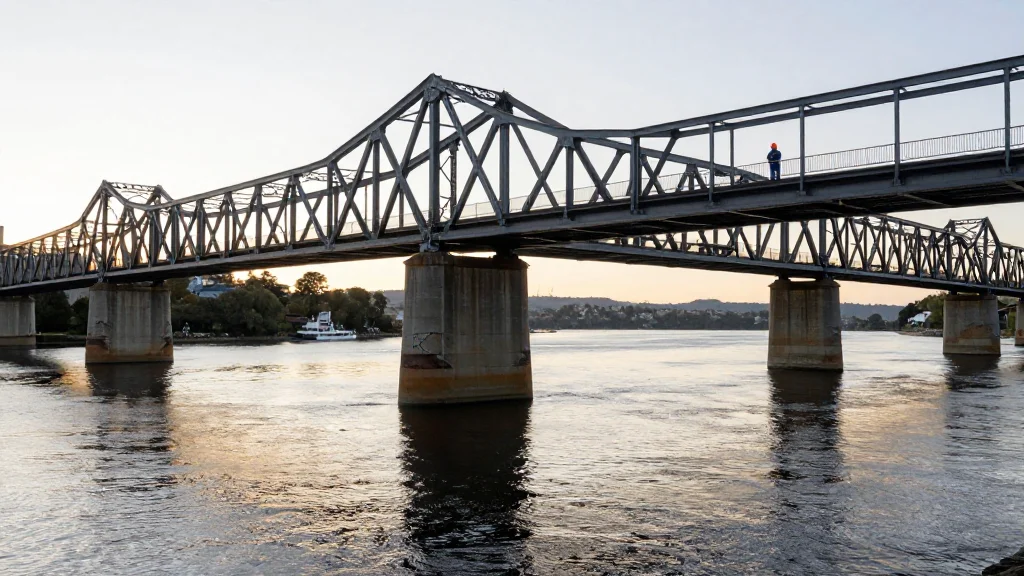
'Intolerable': When $786m Bridge Was Being Designed, Engineers Raised a Red Flag
Why It Matters
The clash between design assumptions and geotechnical reality exposes the risk of costly retrofits and safety issues in taxpayer‑funded megaprojects, underscoring the need for rigorous independent oversight.
Key Takeaways
- •Single‑pile design chosen despite complex, soft riverbed conditions.
- •Advisory team called pile risk “intolerable,” later dismissed in 2024.
- •Large pier crack discovered, raising doubts about modelling accuracy.
- •Potential traffic speed limits or load restrictions may be required.
- •State claims monitoring shows no unexpected movement, but concerns persist.
Pulse Analysis
Tasmania’s Bridgewater Bridge, the state’s largest recent infrastructure investment, was built to replace an aging lift‑span structure. The $786 million project adopted a single‑pile foundation system, drilling concrete posts 30‑88 metres below the Derwent River. While this approach reduced construction time and cost, it assumed relatively uniform ground conditions—a risky bet in an estuary known for soft, variable sediments. The design choice reflects a broader trend of cost‑driven engineering decisions in public works, where complex geotechnical data can be oversimplified.
During construction, a Technical Advisory Team hired by the Department of State Growth raised red flags about the pile design’s ability to provide adequate lateral stability. Their concerns centered on the riverbed’s brittleness and the lack of multiple or raked piles, which are standard for deep‑water crossings. A subsequent discovery of a sizable crack in one pier, attributed to inaccurate modelling, amplified doubts about the structural integrity. Although McConnell Dowell and an independent verifier defended the calculations, the advisory team’s departure in 2024 left a gap in independent scrutiny, prompting the state to rely on monitoring markers installed on the piers to track movement.
The dispute highlights critical lessons for future megaprojects: rigorous, independent geotechnical review must be embedded from concept through delivery, and contingency plans for design revisions should be contractually mandated. For Tasmania, any required traffic‑speed reductions or load‑management measures could affect commuter reliability and economic activity across the region. More broadly, the Bridgewater case may prompt Australian infrastructure agencies to revisit procurement clauses, ensuring that safety‑critical design assumptions are validated by multiple, independent experts before project sign‑off.
'Intolerable': When $786m bridge was being designed, engineers raised a red flag
Comments
Want to join the conversation?
Loading comments...