IO and Metrolinx Issue RFP for Yonge North Subway Extension
Why It Matters
The extension will boost capacity on one of Toronto’s busiest corridors, while the alliance procurement model showcases a collaborative approach that could set a new standard for large‑scale Canadian infrastructure projects.
Key Takeaways
- •IO and Metrolinx launch RFP for Yonge North Subway Extension
- •Eleven firms shortlisted across three work packages: Underground, Surface, Design
- •Alliance procurement model lets selected partners join Metrolinx early design phase
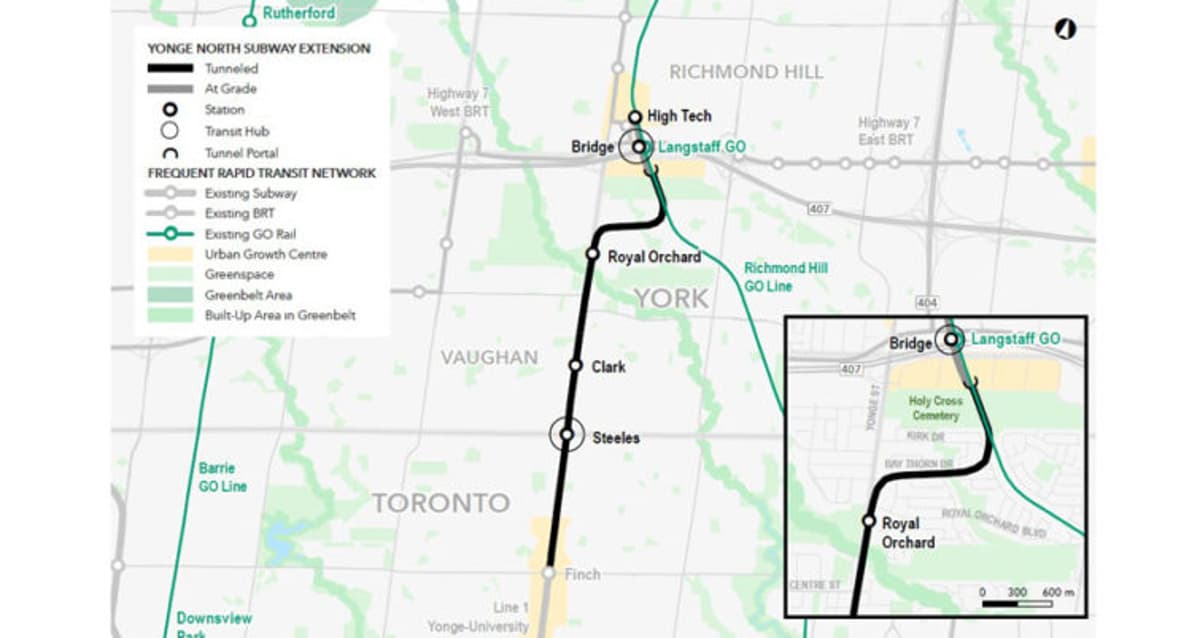
- •Underground package includes stations at Steeles, Clark, Royal Orchard
- •Design & Systems integration led by Arup, AtkinsRéalis, WSP‑AECOM consortia
Pulse Analysis
Toronto’s transit authority is poised to expand its core subway line northward, a move driven by rapid ridership growth and the city’s long‑term mobility plan. The Yonge North Subway Extension will add five stations, including Steeles, Clark and Royal Orchard, and integrate new surface stations and a train‑storage facility. By extending service into rapidly developing neighborhoods, the project promises to alleviate congestion, spur transit‑oriented development, and improve regional connectivity, reinforcing Toronto’s position as a North American economic hub.
The RFP adopts an Owner‑Formed Alliance model, a hybrid procurement approach that blends public oversight with private sector expertise. Under this framework, Metrolinx retains ownership while partners share risk, cost, and schedule responsibilities from the early design phase through construction and commissioning. This early‑stage collaboration enables faster value engineering, reduces change‑order exposure, and aligns incentives toward on‑time delivery. For bidders, the model offers a clearer pathway to influence design decisions and secure long‑term operational roles, potentially reshaping how Canadian infrastructure contracts are structured.
For the construction and engineering market, the tender opens significant opportunities for both domestic and multinational firms. The underground works package alone involves complex tunneling, station construction and power substations, while the surface and systems packages demand expertise in civil works, signaling and integration. Participation by consortia such as Acciona‑Amoco, Ferrovial‑VINCI, and WSP‑AECOM highlights the competitive landscape and the growing appetite for joint ventures that combine local knowledge with global resources. As Canada ramps up infrastructure spending, the Yonge North project serves as a bellwether for future transit initiatives and the evolving role of alliance‑based procurement.
IO and Metrolinx Issue RFP for Yonge North Subway Extension
Comments
Want to join the conversation?
Loading comments...