Iran Claims to Have Targeted a Second MSC Ship
Why It Matters
The alleged strike underscores rising Iran‑U.S. tensions that threaten commercial shipping lanes in the Gulf, potentially driving up freight costs and insurance premiums. It also pressures global carriers to reassess route security and contingency planning.
Key Takeaways
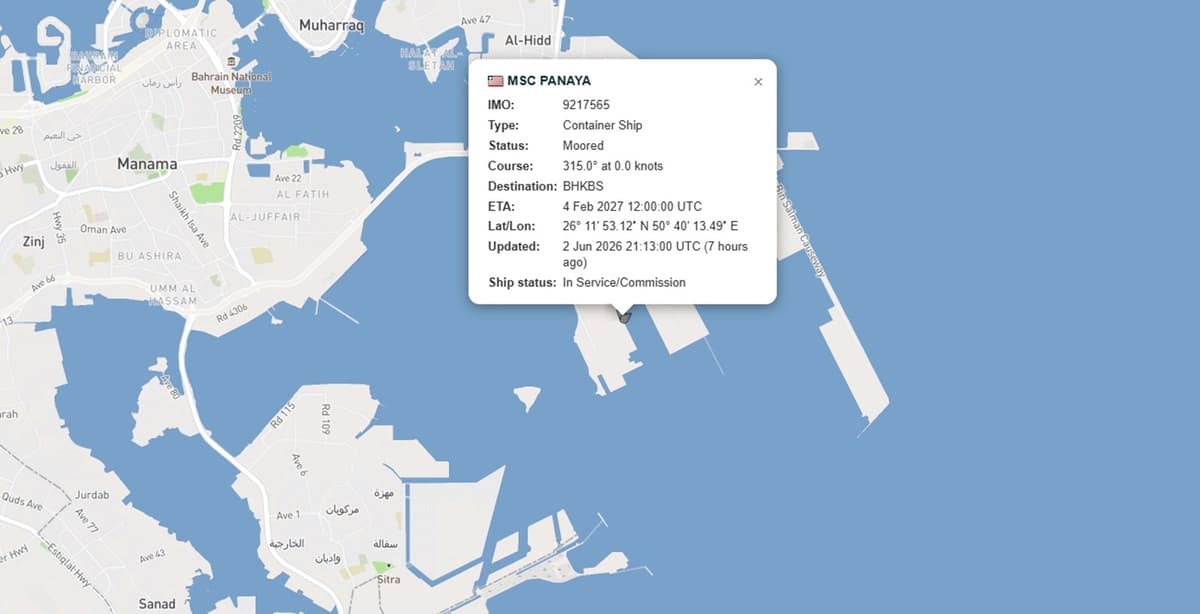
- •Iran claims missile strike on MSC Panaya in Bahrain port
- •No independent verification; AIS shows vessel docked, no damage reported
- •Attack follows MSC Sariska V hit, raising regional maritime tensions
- •US Central Command says Iranian attacks failed, contradicting Tehran
- •MSC stresses neutrality, unrelated to US or Israeli operations
Pulse Analysis
The Gulf region has become a flashpoint for naval confrontations after the United States deployed a Hellfire missile against the VLCC Lexie on June 2, aiming to enforce its blockade of Iranian ports. In response, Iran’s Tasnim News Agency reported that the IRGC Navy fired missiles at the MSC Panaya, a container ship currently moored in Bahrain. While satellite‑derived AIS data confirms the vessel’s presence, there is no independent evidence of damage, and U.S. Central Command has categorically denied any successful Iranian strike. This back‑and‑forth narrative reflects a broader strategy of signaling rather than outright escalation, yet each claim heightens uncertainty for maritime operators.
For global shippers, the repeated targeting of MSC vessels—first the Sariska V in Iraq and now the Panaya—raises immediate operational concerns. Carriers may reroute vessels away from the Strait of Hormuz or increase onboard security measures, driving up fuel consumption and transit times. Insurers are likely to reassess war‑risk premiums, especially for vessels transiting the Persian Gulf, which could translate into higher freight rates for end‑users. MSC’s public emphasis on its neutrality and Swiss‑based ownership seeks to distance the company from geopolitical entanglements, but the perception of risk remains a critical factor for charterers and cargo owners.
Geopolitically, the tit‑for‑tat exchanges illustrate how maritime incidents can serve as proxies for broader U.S.–Iran confrontations. If Iran continues to claim missile launches against commercial ships, even without verifiable hits, the narrative may justify further U.S. naval posturing, potentially spiraling into more direct engagements. Such dynamics threaten the stability of one of the world’s most vital trade corridors, where roughly 20% of global oil passes daily. Stakeholders—from port authorities to multinational logistics firms—must monitor diplomatic channels closely, as any escalation could reshape routing decisions and impact global supply chains for months to come.
Iran claims to have targeted a second MSC ship
Comments
Want to join the conversation?
Loading comments...