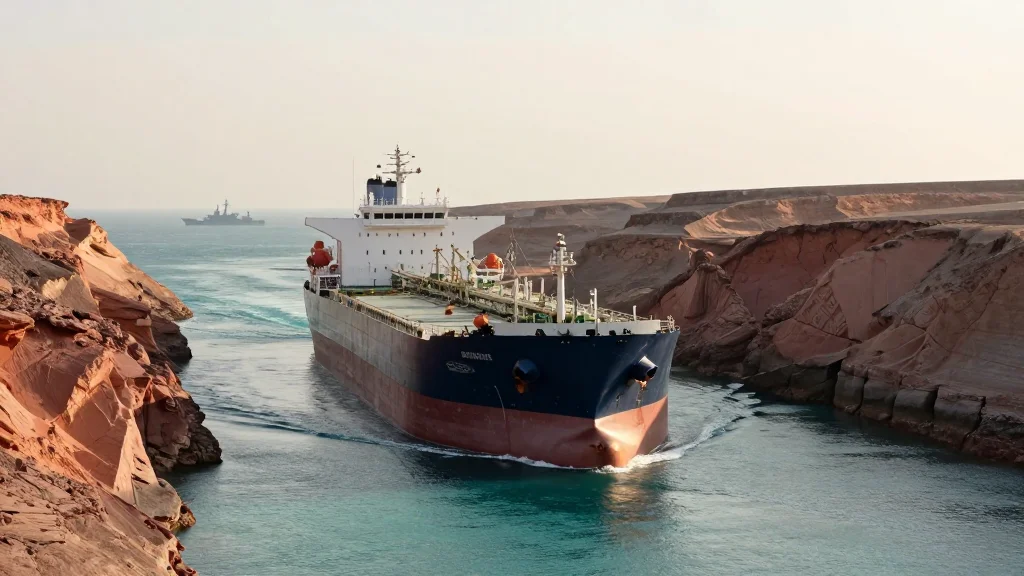
Iran Threatens Bab Al‑Mandeb If U.S. Blocks Hormuz, Escalating Red Sea Shipping Risk

Why It Matters
The Bab al‑Mandeb strait links the Red Sea to the Gulf of Aden and is a vital artery for European and Asian trade. A closure would force container ships to reroute around the Cape of Good Hope, adding weeks to transit times and hundreds of millions of dollars in extra fuel costs. For the energy market, simultaneous disruption of Hormuz and Bab al‑Mandeb would compress global oil supplies, likely pushing prices into double‑digit inflationary territory and straining economies already coping with post‑war supply shocks. Geopolitically, the threat underscores how littoral states can weaponise narrow maritime passages to extract leverage. If Iran follows through, it could set a precedent for other coastal powers to threaten chokepoints, reshaping the rules of naval engagement and prompting a reassessment of maritime security strategies by NATO, the Gulf Cooperation Council and the broader international community.
Key Takeaways
- •Iran warned it will target Bab al‑Mandeb if the U.S. enforces a Hormuz blockade
- •U.S. President Trump ordered a naval blockade and mine‑clearance of Hormuz, raising oil to $102/bbl
- •Iranian speaker Mohammad Bagher Ghalibaf threatened to mobilise Yemen’s Houthis against Red Sea traffic
- •Retired officers Bryan Clark and Mark Montgomery said a blockade is militarily feasible but risky
- •Potential Red Sea closure could add 10‑14 days to container routes and lift freight rates by 30‑40 %
Pulse Analysis
The escalation from a single chokepoint dispute to a two‑front maritime standoff reflects a broader shift in how modern conflicts are fought. In the past, control of the Strait of Hormuz alone could dictate oil market dynamics; today, the ability to threaten a second gateway amplifies leverage for a state with limited conventional power. Iran’s strategy leverages asymmetric tools—mines, fast‑attack craft, and proxy forces—to impose strategic costs that far exceed its naval size. By signaling readiness to hit Bab al‑Mandeb, Tehran forces the United States and its allies to consider a multi‑theater naval commitment, stretching resources and complicating rules of engagement.
For global markets, the immediate impact is a pricing shock that reverberates through energy‑intensive sectors. The risk premium baked into freight contracts will likely persist until a credible de‑escalation mechanism is established, perhaps via a UN‑mandated safe‑passage corridor. In the longer term, investors may reassess exposure to shipping routes that have historically been taken for granted, prompting a shift toward more resilient supply‑chain designs and increased insurance coverage for high‑risk lanes.
Strategically, the episode may accelerate discussions within NATO and the Gulf Cooperation Council about joint maritime patrols and rapid‑response mine‑countermeasure capabilities. It also raises the question of whether existing international legal frameworks—UNCLOS and the 1958 Geneva Convention—are sufficient to deter littoral states from weaponising natural straits. If Iran follows through, the precedent could embolden other regional actors, from the Turkish straits to the South China Sea, to treat chokepoints as bargaining chips, fundamentally altering the calculus of global trade security.
Iran Threatens Bab al‑Mandeb If U.S. Blocks Hormuz, Escalating Red Sea Shipping Risk
Comments
Want to join the conversation?
Loading comments...