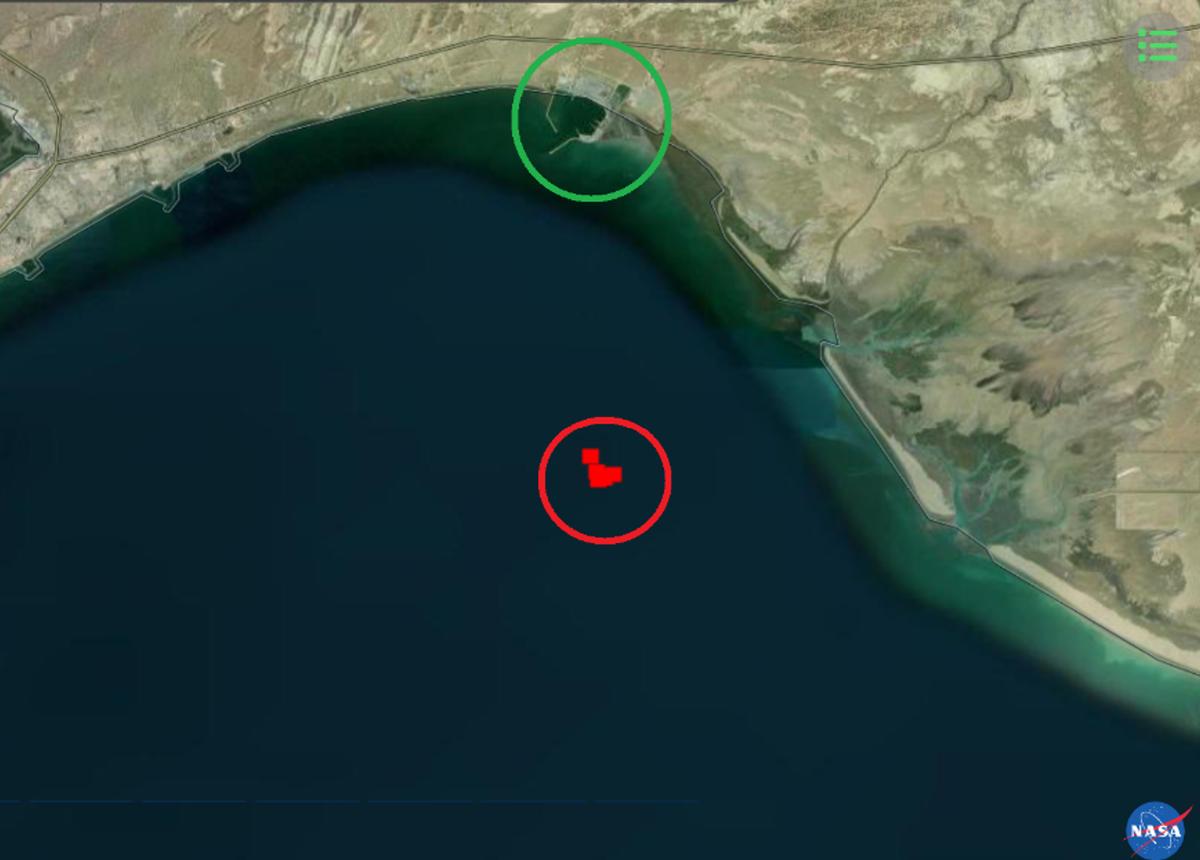
Iranian Shadow Fleet Tanker Ablaze Off Jask
Why It Matters
The incident demonstrates escalating U.S. pressure on sanctioned Iranian oil transport and raises concerns about regional oil flow disruptions and environmental risk from leaking infrastructure.
Key Takeaways
- •Sevda tanker caught fire near Jask, remains afloat
- •Nearby VLCC shows smoke and possible leak, no rescue vessels
- •US Navy struck Sevda, Hasna, Sea Star III with precision munitions
- •SBM off Kooh Mobarak leaked crude oil three consecutive days
Pulse Analysis
The fire on the Iranian‑flagged tanker Sevda, captured by Sentinel‑2 on May 9, underscores the vulnerability of Iran’s shadow fleet operating near the strategic Bandar‑e Jask naval hub. The base, inaugurated in early 2025, serves as the headquarters for the Iranian Navy’s 2nd Naval Region, making the area a focal point for both commercial and military maritime activity. Satellite data revealed not only Sevda’s blaze but also a nearby VLCC emitting smoke and a possible leak, suggesting a cluster of distressed vessels in a confined bight, a scenario that could quickly evolve into a larger maritime safety incident.
U.S. Central Command’s confirmation that F/A‑18 Super Hornets engaged Sevda, Hasna and Sea Star III with 20 mm cannon fire and precision‑guided munitions reflects a calibrated approach to enforce OFAC sanctions while avoiding full sinkings that could trigger broader escalation. By targeting propulsion and steering systems, the U.S. aims to cripple Iran’s ability to move sanctioned crude without creating hazardous debris fields that threaten other shipping lanes. The attacks also signal to other sanctioned operators that covert voyages with AIS off are increasingly detectable via commercial satellite constellations, raising the operational risk for Iran’s clandestine oil trade.
Compounding the security dimension, the Single Buoy Mooring (SBM) off the Kooh Mobarak terminal leaked crude oil on three consecutive days, hinting at technical failures or possible sabotage. Such leaks not only threaten the marine environment but also jeopardize Iran’s export capacity at a time when international buyers are already wary of sanctions. The convergence of vessel damage, U.S. kinetic actions, and infrastructure leaks could tighten global oil supply constraints, prompting refiners to seek alternative sources and potentially nudging prices upward. Stakeholders in the energy market should monitor further satellite assessments and diplomatic signals, as the region’s maritime stability remains precarious.
Iranian Shadow Fleet Tanker Ablaze off Jask
Comments
Want to join the conversation?
Loading comments...