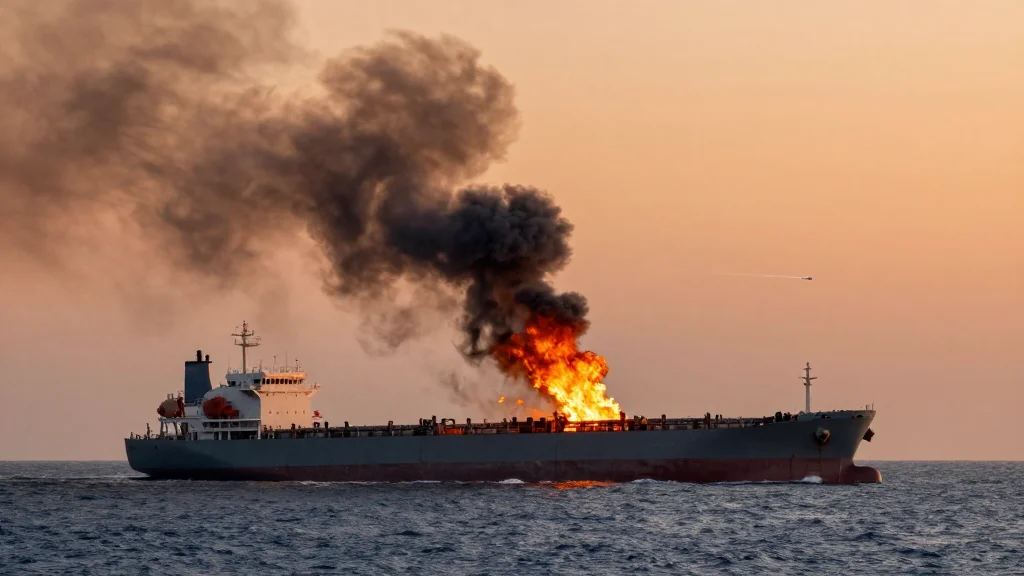
Iranian Threats Ignite New Maritime Tensions After Cargo Ship Fire in Gulf

Companies Mentioned

Why It Matters
The flare‑up in the Persian Gulf threatens the uninterrupted flow of oil and LNG that underpins global energy markets. A single disruption in the Strait of Hormuz can reverberate through fuel prices, inflation rates, and the balance of trade for oil‑importing nations. Moreover, heightened maritime risk drives up insurance premiums and may force carriers to take longer, costlier routes, eroding profit margins for shipping firms and raising consumer costs worldwide. Beyond economics, the incident tests the credibility of diplomatic mechanisms aimed at containing the Iran‑U.S. conflict. If Iran follows through on its threats, it could compel the United States to expand its naval presence, raising the specter of a broader naval clash that would further destabilize the region and complicate international efforts to secure energy supplies.
Key Takeaways
- •Bulk carrier hit by unknown projectile off Qatar, fire extinguished quickly
- •IRGC warned any attack on its tankers will trigger heavy retaliation against U.S. sites
- •Qatari LNG tanker began risky transit through Strait of Hormuz, first major LNG shipment since flare‑up
- •Morgan Stanley data shows global oil inventories fell 4.8 million barrels per day in March‑April
- •U.S. and Iran remain deadlocked on a one‑page cease‑fire extension, with Pakistani mediators involved
Pulse Analysis
The latest Gulf incident illustrates how quickly a localized maritime event can cascade into a strategic flashpoint. Historically, the Strait of Hormuz has been a pressure valve for geopolitical bargaining; today, the presence of autonomous drones and next‑generation counter‑drone systems adds a new layer of unpredictability. Iran’s willingness to issue explicit retaliation threats signals a shift from proxy posturing to direct economic coercion, leveraging its control over a chokepoint that moves 20% of world oil daily. For the United States, the calculus balances the cost of a kinetic response against the risk of legitimizing Iran’s leverage over global energy flows.
From a market perspective, the incident is already being priced in. Shipping insurers have lifted war‑risk premiums for Gulf voyages by an estimated 30%, while freight forwarders are scrambling to secure alternative routes. The Qatari LNG tanker’s successful passage may provide a short‑term confidence boost, but it also underscores Qatar’s dependence on a single maritime corridor. In the longer run, sustained tension could accelerate diversification efforts, prompting investors to fund overland pipelines, floating storage solutions, and even the development of new LNG export terminals outside the Gulf. The next diplomatic overture—whether a renewed cease‑fire or a broader settlement—will determine if the Gulf remains a volatile flashpoint or reverts to a managed conduit for global energy.
Iranian Threats Ignite New Maritime Tensions After Cargo Ship Fire in Gulf
Comments
Want to join the conversation?
Loading comments...