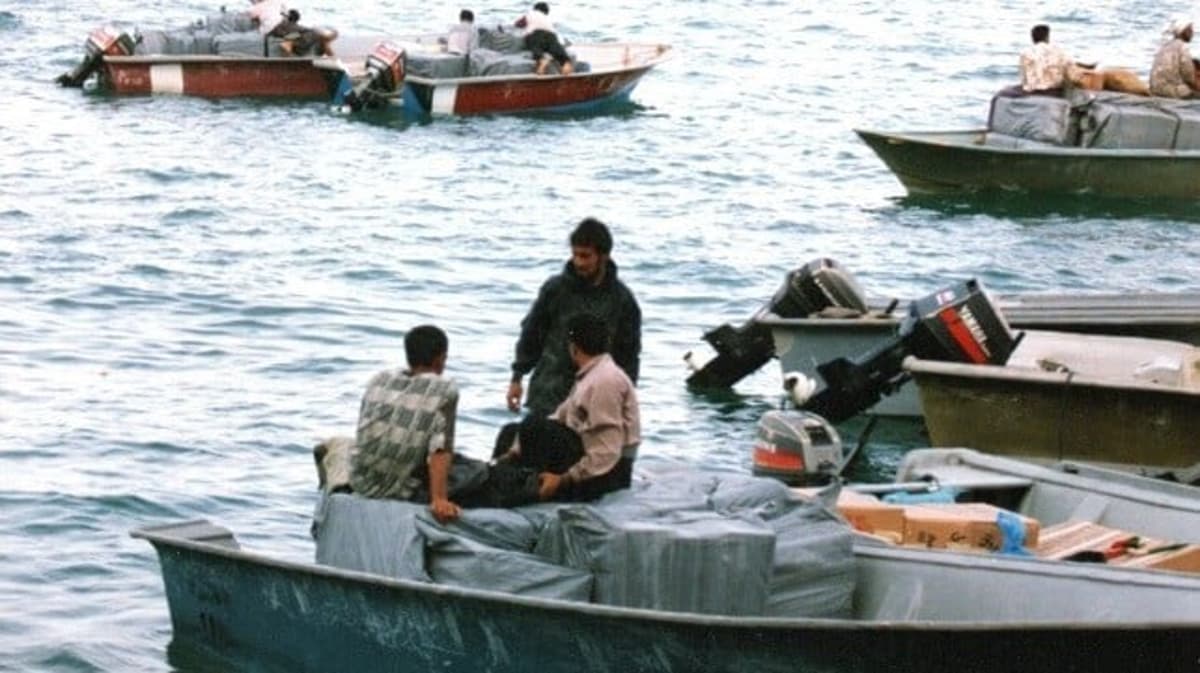
Iranian Trader Boats Are Still Crossing the Strait of Hormuz
Why It Matters
The unchecked speedboat traffic sustains a local economy while providing the IRGC a covert platform for mining and attacks, complicating regional security and naval planning.
Key Takeaways
- •Iranian speedboats barter pistachios, carpets, sheep with Omani merchants
- •Trade operates at night to evade Iran customs patrols
- •IRGC Navy infiltrates similar boats for surveillance and potential attacks
- •US blockade bypassed; small‑boat traffic remains unchanged
- •Mines on speedboats create mine‑clearance challenges for convoys
Pulse Analysis
The Strait of Hormuz has long hosted a shadow market in which Iranian traders ferry agricultural produce, carpets and even live livestock to the Musandam enclave of Oman. Operating under the cover of darkness, up to 500 speedboats slip into Khasab harbor each dawn, where Omani merchants barter the cargo for consumer goods that are scarce in Iran, such as washing machines, Western cigarettes and, more recently, satellite terminals. While Omani authorities deem the exchanges legal, Iran’s customs agency classifies them as smuggling, creating a gray‑zone that has persisted for decades.
This informal traffic carries a hidden security dimension. The Islamic Revolutionary Guard Corps (IRGC) Navy routinely mixes its own vessels with the civilian fleet, using identical hulls to conduct surveillance and, if needed, to launch small‑scale attacks. Equipped with Maham‑3 or Maham‑7 mines, even modest speedboats can lay explosive threats that jeopardize high‑value tankers transiting the strait. The sheer density of these craft complicates any prospective mine‑clearance operation, forcing naval planners to consider how to isolate legitimate trade from potential weapon platforms.
From a geopolitical standpoint, the U.S. maritime blockade has little impact on this niche market because the boats neither dock at Iranian ports nor qualify as ships under international law. Consequently, the smuggling lanes continue unabated, undermining the broader strategy of economic pressure on Tehran. Regional policymakers face a dilemma: curbing the speedboat flow could disrupt the fragile Omani‑Iranian border economy, yet leaving it unchecked preserves a conduit for IRGC aggression. A calibrated response—enhanced maritime domain awareness combined with targeted interdiction of vessels carrying mines—may balance security needs with local livelihoods.
Iranian Trader Boats are Still Crossing the Strait of Hormuz
Comments
Want to join the conversation?
Loading comments...