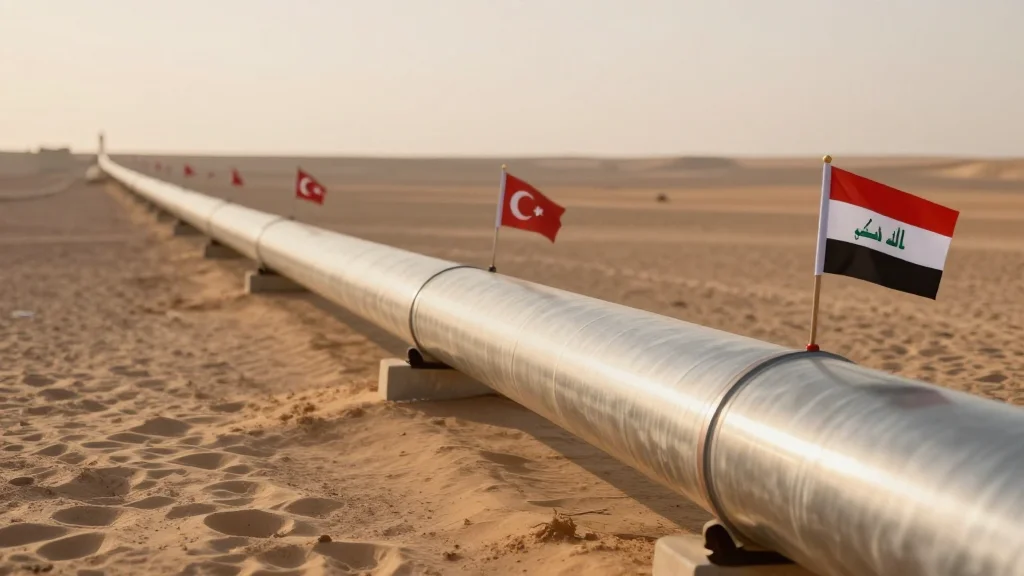
Iraq to Seek Talks with Turkey on New Oil Transit Deal
Why It Matters
Renewing the transit treaty safeguards a critical revenue stream for Iraq and preserves a key supply route that influences global oil markets, prompting investors to reassess exposure to regional logistics risk.
Key Takeaways
- •Iraq's oil ministry to negotiate new Turkey transit treaty.
- •Current 1973 agreement expires July; Turkey gave one‑year exit notice.
- •230,000 barrels per day flow after March restart.
- •Pipeline is Iraq's sole export route amid Strait of Hormuz crisis.
- •New deal could boost tariffs and capacity for Kurdish oil producers.
Pulse Analysis
The Iraq‑Turkey pipeline, a 1,600‑kilometer conduit built in the 1970s, has long been the lifeline for Baghdad’s export‑oriented oil sector. After the 2023‑2024 shutdown, a March 2026 accord between Baghdad and Erbil revived flows to roughly 230,000 barrels per day, underscoring the pipe’s strategic value when the Strait of Hormuz—through which two‑thirds of Iraq’s crude traditionally passes—faces geopolitical disruption. The aging 1973 treaty, repeatedly extended, is set to lapse in July, prompting the cabinet to authorize fresh negotiations that will define tariffs, capacity caps and technical standards for the next decade.
Iraq’s urgency stems from the pipeline’s role as the sole international outlet for Kurdish production, a segment that commands premium prices on the global market. With Hormuz bottlenecks cutting Iraqi exports by an estimated 60 %, the pipeline now accounts for a disproportionate share of national oil revenue, feeding both the federal budget and regional development funds. Legal experts warn that any lapse could trigger a revenue gap of several hundred million dollars monthly, pressuring the government to lock in a long‑term deal that mitigates tariff volatility and safeguards supply continuity for downstream refiners.
For investors and multinational operators active in Kurdistan, the renegotiation presents both risk and opportunity. A modernized treaty could introduce higher transit fees, incentivizing infrastructure upgrades that boost throughput beyond current levels. Conversely, a protracted stalemate may force producers to pivot toward costly overland routes or seek alternative maritime options, reshaping trade flows in the Eastern Mediterranean. Scenario planning, therefore, is essential as market participants gauge the likelihood of a seamless renewal versus the prospect of renewed interruptions that could reverberate through oil price benchmarks worldwide.
Iraq to seek talks with Turkey on new oil transit deal
Comments
Want to join the conversation?
Loading comments...