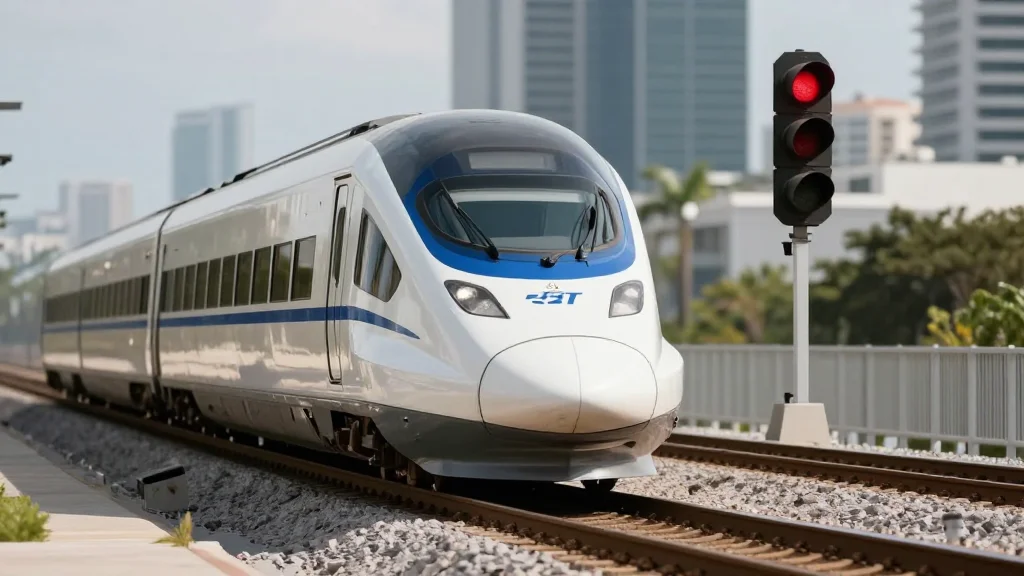
Is Brightline Florida Approaching a Red Signal?
Why It Matters
The going‑concern warning signals heightened financial risk for Brightline, potentially affecting investors, creditors, and Florida’s high‑speed rail ambitions.
Key Takeaways
- •Brightline flagged substantial doubt about continuing as a going concern.
- •2025 revenue rose to $214M, but net loss remained $233M.
- •Operating loss narrowed to $127M in 2025 from $153M in 2024.
- •Q1 2026 ridership up 13% YoY; March record 337,874 passengers.
- •Added capacity generated $1.1M March revenue, yet financing remains uncertain.
Pulse Analysis
Brightline Florida’s 2025 financial statements paint a mixed picture. Revenue climbed to $214 million, a 14 percent increase over the prior year, and operating losses narrowed to $127 million. However, the company posted a $233 million net loss and, according to Ernst & Young, still lacks the liquid funds needed to meet debt obligations. The auditor’s unmodified opinion underscores a “substantial doubt” about the railroad’s ability to continue as a going concern, highlighting the urgency of securing new capital. The company’s debt portfolio includes senior secured, subordinated and unsecured instruments, further complicating refinancing.
Despite the balance‑sheet strain, Brightline’s operational metrics show encouraging momentum. Ridership rose 8 percent in January, 11 percent in February and a striking 21 percent in March, delivering a 13 percent year‑over‑year increase for the first quarter of 2026. The March record of 337,874 passengers coincided with a schedule overhaul that added eight long‑distance round trips on peak days, generating roughly $1.1 million of incremental revenue. Higher‑frequency service between Miami and Orlando also aims to capture business travelers, a segment that historically yields higher yields. These gains suggest the service is attracting demand, yet they remain insufficient to offset the company’s cash shortfall.
The crux of Brightline’s dilemma lies in financing. Total liabilities sit at roughly $5.6 billion, and management is pursuing a “substantial” equity issuance to repay high‑coupon debt and bolster cash reserves. Yet the company cautions that market conditions could delay or diminish any transaction, leaving it exposed to refinancing risk. If the equity raise succeeds, analysts project a potential reduction of leverage to below 4.5 times EBITDA, improving credit metrics. For investors and policymakers, the situation raises questions about the viability of high‑speed rail in Florida without sustained public or private backing. A successful capital raise could stabilize operations, while failure may force service cuts or restructuring.
Is Brightline Florida Approaching a Red Signal?
Comments
Want to join the conversation?
Loading comments...