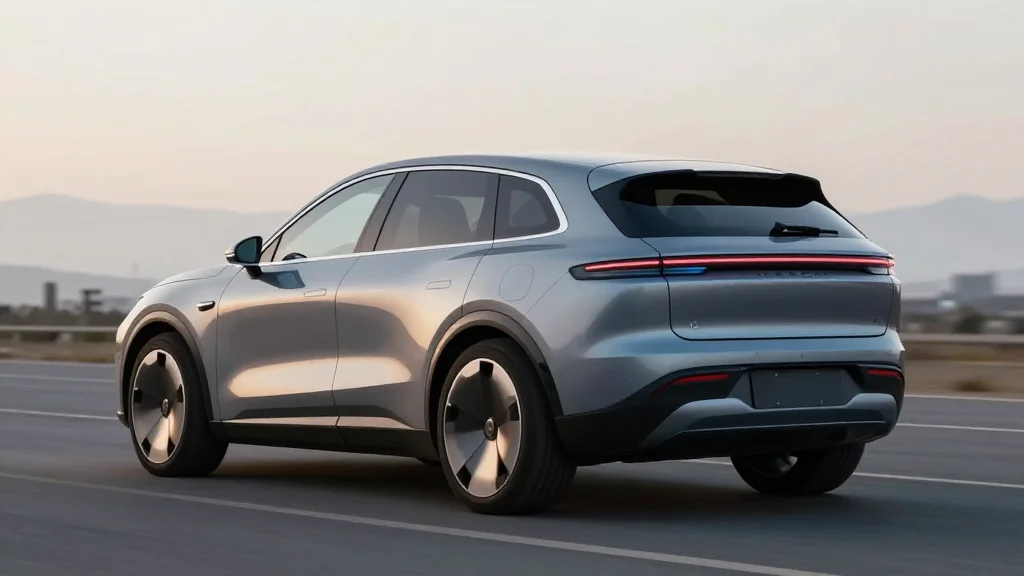
Is the World Ready For a Car Without a Rear Window?

Companies Mentioned
Why It Matters
The design showcases how camera‑based visibility can boost safety and efficiency in EVs, signaling a shift toward fully sensor‑driven vehicle architectures. It also pressures regulators and competitors to reconsider legacy mirror requirements as range and aerodynamics become paramount.
Key Takeaways
- •Polestar 4 replaces rear window with high‑resolution camera display.
- •Live feed improves visibility in darkness and rain.
- •Eliminating the rear glass cuts drag, extending electric range.
- •11 exterior cameras and 12 ultrasonics enable advanced driver assistance.
Pulse Analysis
The Polestar 4’s decision to drop the rear glass reflects a broader industry move toward camera‑first visibility solutions. Traditional mirrors have long been a design compromise, adding weight and wind resistance while offering limited field of view. By integrating a 1480 × 320‑pixel display fed by a wide‑angle camera, Polestar delivers a panoramic rear perspective that adapts to lighting conditions, rain and fog. The display’s auto‑dimming and graphical overlays help drivers judge distance and speed, while the surrounding sensor suite—four short‑range cameras, 11 exterior cameras, 12 ultrasonic sensors and a radar—creates a comprehensive situational awareness platform.
Aerodynamics are a decisive factor for electric vehicles, where every watt of drag directly erodes range. Removing the rear window reduces the vehicle’s drag coefficient, allowing the Polestar 4 to preserve more of its battery’s energy for propulsion rather than overcoming turbulence. This design tweak, combined with the vehicle’s sleek SUV‑coupe silhouette, illustrates how manufacturers are extracting efficiency gains from every component. As EV adoption accelerates and range anxiety remains a barrier, innovations that shave off even a few percent of drag can translate into meaningful mileage improvements for consumers.
Consumer acceptance of camera‑based mirrors hinges on perceived safety and regulatory approval. Early user feedback indicates drivers quickly trust the high‑resolution feed, especially when supplemented by audible warnings and visual overlays. However, legislation in many jurisdictions still mandates a physical rear‑view mirror, potentially slowing rollout. As more automakers experiment with similar systems—Tesla’s rear‑camera display and Mercedes’ digital mirror—the regulatory landscape is likely to evolve. The Polestar 4 thus serves as a test case for the next generation of sensor‑driven vehicle design, where glass may become a relic of the past.
Is the World Ready For a Car Without a Rear Window?
Comments
Want to join the conversation?
Loading comments...