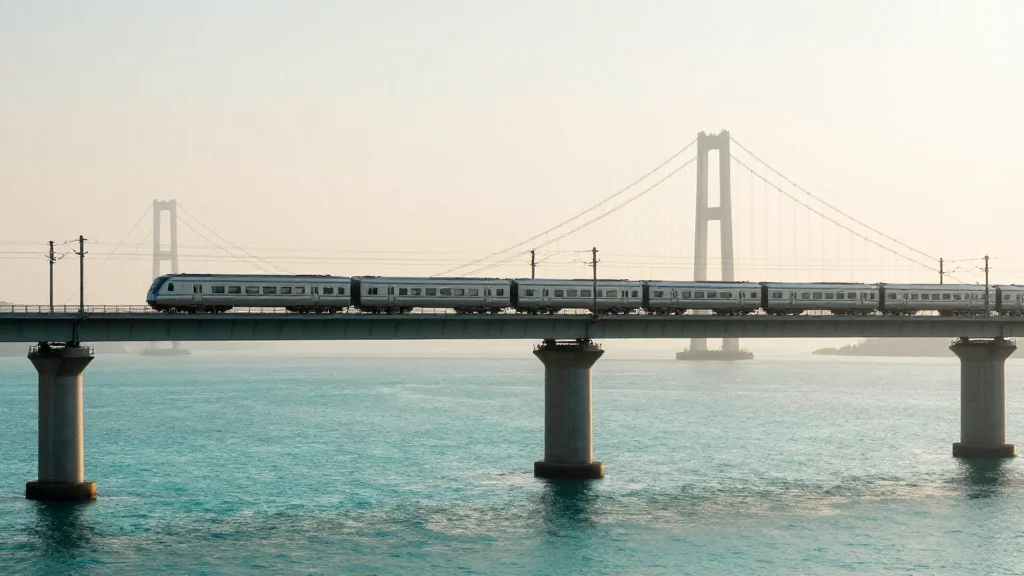
Istanbul North Rail Crossing Project
Why It Matters
The railway will create a high‑capacity, trans‑Bosphorus freight and passenger corridor, boosting regional logistics and supporting Turkey’s ambition to become a Eurasian transport hub. Its multilateral financing and modern procurement framework set a benchmark for large‑scale infrastructure projects in emerging markets.
Key Takeaways
- •127 km electrified railway to bypass Istanbul, crossing Bosphorus via bridge
- •Financed by World Bank, AIIB, ADB, EBRD, Islamic Development Bank, OPEC Fund
- •Four procurement lots cover corridors from Çayırova to Çatalca
- •FIDIC Yellow Book and World Bank rules guide contract terms
Pulse Analysis
The Istanbul North Rail Crossing (INRAIL) project marks a strategic leap for Turkey’s rail network, linking the Asian and European sides of Istanbul with a 127‑kilometer high‑speed line. By leveraging the existing Yavuz Sultan Selim Bridge, the route avoids the congested urban core while providing a dedicated freight corridor capable of moving 50 million tons per year. This alignment not only shortens transit times for cargo moving between Europe and Asia but also opens new passenger travel options, supporting Turkey’s broader goal of becoming a pivotal logistics hub along the Belt and Road Initiative.
Financing for INRAIL is anchored by a World Bank loan, complemented by contributions from the Asian Infrastructure Investment Bank, Asian Development Bank, European Bank for Reconstruction and Development, Islamic Development Bank, and the OPEC Fund. Such a diversified capital stack underscores confidence in the project’s economic viability and reduces reliance on any single source. The procurement approach—an international competitive RFP using the World Bank’s procurement regulations and FIDIC Yellow Book contracts—ensures transparency, risk allocation, and adherence to global best practices, attracting reputable engineering‑construction firms worldwide.
The upcoming RFP, slated for May 2026, will be divided into four lots covering distinct corridor segments, from Çayırova through Sabiha Gökçen Airport to Çatalca. This lot‑based structure enables bidders to specialize in specific terrain challenges, such as twin‑tube TBM tunnels, NATM tunnels, and extensive bridge works. Successful execution will generate significant employment, stimulate local supply chains, and set a precedent for future trans‑continental rail initiatives in the region, reinforcing Turkey’s position at the crossroads of Europe and Asia.
Istanbul North Rail Crossing Project
Comments
Want to join the conversation?
Loading comments...