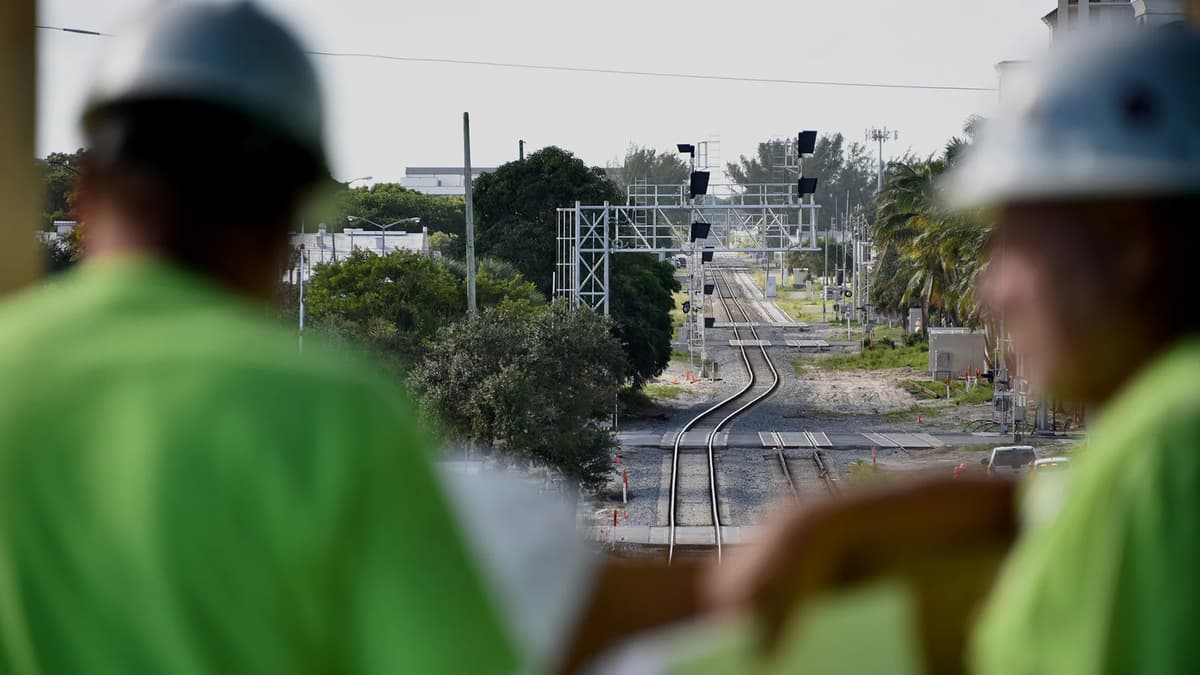
It Was Supposed to Be America’s High-Speed Transit Solution. It Could Soon Declare Bankruptcy
Why It Matters
The looming bankruptcy highlights the financial fragility of U.S. high‑speed rail projects, signaling that demand growth alone may not offset massive capital structures. Investors and policymakers will watch Brightline’s outcome to gauge the viability of future rail investments.
Key Takeaways
- •Brightline's ridership rose 20% to 292,626 passengers in April.
- •Revenue increased 32% to $22.3 million despite mounting debt.
- •$985 million commuter‑rail bonds extended, delaying interest payment to July 1.
- •Debt stands at roughly $5.5 billion, far exceeding cash flow.
- •Creditors propose pre‑bankruptcy financing to keep operations running.
Pulse Analysis
Brightline was launched as a flagship high‑speed rail experiment, backed by billionaire Wes Edens and positioned as a template for a national network. The Florida corridor, linking Miami, Fort Lauderdale, West Palm Beach, and Orlando, has attracted attention for its sleek service and private‑sector model, contrasting with traditional publicly funded rail. Early optimism hinged on rapid passenger growth and ancillary real‑estate development, but the capital‑intensive nature of high‑speed infrastructure demands a scale of revenue that has yet to materialize.
Financial pressure mounted as the company’s balance sheet ballooned to an estimated $5.5 billion, far outpacing its $22.3 million April revenue. While ridership climbed 20% year‑over‑year, the cash flow gap forced Brightline to negotiate with bondholders, securing a two‑week extension on a $985 million bond and a waiver on a separate covenant breach. Creditors are now weighing pre‑bankruptcy financing options, a move that could preserve operations but also dilute existing equity and set a precedent for distressed rail ventures.
The situation underscores broader challenges for U.S. high‑speed rail ambitions. Investors are scrutinizing whether private models can sustain the massive upfront costs without robust public subsidies or guaranteed traffic volumes. If Brightline restructures successfully, it may validate a hybrid financing approach; a failure could dampen enthusiasm for similar projects and prompt regulators to reconsider the role of private capital in national transit planning. Either outcome will shape the strategic calculus for future rail initiatives across the country.
It Was Supposed to Be America’s High-Speed Transit Solution. It Could Soon Declare Bankruptcy
Comments
Want to join the conversation?
Loading comments...